1. Ifihan
This manual provides essential information for the proper use, setup, operation, maintenance, and troubleshooting of your Aqua Lung Wave Scuba Buoyancy Compensator Device (BCD). The Aqua Lung Wave BCD is designed for durability and performance, featuring advanced ResisteK™ material for enhanced resistance to fading and abrasion, making it suitable for demanding dive environments.
Awọn ẹya pataki pẹlu:
- New technologically advanced ResisteK™ material resists fading and abrasion.
- A proprietary backpack with a built-in carrying handle for easy transport.
- A scooped octo-pocket on the top front of the right lobe and a new octo-sleeve on the right shoulder strap, offering two convenient options to stow and deploy an octopus regulator, ensuring visibility and accessibility.
- A detachable, double-adjusting crotch strap with neoprene center for enhanced comfort and secure fit.
- Two stainless steel flat D-rings for attaching accessories.
2. Alaye Aabo
Always read and understand this manual completely before using the Aqua Lung Wave BCD. Scuba diving carries inherent risks. Proper training and certification from a recognized agency are mandatory before using this equipment. Failure to follow these instructions could result in serious injury or death.
- Pre-Dive Inspection: Always perform a thorough pre-dive inspection of your BCD and all other dive equipment before each dive.
- Buoyancy Control: Practice buoyancy control in a controlled environment before open water dives.
- Afikun afikun: Do not over-inflate the BCD. Over-inflation can cause damage to the BCD and lead to uncontrolled ascents.
- Itọju: Regular maintenance and professional servicing are crucial for the safe operation and longevity of your BCD.
- Awọn ilana pajawiri: Be familiar with emergency procedures for BCD failure, including manual inflation and rapid deflation.
3. irinše Loriview
Familiarize yourself with the main components of your Aqua Lung Wave BCD.

Nọmba 3.1: Iwaju view of the Aqua Lung Wave Scuba BCD, showcasing the main bladder, shoulder straps, waist strap, and integrated pockets. The Aqua Lung logo is visible on the left pocket.
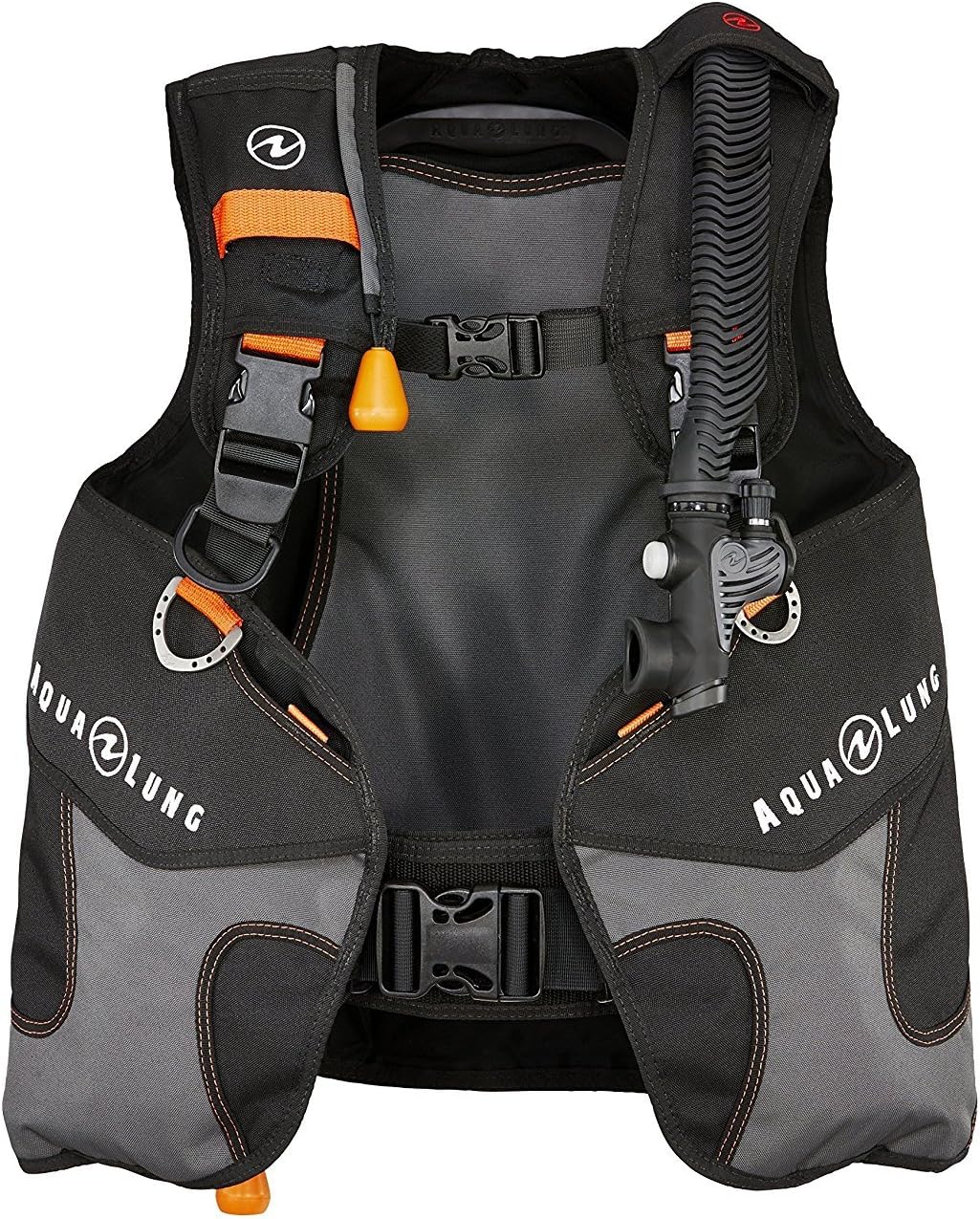
Nọmba 3.2: Ẹyìn view of the Aqua Lung Wave Scuba BCD, highlighting the proprietary backpack with a built-in carrying handle and the tank band system for securing a scuba cylinder.
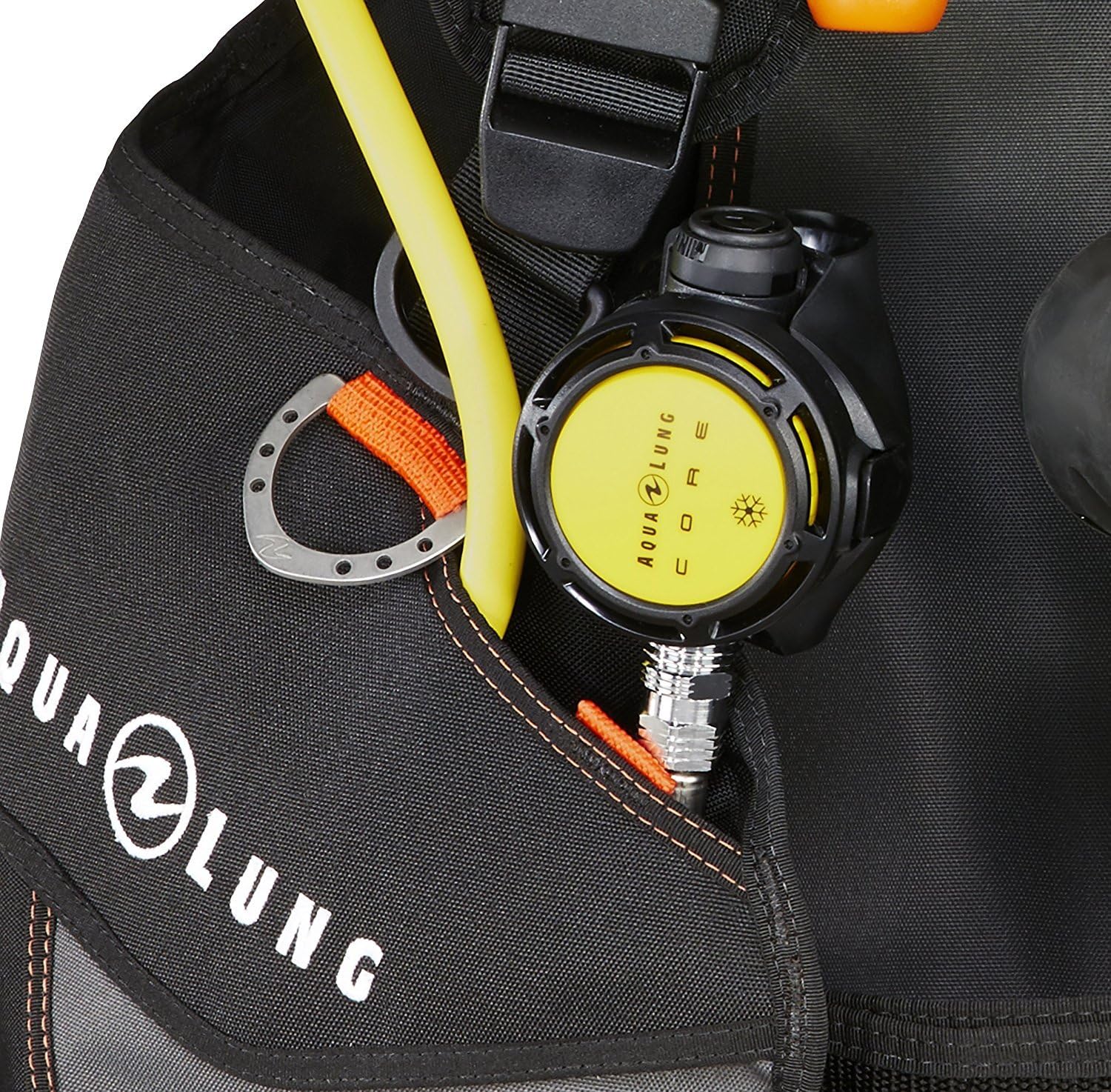
Nọmba 3.3: Close-up of the BCD's left side, showing the scooped octo-pocket designed for easy stowage and deployment of an octopus regulator. A stainless steel D-ring is also visible.

Nọmba 3.4: Detail of the right shoulder strap, featuring the octo-sleeve for an alternative octopus regulator placement. The inflator hose connection point and a D-ring are also visible.
Awọn eroja pataki:
- Bladder: The inflatable air cell that provides buoyancy.
- Inflator Mechanism: Allows for oral or power inflation/deflation.
- Dump Valves: Located at various points (shoulder, lower rear) for rapid air release.
- Awọn okun ejika: Adjustable straps for securing the BCD to the diver.
- Waist Strap/Cummerbund: Secures the BCD around the diver's waist.
- Tank Band: Strap system for attaching the scuba cylinder.
- D-Oruka: Attachment points for accessories.
- Awọn apo: Storage for small items.
- Octo-Pocket/Sleeve: Dedicated locations for securing an octopus regulator.
4. Eto
4.1 Unpacking ati Ibẹrẹ ayewo
- Carefully remove the BCD from its packaging.
- Inspect the BCD for any signs of damage, such as cuts, tears, or loose stitching. Check all buckles, straps, and D-rings for proper function and integrity.
- Ensure the inflator mechanism and dump valves operate smoothly.
4.2 Attaching to a Scuba Tank
- Place the BCD on a flat surface with the tank band facing up.
- Position the scuba cylinder into the BCD's backpack, ensuring the tank valve aligns with the top of the BCD's backplate.
- Thread the tank band securely around the cylinder. Pull the strap tight and fasten the buckle. Ensure the tank is snug and does not wobble.
- For added security, some BCDs have a secondary tank strap or cam band. Ensure this is also fastened correctly if present.
4.3 Adjusting Straps
- Awọn okun ejika: Adjust the shoulder straps so the BCD fits snugly but comfortably over your shoulders. They should not restrict movement or breathing.
- Waist Strap/Cummerbund: Fasten the waist strap or cummerbund around your waist. It should be tight enough to prevent the BCD from riding up, but not so tight as to be uncomfortable.
- Okùn Àyà: If present, fasten and adjust the chest strap for additional stability.
- Crotch Strap: The Aqua Lung Wave BCD features a detachable, double-adjusting crotch strap. Attach and adjust this strap for a secure fit, preventing the BCD from riding up during a dive. Ensure the neoprene center is positioned for comfort.
4.4 Connecting Inflator Hose
- Connect the low-pressure inflator hose from your regulator first stage to the BCD's inflator mechanism. Ensure it clicks securely into place.
- Verify the connection by gently pulling on the hose.
5. Awọn ilana Iṣiṣẹ
5.1 Àwọn Àyẹ̀wò Ṣáájú Jíjìn
- Ayewo wiwo: Re-check all straps, buckles, and hoses for secure connections and no visible damage.
- Iṣẹ́ Inflọtọ: With the tank valve open, press the inflate button to ensure the BCD inflates. Press the deflate button to ensure air can be released.
- Dump Valve Function: Test all dump valves (shoulder, lower rear) by pulling their respective cords to ensure they open and close properly.
- Air Retention: Inflate the BCD fully and listen for any air leaks. The BCD should hold air without significant loss.
- Octopus Stowage: Ensure your octopus regulator is securely stowed in either the scooped octo-pocket or the octo-sleeve on the shoulder strap, yet easily accessible.
5.2 Inflation and Deflation
- Power Inflation: Press the inflate button on the inflator mechanism to add air to the BCD. Use short bursts to control buoyancy.
- Oral Inflation: If power inflation fails or for fine-tuning, orally inflate the BCD by pressing the deflate button and blowing into the mouthpiece at the end of the inflator hose.
- Power Deflation: Press the deflate button on the inflator mechanism to release air.
- Manual Deflation (Dump Valves):
- Shoulder Dump: Pull the cord on the shoulder dump valve to rapidly release air, especially useful when ascending.
- Lower Rear Dump: Pull the cord on the lower rear dump valve to release air, useful when in a horizontal or head-down position.
5.3 Using D-Rings and Pockets
- The Aqua Lung Wave BCD features two stainless steel flat D-rings. Use these for attaching accessories such as gauges, lights, or slates. Ensure items are securely clipped and do not dangle excessively.
- Utilize the integrated pockets for storing small items like dive tables, spare masks, or signaling devices. Ensure pockets are securely closed before and during the dive.
6. Itọju
Proper maintenance is crucial for the longevity and safe operation of your Aqua Lung Wave BCD.
6.1 After Each Dive
- Rinsin: Thoroughly rinse the BCD with fresh water immediately after each dive.
- Rinse the exterior to remove salt, sand, and other debris.
- Rinse the interior by orally inflating the BCD with a small amount of fresh water, sloshing it around, and then draining it through the dump valves. Repeat several times until the water runs clear.
- Gbigbe: Hang the BCD in a shaded, well-ventilated area to dry completely, both inside and out. Avoid direct sunlight, which can degrade materials.
6.2 Ibi ipamọ
- Store the BCD partially inflated in a cool, dry place away from direct sunlight, heat sources, and chemicals.
- Do not store heavy items on top of the BCD.
6.3 Periodic Inspection and Servicing
- Regularly inspect all components for wear, damage, or signs of degradation. Pay close attention to seams, zippers, buckles, and the inflator mechanism.
- It is recommended to have your BCD professionally serviced by an authorized Aqua Lung technician at least once a year, or more frequently with heavy use.
7. Laasigbotitusita
This section addresses common issues you might encounter with your BCD.
| Isoro | Owun to le Fa | Ojutu |
|---|---|---|
| BCD loses air quickly. |
|
|
| Power inflator not working. |
|
|
| BCD difficult to deflate. |
|
|
For issues not listed here or if troubleshooting steps do not resolve the problem, contact an authorized Aqua Lung service center.
8. Awọn pato
| Iwa | Ẹ̀kúnrẹ́rẹ́ |
|---|---|
| Orukọ Brand | Aqua ẹdọfóró |
| Olupese | Aqua ẹdọfóró |
| Nọmba Awoṣe (Nọmba Apakan) | 303482 |
| Iwọn | Alabọde |
| ASIN | B01NA9NW6T |
| Ọjọ Akọkọ Wa | Oṣu kọkanla ọjọ 22, ọdun 2016 |
| Ohun elo | ResisteK™ (fade and abrasion resistant) |
| D-Oruka | 2 x Stainless Steel Flat D-rings |
| Pataki Awọn ẹya ara ẹrọ | Proprietary backpack with carrying handle, scooped octo-pocket, octo-sleeve, detachable double-adjusting crotch strap with neoprene center. |
9. atilẹyin ọja Information
Aqua Lung products are manufactured to the highest quality standards. For specific warranty terms and conditions applicable to your Aqua Lung Wave Scuba BCD, please refer to the warranty card included with your purchase or visit the official Aqua Lung webojula. Jeki ẹri rira rẹ fun eyikeyi awọn ibeere atilẹyin ọja.
10. Onibara Support
If you have any questions, require technical assistance, or need to arrange for service, please contact Aqua Lung customer support or an authorized Aqua Lung dealer in your region. Contact information can typically be found on the official Aqua Lung website or through your local dive shop.
Fun alaye diẹ sii, ṣabẹwo: www.aqualung.com


