1. Ifihan
The PerfectPrime GA0080 is a portable gas leak detector designed to identify the presence of natural gas (NG), methane, propane, and butane. This device utilizes a catalytic method gas sensor to provide a quick and reliable indication of gas leaks, enhancing safety in residential and commercial environments. It features a visible LED alarm system and a clear display for gas concentration readings.
2. Alaye Aabo pataki
Please read all instructions carefully before using the PerfectPrime GA0080. Failure to follow these instructions may result in inaccurate readings, property damage, or personal injury.
- This device is intended for detecting combustible gases such as natural gas, methane, propane, and butane. It is not designed to detect carbon monoxide or other toxic gases.
- Ma ṣe fi ẹrọ naa han si awọn iwọn otutu to gaju, ọriniinitutu, tabi imọlẹ orun taara.
- Jeki ẹrọ naa kuro ni awọn aaye itanna to lagbara.
- Má ṣe gbìyànjú láti tún ẹ̀rọ náà ṣe tàbí láti ṣe àtúnṣe rẹ̀. Tọ́ka gbogbo iṣẹ́ ìtọ́jú náà sí àwọn òṣìṣẹ́ tó mọ̀ nípa rẹ̀.
- Ensure proper ventilation when investigating a gas leak. If a significant leak is suspected, evacuate the area, shut off the gas supply, and contact emergency services.
- Always replace batteries with new ones of the specified type (AA 1.5V).
3. Package Awọn akoonu
Daju pe gbogbo awọn nkan wa ninu apo rẹ:
- PerfectPrime GA0080 Portable Gas Leak Detector
- Itọsọna olumulo
- Note: 2 x AA 1.5V batteries are required and typically not included.
4. Ọja Ipariview
Familiarize yourself with the components of your GA0080 gas leak detector.

Nọmba 4.1: Lapapọ view of the PerfectPrime GA0080 Portable Gas Leak Detector, highlighting the digital display and power button.

Nọmba 4.2: Close-up of the sensor end of the GA0080, showing the protective grille and ventilation holes for gas detection.
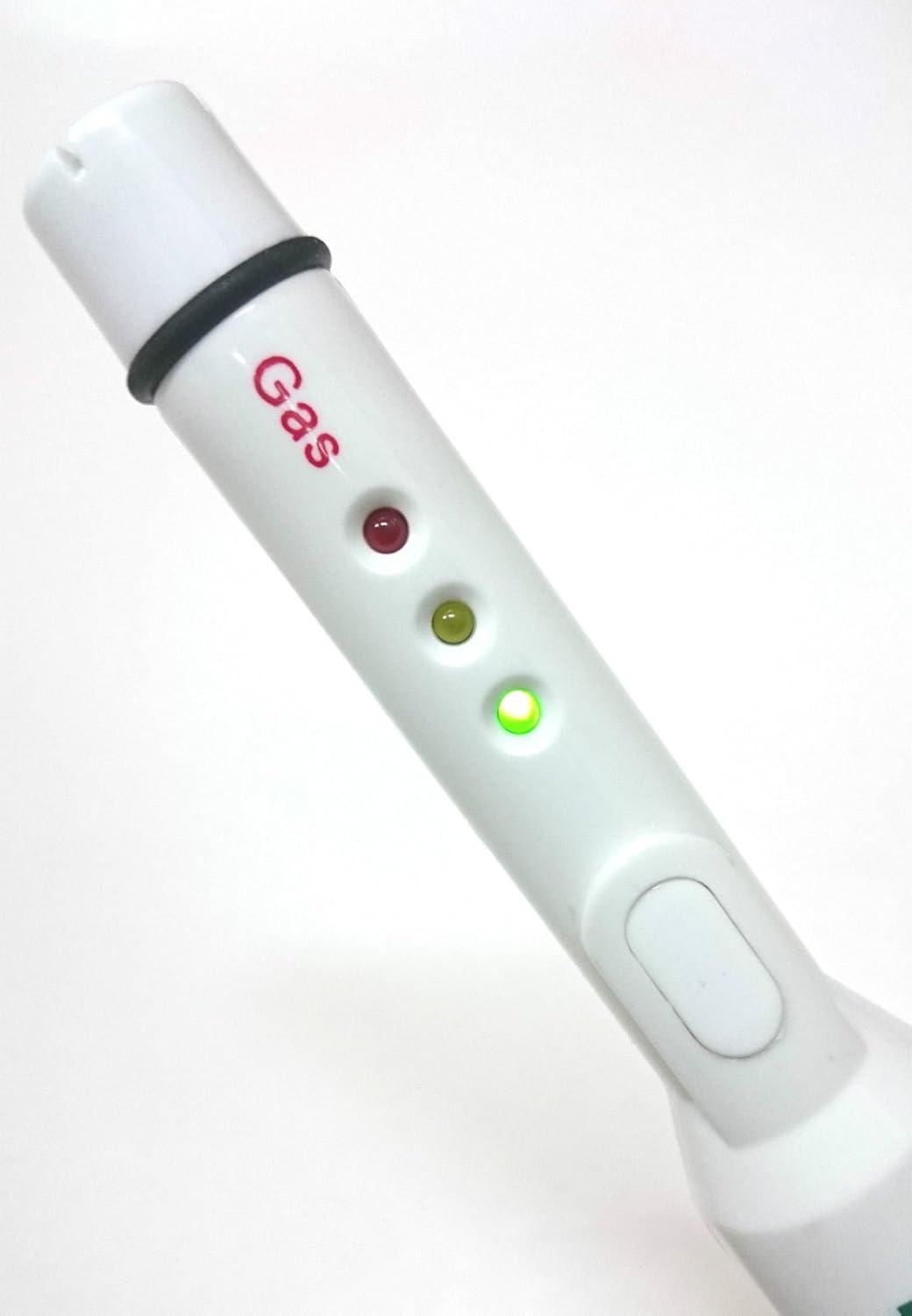
Nọmba 4.3: Apa view of the GA0080, illustrating the three LED indicators (green, yellow, red) for visual alarm signals.
- Ori sensọ: Located at the tip, responsible for detecting gas.
- Ifihan Digital: Shows gas concentration in ppm.
- Bọtini agbara: Yipada ẹrọ si tan/pa.
- Awọn itọkasi LED: Provide visual alarm signals (Green, Yellow, Red).
- Abala Batiri: Houses two AA 1.5V batteries.
5. Eto
5.1 Fifi sori batiri
- Wa ideri iyẹwu batiri ni ẹhin ẹrọ naa.
- Gbe tabi yọ ideri naa kuro lati ṣii yara naa.
- Insert two (2) AA 1.5V batteries, ensuring correct polarity (+/-).
- Pa ideri batiri naa ni aabo.
Note: Always use fresh batteries for optimal performance. Remove batteries if the device will not be used for an extended period.
6. Isẹ
6.1 Lilo ati Imudara
- Tẹ mọlẹ bọtini agbara titi ti ẹrọ yoo fi tan.
- The device will enter a warm-up phase, which takes approximately 200 seconds. During this time, the display may show a countdown or "Warm Up".
- Once warm-up is complete, the device is ready for use, and the display will show "0 ppm" or a low background reading.
6.2 Detecting Gas Leaks
- Move the sensor head slowly along gas lines, connections, and potential leak points.
- The device detects gas in the range of 0 to 9999 ppm with a resolution of 100 ppm.
- Visual Alarm Indicators:
- Green Green: Indicates normal operation or very low gas levels.
- LED ofeefee: Illuminates when gas concentration reaches approximately 2% LEL (Lower Explosive Limit), indicating a potential leak.
- LED pupa: Illuminates when gas concentration reaches approximately 10% LEL, indicating a significant leak and a higher risk.
- An audible alarm (2.713kHz / 100ms) will also sound when gas levels exceed the alarm thresholds.
- The digital display will show the detected gas concentration in parts per million (ppm).
6.3 Agbara Pa
Press and hold the Power button until the device turns off.
7. Itọju
- Ninu: Mu ẹrọ naa nu pẹlu asọ ti o gbẹ. Ma ṣe lo abrasive ose tabi epo.
- Ibi ipamọ: Tọ́jú ẹ̀rọ náà sí ibi gbígbẹ tí ó tutù, tí kò sí ìmọ́lẹ̀ oòrùn tààrà tàbí ooru tó le gan-an. Yọ àwọn bátìrì kúrò tí o bá ń tọ́jú rẹ̀ fún ìgbà pípẹ́.
- Itọju Sensọ: Avoid exposing the sensor head to liquids, dust, or harsh chemicals, as this can affect its accuracy and lifespan.
8. Laasigbotitusita
| Isoro | Owun to le Fa | Ojutu |
|---|---|---|
| Ẹrọ naa ko ṣiṣẹ. | Awọn batiri ti o ku tabi ti ko tọ ti fi sori ẹrọ. | Rọpo awọn batiri pẹlu awọn batiri AA 1.5V tuntun, ki o rii daju pe o peye polarity. |
| Awọn kika aipe tabi aisedede. | Sensor not fully warmed up; sensor contamination; low battery. | Allow full warm-up time (200 seconds). Ensure sensor head is clean. Replace batteries. |
| Device constantly alarms in a clean environment. | High background gas levels; sensor malfunction. | Move to a well-ventilated area to check if the alarm stops. If the issue persists, contact customer support. |
| No alarm when gas is present. | Gas concentration below alarm threshold; device malfunction. | Ensure gas concentration is sufficient to trigger an alarm (2% LEL for yellow, 10% LEL for red). Test with a known gas source if safe to do so. Contact customer support if malfunction is suspected. |
9. Awọn pato
| Awọn Gas iwari | Natural Gas (NG), Methane, Propane, Butane |
| Sensọ Iru | Catalytic Method Gas Sensor |
| Aago igbona | Laarin ọgbọn iṣẹju |
| Ibiti wiwa | 0 ~ 9999 ppm |
| Ipinnu | 100ppm |
| Itaniji LED | Three colors (Green, Yellow, Red) |
| Awọn ifilelẹ Itaniji | Yellow LED: ~2% LEL; Red LED: ~10% LEL |
| Itaniji Ngbohun | 2.713kHz / 100ms |
| Awọn iwọn otutu ṣiṣẹ | -20°C ~ 70°C (-4°F ~ 158°F) |
| Ọriniinitutu ṣiṣẹ | O kere ju 90% RH |
| Orisun agbara | Awọn batiri 2 x AA 1.5V (kii ṣe pẹlu) |
| Awọn iwọn (L x W x H) | 220 x 20 x 20 mm (8.66" x 0.79" x 0.79") |
| Iwọn | Isunmọ. 80g (2.82 iwon) |
10. Atilẹyin ọja ati Support
For warranty information or technical support, please contact PerfectPrime customer service. Refer to the product packaging or the official PerfectPrime webAaye fun awọn alaye olubasọrọ lọwọlọwọ julọ.
Webojula: www.perfectprime.com
Awọn iwe aṣẹ ti o jọmọ - GA0080
 |
PerfectPrime AR168 Digital Ipa Gauge Ilana itọnisọna Instruction manual for the PerfectPrime AR168 Digital Pressure Gauge, covering product introduction, basic functions, technical performance, measurement ranges, symbol definitions, button operations, precautions, and additional information. |
 |
PerfectPrime TC0520 USB Interface Protocol Guide A comprehensive guide to the USB interface protocol for the PerfectPrime TC0520 datalogger thermometer, detailing commands, data output, and error checking. |
 |
PerfectPrime TC0580 Thermocouple Temperature Data Logger Instruction Manual This instruction manual provides comprehensive guidance on the PerfectPrime TC0580 Thermocouple Temperature Data Logger. It covers product features, specifications, software installation, device operation, data logging, viewing, exporting, and troubleshooting. |