Ọrọ Iṣaaju
The MOOER Ocean Machine TDL3 is a versatile multi-effects pedal designed for electric guitar, combining two independent delays, a high-fidelity reverb, and an audio looper. This manual provides detailed instructions for setting up, operating, and maintaining your device to ensure optimal performance and creative expression.

Nọmba 1: Iwaju view of the MOOER Ocean Machine TDL3 multi-effects pedal, showcasing awọn iṣakoso ati ifihan rẹ.
Ṣeto
Awọn ibeere agbara
The Ocean Machine TDL3 requires a 9V DC power supply with a minimum current of 500mA. Ensure the power supply is center-negative. Using an incorrect power supply can damage the unit and void the warranty.
- Voltage: 9 Volts DC
- Lọwọlọwọ: 500mA (o kere ju)
- Polarity: Aarin-odi
Awọn isopọ
Connect your guitar and amplifier to the appropriate input and output jacks. The pedal supports both mono and stereo configurations.
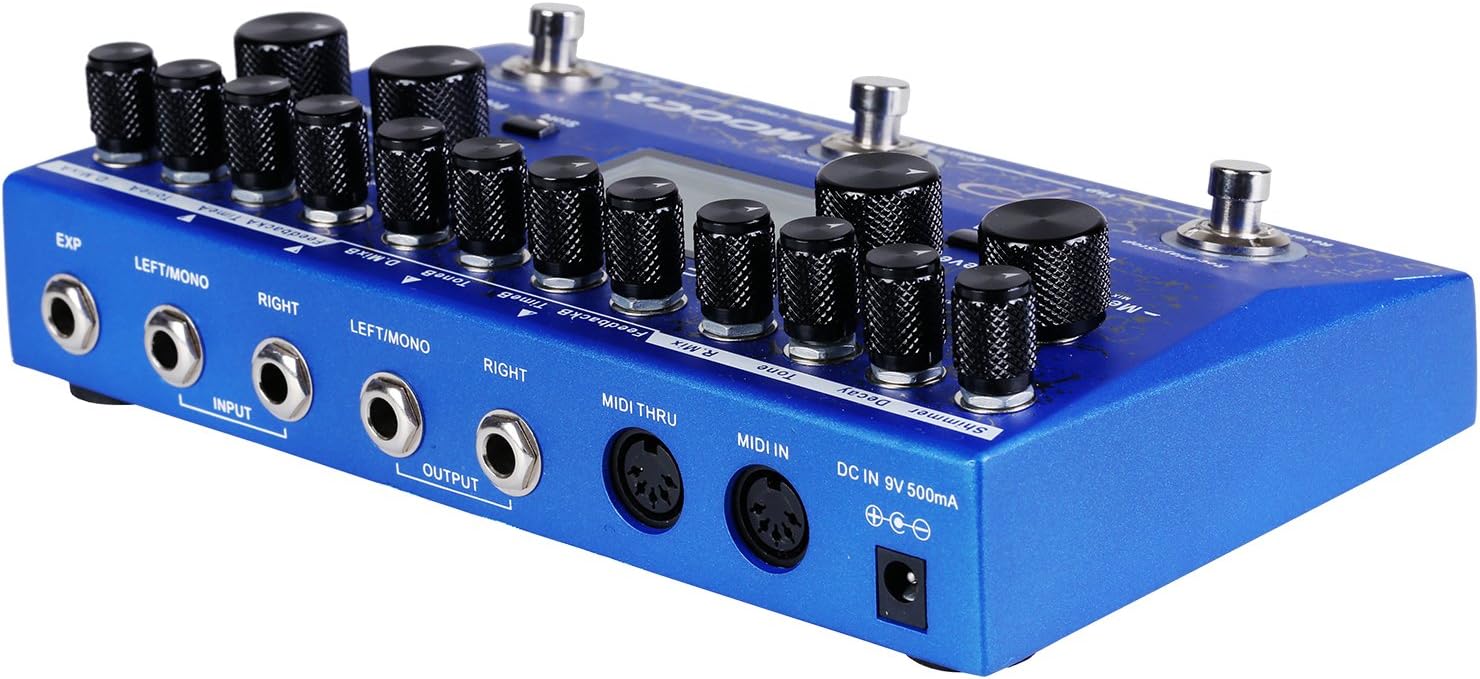
Nọmba 2: Ẹyìn view of the MOOER Ocean Machine TDL3, showing input/output jacks, MIDI ports, and power input.
- Input (LEFT/MONO, RIGHT): Connect your instrument to the LEFT/MONO input for mono operation. For stereo input, connect to both LEFT/MONO and RIGHT inputs.
- Output (LEFT/MONO, RIGHT): Sopọ si rẹ amplifier or audio interface. Use LEFT/MONO for mono output. For stereo output, connect to both LEFT/MONO and RIGHT outputs.
- EXP: Connect an external expression pedal for real-time control over various parameters.
- MIDI IN/THRU: Connect to MIDI devices for external control and synchronization.
- DC IN 9V 500mA: Connect the specified 9V DC power adapter.
Awọn ilana Iṣiṣẹ
The Ocean Machine TDL3 offers extensive control over its delay, reverb, and looper functions. Familiarize yourself with the main controls and display.
Main Controls Overview
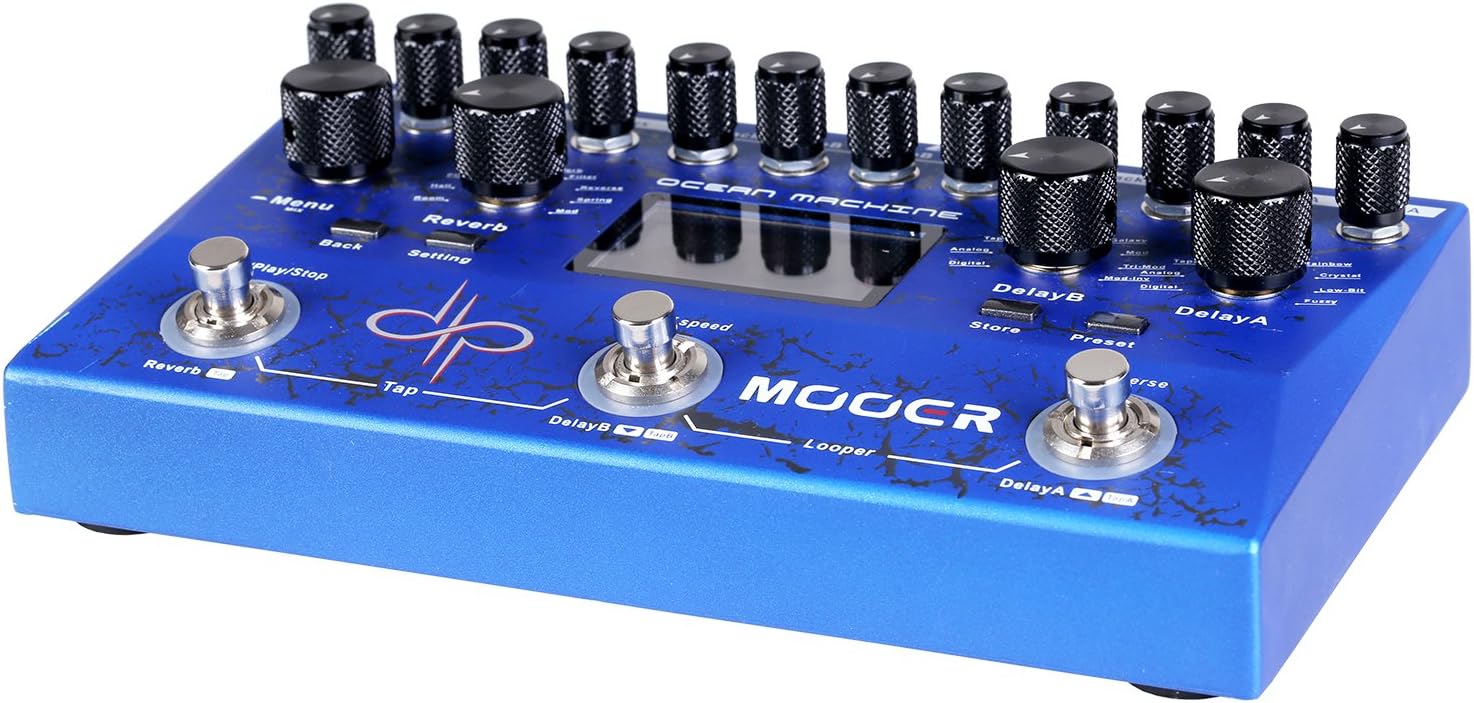
Nọmba 3: Oke view of the MOOER Ocean Machine TDL3, highlighting the various knobs and footswitches.
- MENU Knob: Navigates through menus and adjusts parameters on the LCD screen.
- REVERB Section: Controls for Mix, Tone, Decay, Shimmer, and Reverb Type.
- DELAY A Section: Controls for Mix, Feedback, Time, and Delay Type.
- DELAY B Section: Controls for Mix, Feedback, Time, and Delay Type.
- Footswitches (REVERB, DELAY B, DELAY A): Activate/deactivate effects, tap tempo, and looper functions.
- Ifihan LCD: Shows current settings, preset information, and menu options.
Awọn iṣẹ idaduro
The pedal features two independent delays (Delay A and Delay B) with 15 different delay types and a delay time range of 0-2 seconds. Each delay can be configured with optional ping-pong effects.
- Delay Types: Explore various delay algorithms including Analog, Digital, Tape, Modulated, Reverse, and more.
- Àkókò: Adjusts the delay time. Can be synchronized via Tap Tempo.
- Esi: Controls the number of delay repeats.
- Àdàpọ̀: Adjusts the wet/dry balance of the delay effect.
Reverb Functions
A high-fidelity reverb section offers 9 different reverb types and a shimmer effect for ambient textures.
- Awọn oriṣi Reverb: Includes Hall, Plate, Room, Spring, Modulated, Filter, Reverse, and Shimmer.
- Ibajẹ: Ó ń ṣàkóso gígùn ìrù ìrọ̀rùn.
- Ohun orin: Adjusts the brightness or darkness of the reverb.
- Shimmer: Adds an octave-up effect to the reverb tail.
- Àdàpọ̀: Adjusts the wet/dry balance of the reverb effect.
Looper Išė
The integrated audio looper provides 32 MB of storage memory, allowing up to 44 seconds of recording time.
- Record/Play/Stop: Controlled by the dedicated footswitch (typically the REVERB footswitch in Looper mode).
- Apọju: Layer additional guitar parts over your recorded loop.
- Yipada/Túnṣe: Correct mistakes during overdubbing.
Modes of Operation and Presets
The Ocean Machine TDL3 features multiple operational modes and the ability to save and recall presets.

Nọmba 4: Close-up of the LCD screen showing various settings and parameters, including delay and reverb types.
- Ipo Live: Allows direct control of effects via knobs and footswitches.
- Ipo Tto tẹlẹ: Recall saved combinations of delay, reverb, and looper settings. The pedal offers a multitude of programmable options via the LCD menu.
- Fifipamọ awọn tito tẹlẹ: To save a preset, adjust your desired settings, then navigate through the menu using the MENU knob to find the "Store" option. Confirm to save.
- Effect Chain Order: The pedal allows you to reorder the internal effect chain (Delay A, Delay B, Reverb) to customize your sound. This is accessible through the system menu.
Iṣakoso MIDI
The Ocean Machine TDL3 is MIDI programmable, allowing integration with other MIDI-enabled devices for advanced control and synchronization.
- Program Change (PC) Messages: Recall specific presets.
- Control Change (CC) Messages: Control individual parameters in real-time.
- MIDI nipasẹ: Passes MIDI data to other devices in a chain.
Agbaye Eto
Access the global settings menu to adjust overall parameters such as Global EQ, input/output levels, and other system configurations.
- EQ agbaye: Fine-tune the overall tonal response of the pedal.
- Input/Output Levels: Optimize signal levels for seamless integration with various instruments and setups.
Itoju
To ensure the longevity and optimal performance of your MOOER Ocean Machine TDL3, follow these maintenance guidelines:
- Ninu: Use a soft, dry cloth to clean the pedal's surface. Avoid abrasive cleaners or solvents.
- Ibi ipamọ: Tọ́jú pedal náà sí ibi tí ó tutù tí ó sì gbẹ, tí kò sí ibi tí oòrùn lè tàn dé àti ibi tí ó gbóná janjan.
- Agbara: Nigbagbogbo ge asopọ ipese agbara nigbati ẹsẹ ko ba si ni lilo fun awọn akoko ti o gbooro sii.
- Knobs and Footswitches: Handle controls gently. If any knobs feel loose, they may need to be re-secured by a qualified technician.
Laasigbotitusita
If you encounter issues with your Ocean Machine TDL3, refer to the following common troubleshooting steps:
- Ko si Ohun:
- Ṣàyẹ̀wò gbogbo àwọn ìsopọ̀ okùn (ẹ̀rọ, ampolùgbéga, agbára).
- Ensure the power supply meets the 9V DC, 500mA, center-negative specifications.
- Verify that the pedal is powered on and effects are engaged.
- Check input/output levels in the global settings.
- Ariwo/Ìró Aláìròtẹ́lẹ̀:
- Rí i dájú pé gbogbo àwọn okùn wa ni ààbò tó péye àti pé wọ́n wà ní ipò tó dára.
- Try a different power outlet or isolated power supply.
- Ṣàyẹ̀wò fún àwọn ìyípo ilẹ̀ nínú ẹ̀wọ̀n àmì rẹ.
- Tap Tempo Not Working in Preset Mode:
- In Preset Mode, the tap tempo footswitch requires delay sub-divisions to be set.
- Navigate to the desired preset.
- Press REVERB + DELAY B footswitches simultaneously to enter preset edit mode.
- Press the MENU knob once.
- Rotate the MENU knob until "TempoB:" is highlighted and press the knob to enter sub-division settings.
- Press the MENU knob to turn sub-division on, select the desired sub-division, and press "back" to return.
- Press REVERB + DELAY B footswitches simultaneously to exit edit mode. Save the preset if satisfied.
- Awọn oran Ifihan LCD:
- Ensure the pedal is receiving adequate power.
- If the display is unresponsive, try power cycling the unit.
Awọn pato
| Ẹya ara ẹrọ | Sipesifikesonu |
|---|---|
| Nọmba awoṣe | TDL3 |
| Awọn iwọn (L x W x H) | 4.1 x 1.9 x 2.3 inches |
| Iwọn Nkan | 6.4 iwon |
| Agbara ibeere | 9V DC, 500mA, Center-Negative |
| Delay Types | 15 (2 independent delays) |
| Reverb Orisi | 9 (with Shimmer effect) |
| Looper Recording Time | Up to 44 seconds (32 MB storage) |
| Asopọmọra | Stereo Input/Output, Expression Pedal Input, MIDI IN/THRU |
| Ni wiwo Hardware | Ethernet (Note: This specification from product data may refer to internal communication or a specific feature not typically user-facing for a guitar pedal.) |
| Ilana ifihan agbara | Analog |
| Akọkọ Wa Ọjọ | Oṣu Kẹta Ọjọ 10, Ọdun 2017 |
Atilẹyin ọja ati Support
MOOER products are designed for reliability and performance. For warranty information and technical support, please refer to the official MOOER webaaye tabi kan si olupin agbegbe rẹ. Jeki ẹri rira rẹ fun awọn iṣeduro atilẹyin ọja.
- Official MOOER Webojula: www.mooeraudio.com
- Iṣẹ onibara: Contact information can typically be found on the official webaaye tabi apoti ọja.


