1. Ifihan
The Korg CM-300 Contact Microphone is designed to enhance and expand the sound of your musical instrument. Utilizing a piezo element, it directly transmits vibrations from your instrument to a tuner, facilitating high-precision tuning even in environments with high ambient sound. This microphone is versatile and can be applied to various instruments including trumpets, trombones, saxophones, violins, guitars, and ukuleles.
2. Awọn ẹya ara ẹrọ
- Sound Transmission: Specifically designed for tuning instruments in loud ensembles by directly capturing instrument vibrations.
- Iduroṣinṣin Asomọ: Features an internal rubber grip within the clip for secure attachment to various instruments.
- Imudara Itọju: The cable design includes updated strain-relief slits where it joins the clip, reducing wire stress for increased longevity.
- Ibamu gbooro: Suitable for a wide range of instruments including trumpet, trombone, saxophone, violin, guitar, and ukulele.
- Clip Mechanism: The clip opens to a maximum of 1.2 inches (30mm) and connects via a 1/4-inch TS Plug to a tuner.
3. Package Awọn akoonu
- Korg CM-300 Contact Microphone (Black)
4. Eto
To set up your Korg CM-300 Contact Microphone, follow these steps:
- Ṣe idanimọ Ojuami Asomọ: Choose a suitable location on your instrument for the clip. Recommended points include the bell of a brass instrument, the bridge of a violin, or the headstock of a guitar or ukulele.
- So Agekuru naa: Gently open the clip (it can open up to 1.2 inches or 30mm) and securely attach it to the chosen part of your instrument. Ensure the internal rubber material makes firm contact to prevent slippage and optimize vibration transmission.
- Connect to Tuner: Insert the 1/4-inch TS plug of the microphone cable into the input jack of your compatible electronic tuner.
- Okun ipo: Route the cable in a way that does not interfere with your playing or instrument movement, and avoids excessive strain on the cable or connector.

Image: Korg CM-300 Contact Microphone attached to a clarinet. The clip securely holds the microphone to the instrument, ready for tuning.
5. Awọn ilana Iṣiṣẹ
Once the Korg CM-300 is properly set up and connected to your tuner, operating it is straightforward:
- Power On Tuner: Turn on your electronic tuner.
- Play Instrument: Play a note on your instrument as you normally would. The CM-300's piezo element will detect the vibrations directly from the instrument's body.
- Observe Tuner Display: The vibrations are converted into an electrical signal and sent to the tuner, which will then display the detected pitch.
- Tune Instrument: Adjust your instrument's tuning based on the feedback provided by your tuner. The direct vibration transmission ensures accurate tuning even in noisy environments.
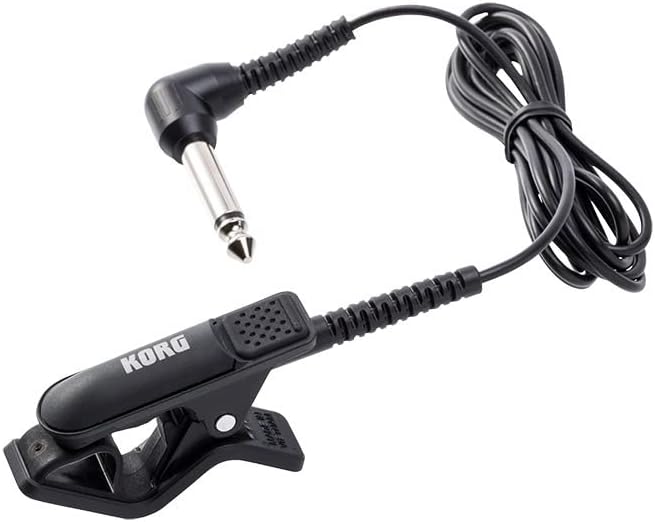
Image: The Korg CM-300 Contact Microphone, showing its clip, cable, and 1/4-inch TS plug. This plug connects directly to a compatible tuner.
6. Itọju
Proper maintenance will ensure the longevity and optimal performance of your Korg CM-300 Contact Microphone:
- Ninu: Wipe the microphone body and cable with a soft, dry cloth. Avoid using abrasive cleaners, solvents, or excessive moisture, as these can damage the rubber and electronic components.
- Ibi ipamọ: When not in use, store the microphone in a clean, dry place away from extreme temperatures and direct sunlight. Avoid tightly coiling the cable to prevent kinks and damage.
- Itọju USB: Handle the cable gently. Do not pull on the cable to disconnect the plug from the tuner. Always grasp the plug itself. The updated strain-relief slits are designed to reduce stress, but proper handling is still crucial.
- Ayewo agekuru: Periodically check the clip and its internal rubber grip for any signs of wear or damage. A damaged clip may not provide secure attachment or optimal vibration transfer.
7. Laasigbotitusita
If you encounter issues with your Korg CM-300, consider the following:
- No Signal on Tuner:
- Ensure the 1/4-inch TS plug is fully inserted into the tuner's input jack.
- Verify that the tuner is powered on and functioning correctly (test with another input source if possible).
- Check the microphone cable for any visible damage or kinks.
- Ensure the clip is securely attached to the instrument and making good contact.
- Inaccurate Tuning/Interference:
- Confirm the microphone is attached to a part of the instrument that vibrates strongly and clearly (e.g., bell, bridge, headstock).
- Minimize external noise sources if possible, although the CM-300 is designed for noisy environments, extreme noise can still affect performance.
- Ensure the tuner's settings are appropriate for the instrument being tuned.
- Loose Clip:
- Re-position the clip to a more secure location on the instrument.
- Check the internal rubber grip for wear; if worn, the grip may be compromised.
8. Awọn pato
| Ẹya ara ẹrọ | Ẹ̀kúnrẹ́rẹ́ |
|---|---|
| Orukọ awoṣe | CM-300 |
| Brand | Korg |
| Asopọmọra Technology | XLR (Note: Product description states 1/4-inch TS Plug, this specification might be a general category or error in source data. Please refer to product description for actual connector type.) |
| Asopọmọra Iru | XLR (Note: Product description states 1/4-inch TS Plug, this specification might be a general category or error in source data. Please refer to product description for actual connector type.) |
| Pataki Ẹya | Apẹrẹ gige-lori |
| Awọn ẹrọ ibaramu | Amplifier, Audio Interface, Tuners |
| Àwọ̀ | Dudu |
| Ohun elo | Roba |
| Iwọn Nkan | 0.01 iwon |
| Ọja Mefa | 9.1 x 9.1 x 9.1 inches |
| Gbohungbo Fọọmù ifosiwewe | Lavalier (Àwòrán ìkọ̀wé) |
| Orisun agbara | Okun Itanna |
| Ifihan Ibuwọlu-si-Noise | 76 dB |
| Nọmba ti awọn ikanni | 1 |
| Pola Àpẹẹrẹ | Unidirectional |
| UPC | 663701771404 |
| Olupese | Korg |
| Ọjọ Akọkọ Wa | Oṣu Kẹwa Ọjọ 9, Ọdun 2018 |
Note: Some specifications like "Connectivity Technology" and "Connector Type" are listed as XLR in the provided data, but the product description clearly states "1/4-inch TS Plug". Please rely on the product description for the correct connector type.
9. Atilẹyin ọja ati Support
For warranty information and technical support regarding your Korg CM-300 Contact Microphone, please refer to the official Korg website or contact Korg customer service directly. Keep your proof of purchase for any warranty claims.
Fun iranlọwọ siwaju sii, o le ṣabẹwo si Korg Store on Amazon.


