1. Ifihan
This instruction manual provides essential information for the safe and effective installation, operation, and maintenance of your Mi-Heat Outdoor Heating Mat, model EcoFROST-MT-750-2.5/300. This system is designed to prevent ice and snow accumulation on outdoor surfaces such as driveways, garage access points, outdoor stairs, ramps, and decks.
Jọwọ ka iwe afọwọkọ yii daradara ṣaaju fifi sori ati lo, ki o si mu u duro fun itọkasi ọjọ iwaju.
2. Alaye Aabo pataki
IKILO: Electrical installation should only be performed by a qualified electrician in accordance with all local and national electrical codes and regulations.
- Máa yọ agbára kúrò kí o tó fi tàbí ṣe àtúnṣe sí aṣọ ìgbóná náà.
- Maṣe ge tabi kuru okun alapapo.
- Ensure the heating mat is not overlapped or installed in a manner that could cause overheating.
- Dáàbò bo aṣọ ìgbóná náà kúrò lọ́wọ́ ìbàjẹ́ ẹ̀rọ nígbà àti lẹ́yìn fífi sori ẹrọ.
- Eto naa gbọdọ wa ni ipilẹ daradara.
- Use a Residual Current Device (RCD) for additional protection.
- The heating mat is designed for outdoor use and is resistant to corrosion, acids, and alkalis.
3. Ọja Ipariview
The Mi-Heat Outdoor Heating Mat is a robust, two-wire heating system with Twin technology, designed for durability and resistance to environmental factors. It features pre-assembled heating cables in a loop formation for simplified installation.
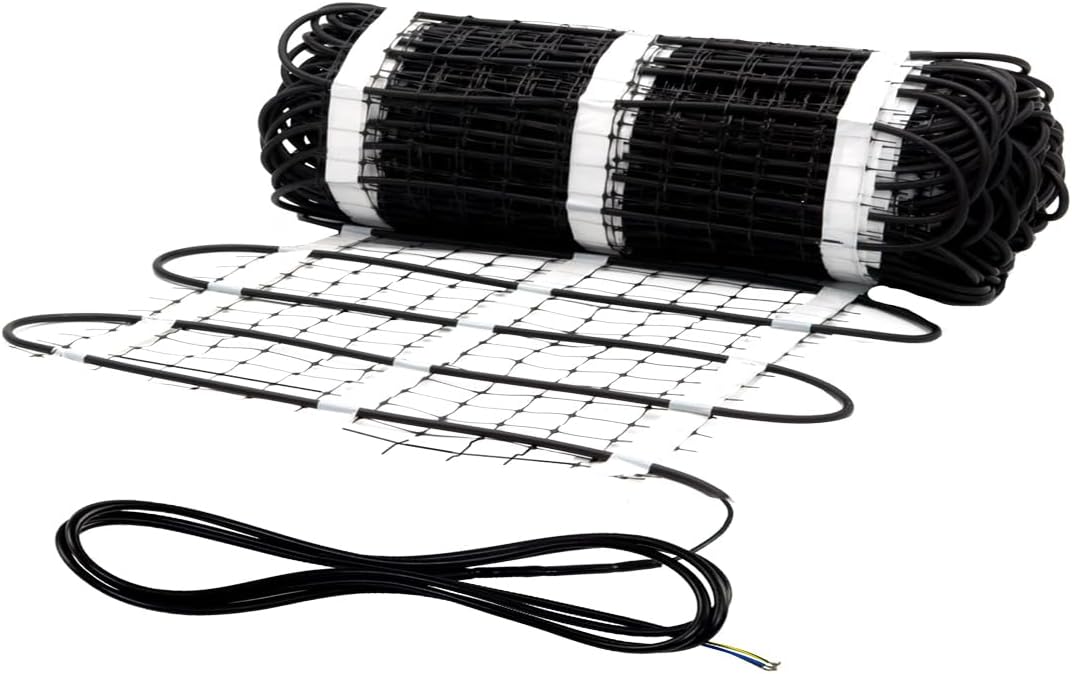
Image 1: The Mi-Heat Outdoor Heating Mat, shown rolled up with its connection cable. This mat is designed for efficient snow and ice melting.

Image 2: Diagram illustrating key specifications of the heating mat, including its 50 cm width, 230 Volt operating voltage, 300 W/m² power output, and 3.8 m connection cable length.
4. Itọsọna fifi sori ẹrọ
The Mi-Heat Outdoor Heating Mat is designed for installation under various outdoor surfaces. Proper installation is crucial for optimal performance and longevity.
4.1 Igbaradi Aye
- Ensure the installation area is clear of debris and has a stable, level base.
- Plan the layout of the heating mat to cover the desired area, ensuring adequate spacing from walls or other structures as per local regulations.
- The mat can be laid in sand, gravel under paving stones, in concrete, or screed.
4.2 Laying the Heating Mat
- Unroll the heating mat carefully over the prepared surface. The heating elements are 50 cm wide and are fixed in a loop formation for easy deployment.
- Ensure the mat lies flat and is not creased or folded.
- Position the mat to avoid overlapping heating cables, which can lead to overheating.
- The connection cable (cold lead) should be routed to the junction box or thermostat location. The cable length is 3.8 meters.

Image 3: Illustrative diagram showing the heating mat installed beneath paving stones on a driveway, demonstrating how it prevents snow and ice accumulation.

Image 4: A worker placing the heating mat between layers of grit, a common method for installation under pavers or other surface materials.
4.3 Covering the Mat
- Once the mat is correctly positioned, cover it with the chosen material (sand, gravel, concrete, or screed).
- Ensure the covering material is evenly distributed and compact to protect the heating elements.
- The mat is suitable for mastic asphalt and resistant to processing temperatures up to 240 °C (464 °F).

Image 5: This image highlights the mat's compatibility with mastic asphalt and its resistance to high processing temperatures, up to 240°C (464°F).
4.4 Itanna Asopọ
- Connect the heating mat to a suitable power supply via a thermostat with a floor sensor.
- Rí i dájú pé gbogbo àwọn ìsopọ̀ iná mànàmáná kò ní omi, wọ́n sì ní ààbò láti ọ̀dọ̀ àwọn èròjà àyíká.
- A qualified electrician must perform all electrical wiring.
5. Isẹ
The Mi-Heat Outdoor Heating Mat system is designed for automated snow and ice melting when paired with an appropriate thermostat and sensor.
5.1 Thermostat Iṣakoso
- The system should be controlled by a thermostat equipped with a floor sensor to detect temperature and moisture, allowing for efficient and demand-based operation.
- Mi-Heat recommends the PT350 thermostat for optimal performance, especially for use down to -40 °C.
- Refer to your thermostat's instruction manual for specific operating procedures and settings.

Aworan 6: Example of a control unit, such as the ET02 Controller, which manages the heating mat's operation based on sensor input.

Image 7: An outdoor sensor, crucial for detecting ambient temperature and moisture to activate the heating system only when necessary.
5.2 Snow and Ice Melting
When activated, the heating mat will warm the surface above it, melting snow and ice to keep pathways, driveways, and other areas clear and safe.

Image 8: A clear pathway in a snowy environment, demonstrating the effectiveness of the heating mat in maintaining snow-free surfaces.

Image 9: A side-by-side comparison showing a snow-covered driveway (Before) and the same driveway after the heating system has cleared the snow (After).

Image 10: Another visual comparison of a snow-covered driveway (left) and a clear, wet driveway (right) after the heating mat has been in operation.
6. Itọju
The Mi-Heat Outdoor Heating Mat system requires minimal maintenance once properly installed.
- Ayewo Ọdọọdun: It is recommended to have a qualified electrician inspect the system annually before the winter season to ensure all components are functioning correctly and safely.
- Iduroṣinṣin Dada: Periodically check the surface above the heating mat for any signs of damage or shifting that could affect the mat's performance or integrity.
- Thermostat Check: Verify the thermostat and sensors are clean and free from obstructions. Test the system's activation if your thermostat has a test function.
- Yago fun bibajẹ: Do not use sharp objects or heavy machinery that could damage the underlying heating mat.
7. Laasigbotitusita
If your Mi-Heat Outdoor Heating Mat system is not functioning as expected, consider the following common issues:
- Ko si ijade Ooru:
- Check if the power supply to the system is active.
- Verify the thermostat settings. Ensure it is set to an appropriate temperature and that the sensor is detecting cold/moisture.
- Check circuit breakers or RCDs for trips.
- Uneven Melting:
- This could indicate an issue with the mat's installation (e.g., uneven laying, damage during installation) or a localized fault. Contact a qualified electrician for inspection.
- System Not Activating Automatically:
- Inspect the floor sensor for damage or obstruction.
- Review thermostat programming to ensure automatic mode is enabled and thresholds are correctly set.
For complex issues or if troubleshooting steps do not resolve the problem, contact a qualified electrician or Mi-Heat customer support.
8. Imọ ni pato
| Ẹya ara ẹrọ | Sipesifikesonu |
|---|---|
| Brand | Mi-Heat |
| Nọmba awoṣe | EcoFROST-MT-750-2.5/300 (562-004) |
| Agbegbe Agbegbe | 2.5 m² |
| Awọn iwọn | 0.5 m x 5.0 m (Width x Length) |
| Ijade agbara | 300 W/m² |
| Orisun agbara | Cable ina |
| Max. Temperature Setting | 240 Degree Celsius (464°F) |
| Asopọ USB Ipari | 3.8 m |
| Atako | Resistant to spherical acids and alkalis |
9. Atilẹyin ọja ati Support
Information regarding specific warranty terms for the Mi-Heat Outdoor Heating Mat is not available in this document. Please refer to your purchase documentation or contact the seller, infrarot-fussboden-de, for details on warranty coverage and customer support.
For technical assistance or inquiries, please contact the manufacturer or your point of purchase.


