Ọrọ Iṣaaju
This manual provides essential information for the safe and efficient operation, maintenance, and troubleshooting of your Pretul 20 L, 2-1/2 HP (maximum power), 120 V Compressor. Please read this manual thoroughly before using the compressor to ensure proper handling and to prevent injury or damage.

Image: Pretul 20 L Air Compressor, a yellow and black portable unit with wheels and a handle.
Alaye Aabo
IKILO: Ikuna lati tẹle awọn ilana aabo le fa ipalara nla tabi ibajẹ ohun-ini.
- Always wear appropriate personal protective equipment (PPE), such as safety glasses, when operating the compressor.
- Rí i dájú pé a gbé ìkọ́rọ̀mọ́ náà sí orí ilẹ̀ tí ó dúró ṣinṣin, tí ó tẹ́jú láti dènà kí ó rì.
- Ma ṣe ṣiṣẹ konpireso ni tutu tabi damp conditions, or near flammable liquids or gases.
- Before performing any maintenance or adjustments, always disconnect the compressor from the power source and release all air pressure from the tank.
- Jeki awọn ọmọde ati awọn aladuro kuro ni agbegbe iṣẹ.
- Máa ṣe àyẹ̀wò okùn agbára déédéé fún ìbàjẹ́. Má ṣe lò ó bí okùn náà bá ti bàjẹ́ tàbí tí ó bá ti bàjẹ́.
- Má ṣe yí compressor tàbí àwọn èròjà rẹ̀ padà. Lo àwọn ẹ̀yà ìyípadà àtilẹ̀bá nìkan.
Ọja Pariview ati irinše
Familiarize yourself with the various parts of your Pretul air compressor before operation.
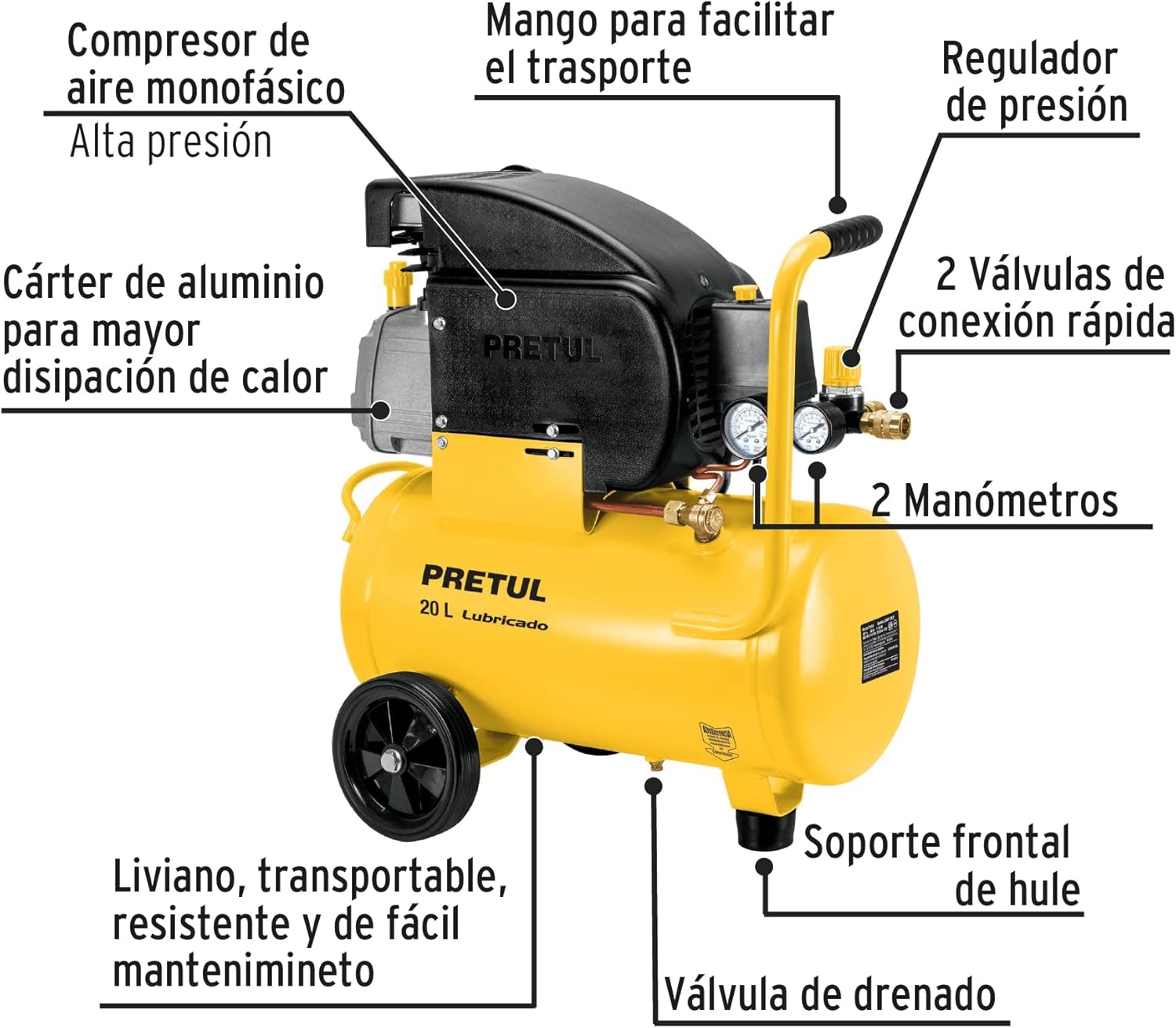
Image: Diagram showing the labeled components of the Pretul air compressor, including the single-phase air compressor, aluminum crankcase, transport handle, pressure regulator, quick-connect valves, pressure gauges, rubber front support, drain valve, and lightweight, transportable, resistant, and easy-to-maintain design.
- Single-phase air compressor: The main unit that compresses air.
- Aluminum Crankcase: Designed for better heat dissipation.
- Ọkọ gbigbe: Fun irọrun gbigbe.
- Olutọsọna titẹ: Ṣe àtúnṣe titẹ afẹfẹ ti o wu jade.
- Quick-Connect Valves: For attaching air tools and hoses.
- Àwọn Òṣùwọ̀n Ìfúnpá: Display tank pressure and regulated output pressure.
- Rubber Front Support: Provides stability.
- Sisan Ikun: Located at the bottom of the tank for moisture removal.
- Awọn kẹkẹ: For easy movement of the compressor.
Awọn pato
Key technical specifications for the Pretul 20 L Air Compressor.
| Ẹya ara ẹrọ | Sipesifikesonu |
|---|---|
| Brand | Pretul |
| Orukọ awoṣe | 23065 |
| Nọmba apakan | COMP-20LP |
| Voltage | 120 Volts |
| Agbara to pọju | 2.5 Agbara ẹṣin |
| Agbara | 20 liters (5.2 galonu) |
| Ariwo Ipele | 69 dB |
| Orisun agbara | Okun Itanna |
| Iwọn Nkan | kilo 21 (46.2 poun) |
| Awọn iwọn Ọja (L x W x H) | 20.87 x 13.39 x 22.83 inches (53 x 34 x 58 cm) |
| Niyanju Lilo | Blow Cleaning, Spraying, Tire Inflation |
| Pataki Ẹya | Built-In Gauge |

Image: Diagram illustrating the dimensions of the Pretul air compressor: Height 58 cm, Depth 53 cm, Base 34 cm.
Ṣeto
1. Unpacking ati ayewo
Carefully remove the compressor from its packaging. Inspect the unit for any signs of damage that may have occurred during shipping. Report any damage to your retailer immediately.

Image: The Pretul air compressor inside its retail packaging, showing the product details on the box.
2. Ifiweranṣẹ
Place the compressor on a firm, level surface in a clean, well-ventilated area. Ensure there is adequate space around the unit for air circulation and maintenance access. Avoid placing it near heat sources or in direct sunlight.
3. Asopọ agbara
Connect the compressor to a grounded 120 V electrical outlet. Ensure the circuit can handle the compressor's power requirements (2.5 HP maximum power).
4. Oil Check (for oil-lubricated models)
This is an oil-lubricated compressor. Before first use, and periodically thereafter, check the oil level. Ensure the oil level is between the minimum and maximum marks on the dipstick or sight glass. Add appropriate compressor oil if necessary.
5. Handle and Wheel Assembly (if not pre-assembled)
If the handle and wheels are not pre-assembled, attach them according to the included hardware. The handle is designed for easy transport.

Image: A person demonstrating how to transport the Pretul air compressor using its integrated handle and wheels.
Awọn ilana Iṣiṣẹ
1. Ibẹrẹ ibẹrẹ
- Ensure the drain valve at the bottom of the tank is closed.
- Plug the compressor into a suitable electrical outlet.
- Yi iyipada agbara pada si ipo "ON". Konpireso naa yoo bẹrẹ si ni titẹ sii.
- Allow the compressor to reach its maximum pressure and shut off automatically. This indicates the pressure switch is functioning correctly.
2. Adjusting Output Pressure
The compressor features a pressure regulator to control the air pressure delivered to your tools.
- Attach your air hose and tool to one of the quick-connect valves.
- Turn the pressure regulator knob (usually located near the output gauges) clockwise to increase pressure and counter-clockwise to decrease pressure.
- Monitor the output pressure gauge to set the desired pressure for your application.

Image: A person demonstrating the adjustment of the air regulating valve on the compressor, with an air hose connected.
3. Overcurrent Protector
Your compressor is equipped with an overcurrent protector to prevent motor damage in case of overload. If the compressor stops unexpectedly, check the overcurrent protector button. If it has popped out, allow the motor to cool down for a few minutes, then press the button to reset it.

Aworan: Isunmọ view of the overcurrent protector button on the Pretul air compressor, with a person using a spray gun in the background.
4. Awọn ohun elo
This compressor is suitable for various applications including:
- Blow Cleaning: Use an air blow gun to clean dust and debris from surfaces.
- Spraying: Connect a spray gun for painting or other liquid applications.
- Tire Tire: Use an inflation gun with a gauge to inflate tires and other inflatables.
Itoju
Regular maintenance is crucial for the longevity and optimal performance of your compressor.
1. Draining the Air Tank
WARNING: Always drain the tank after each use or at least daily. Moisture buildup can lead to rust and tank failure.
- Turn off the compressor and disconnect it from the power source.
- Open the drain valve located at the bottom of the air tank.
- Allow all condensed moisture to drain completely.
- Close the drain valve tightly after draining.
2. Oil Maintenance
As an oil-lubricated compressor, regular oil checks and changes are necessary.
- Ṣayẹwo Ipele Epo: Before each use, ensure the oil level is within the safe operating range.
- Yi Epo pada: Refer to the specific oil change interval recommended by Pretul (typically after the first 20 hours, then every 200 hours or 3 months, whichever comes first). Use only compressor-specific oil.
3. Ninu
- Jeki awọn konpireso mọ ki o si free ti eruku ati idoti.
- Clean the air filter regularly (if accessible) to ensure proper airflow and prevent motor strain.
Laasigbotitusita
Abala yii n pese awọn ojutu si awọn ọran ti o wọpọ ti o le ba pade.
| Isoro | Owun to le Fa | Ojutu |
|---|---|---|
| Compressor ko bẹrẹ. | Kò sí agbára, ẹ̀rọ ìdènà ìṣiṣẹ́ tí ó ti bàjẹ́, àti switi tí ó ní àbùkù. | Ṣàyẹ̀wò ìsopọ̀ agbára, tún ẹ̀rọ ìdènà ìṣiṣẹ́ náà ṣe, iṣẹ́ olùbáṣepọ̀ tí switch bá ní àbùkù. |
| Kọ̀mpútà máa ń ṣiṣẹ́ nígbà gbogbo tàbí ó máa ń yípo nígbà gbogbo. | Air leak in system, faulty pressure switch. | Check all connections for leaks, tighten fittings. If problem persists, pressure switch may need replacement. |
| Low air pressure at output. | Pressure regulator set too low, air leak, clogged air filter. | Adjust pressure regulator, check for leaks, clean or replace air filter. |
| Ariwo pupọ tabi gbigbọn. | Loose components, worn parts, low oil level. | Check and tighten all fasteners, inspect for worn parts, check and add oil if needed. |
| Overcurrent protector trips. | Overload, motor overheating, low voltage. | Reduce load, allow motor to cool, ensure proper voltage supply. Reset button. |
Ti o ba ba pade awọn ọran ti a ko ṣe akojọ si ibi tabi ti awọn ojutu aba ko ba yanju iṣoro naa, jọwọ kan si atilẹyin alabara.
Atilẹyin ọja ati Support
Pretul products are manufactured to high-quality standards. For information regarding warranty coverage and terms, please refer to the warranty card included with your purchase or visit the official Pretul webojula.
For technical assistance, spare parts, or service inquiries, please contact Pretul Customer Support. Details can typically be found on the product packaging or the manufacturer's webojula.
O tun le ṣàbẹwò awọn Pretul brand page on Amazon fun alaye siwaju sii.


