1. Ifihan
This manual provides detailed instructions for the proper use and maintenance of your Traceable Calibrated Thermohygrometer with RS-232. This device is designed for accurate measurement of temperature and humidity, featuring microprocessor-based technology for easy calibration and an RS-232 output for data communication. For optimal performance and longevity, please read these instructions thoroughly before operation.
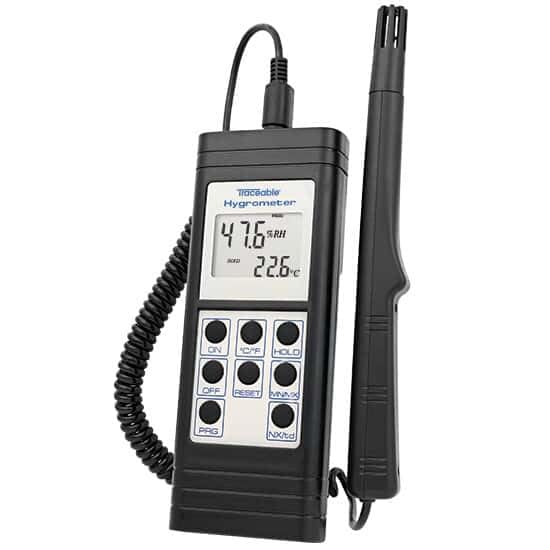
Image 1: The Traceable Calibrated Thermohygrometer. The device features a digital display showing humidity and temperature, with several control buttons below. A probe is connected via a coiled cable.
2. Awọn ẹya ara ẹrọ
- Accurately measures temperature and relative humidity.
- Includes a NIST-Traceable certificate from an A2LA accredited calibration laboratory (1750.01), ensuring measurement accuracy.
- Microprocessor-based design facilitates quick and straightforward calibration procedures.
- Equipped with RS-232 output for data transmission to compatible systems.
3. Ohun ti o wa ninu Apoti
Upon unpacking, verify that the following items are present:
- Traceable Calibrated Thermohygrometer unit
- Humidity/Temperature Probe
- NIST-Traceable Calibration Certificate
- Ilana itọnisọna
4. Eto
- Fifi sori batiri: Open the battery compartment (typically on the back of the unit) and insert the required batteries, observing correct polarity.
- Asopọ Iwadi: Connect the humidity/temperature probe to the designated port on the main unit. Ensure a secure connection.
- Agbara Ibẹrẹ Tan: Tẹ awọn ON button to power on the device. The display should illuminate and show initial readings.
- Unit Selection (if applicable): If your model allows, select your preferred temperature unit (Celsius or Fahrenheit) using the ° C / ° F bọtini.
- Ibi: Position the thermohygrometer in the environment where measurements are required. Ensure the probe is exposed to the air and not obstructed.
5. Awọn ilana Iṣiṣẹ
5.1 Ipilẹ isẹ
- TAN/PAPA: Tẹ awọn ON button to turn the unit on. Press the PAA bọtini lati pa a.
- Ifihan kika: The display will show current relative humidity (RH%) and temperature (°C/°F).
- Ẹka ìwọ̀ntúnwọ̀nsì: Toggle between Celsius (°C) and Fahrenheit (°F) by pressing the ° C / ° F bọtini.
- Idaduro data: Tẹ awọn DIMU button to freeze the current readings on the display. Press again to release.
- Minimum/Maximum Readings: Tẹ awọn MIN / MAX bọtini lati view the minimum and maximum temperature and humidity readings recorded since the last reset. Press repeatedly to cycle through MIN, MAX, and current readings.
- Reset MIN/MAX: Lakoko viewing MIN/MAX readings, press the Tunto button to clear the stored minimum and maximum values.
5.2 RS-232 Output
The device is equipped with an RS-232 port for connecting to a computer or data logger. This allows for real-time data acquisition and analysis. Refer to the specific software or interface instructions for your data collection system for details on establishing communication and data transfer protocols.

Image 2: A hand in a blue glove interacting with a Traceable device, demonstrating typical laboratory use. This image illustrates the practical application of Traceable instruments in a controlled environment.
6. Itọju
- Ninu: Wipe the unit and probe with a soft, damp asọ. Ma ṣe lo abrasive ose tabi epo.
- Rirọpo Batiri: Replace batteries when the low battery indicator appears on the display. Ensure proper battery type and polarity.
- Ibi ipamọ: When not in use for extended periods, remove the batteries and store the device in a cool, dry place away from direct sunlight and extreme temperatures.
- Atunṣe: Due to the nature of humidity sensors, periodic recalibration is recommended to maintain accuracy. Refer to the NIST-Traceable certificate for recommended recalibration intervals.
7. Laasigbotitusita
| Isoro | Owun to le Fa | Ojutu |
|---|---|---|
| Ko si ifihan tabi ifihan arẹwẹsi | Dead or weak batteries; incorrect battery installation. | Rọpo awọn batiri pẹlu awọn tuntun, ni idaniloju polarity ti o pe. |
| Awọn kika ti ko pe | Sensor contamination; need for recalibration; probe not properly connected. | Clean the probe gently; perform recalibration; ensure probe is securely connected. |
| RS-232 communication failure | Incorrect cable; software settings mismatch; port issue. | Verify cable connection and type; check software communication settings (baud rate, parity); try a different USB/serial port. |
8. Awọn pato
| Paramita | Iye |
|---|---|
| Nọmba awoṣe | B07R5N7QYS |
| Olupese | COLE-PARMER |
| Isọdiwọn | NIST-Traceable (A2LA accredited 1750.01) |
| Ni wiwo | RS-232 |
| Ọjọ Akọkọ Wa | Oṣu Kẹrin Ọjọ 29, Ọdun 2019 |
9. Atilẹyin ọja ati Support
For warranty information and technical support, please contact the manufacturer, Cole-Parmer, or your authorized distributor. Keep your purchase receipt and NIST-Traceable certificate for reference.
Olupese: COLE-PARMER
Brand: TACETACET.
Fun iranlọwọ siwaju sii, ṣabẹwo si Traceable Brand Store on Amazon.


