1. Ifihan
This user manual provides comprehensive instructions for the safe and effective operation, maintenance, and troubleshooting of the Fluke FLUKE-BT520 Battery Analyzer. The FLUKE-BT520 is an essential tool designed for maintenance, troubleshooting, and performance testing of individual stationary batteries and battery banks, particularly those used in critical battery back-up applications.
It facilitates automatic or manual sequence testing of battery strings, with automatic measurement storage for voltage, resistance, and temperature (when used with the BTL21 intelligent test probe). All measured values are automatically captured during testing and can be reviewed on the instrument before downloading for analysis.
2. Alaye Aabo
Always adhere to the following safety precautions to prevent personal injury and damage to the instrument or the equipment under test. Read all instructions before using the Fluke FLUKE-BT520 Battery Analyzer.
- Ewu Itanna: Maṣe lo diẹ sii ju iwọn voltage, gẹ́gẹ́ bí a ṣe sàmì sí orí ohun èlò náà, láàárín àwọn ibùdó tàbí láàárín èyíkéyìí ibùdó àti ilẹ̀ ayé.
- Aabo Batiri: Ensure proper battery installation and replacement. Use only specified battery types. Do not expose batteries to excessive heat or direct sunlight.
- Lilo daradara: Use the analyzer only as specified in this manual; otherwise, the protection provided by the analyzer might be impaired.
- Itọju: Dá gbogbo iṣẹ́ ìtọ́jú náà sí àwọn òṣìṣẹ́ iṣẹ́ tó péye. Má ṣe gbìyànjú láti tún ohun èlò náà ṣe fúnra rẹ.
- Awọn ipo Ayika: Do not operate the analyzer in explosive atmospheres or in wet conditions.
3. Ọja Ipariview
The Fluke FLUKE-BT520 Battery Analyzer is a robust and precise instrument designed for comprehensive battery testing. It provides key measurements including internal battery resistance, DC and AC voltage, DC and AC current, ripple voltage, frequency, and temperature.
3.1. Awọn irinše
The standard package for the Fluke FLUKE-BT520 Battery Analyzer includes the following items:
- Fluke FLUKE-BT520 Battery Analyzer Unit
- Batiri Lithium ion (ti a fi sii tẹlẹ tabi pẹlu)
- Test Leads / Intelligent Test Probe (e.g., BTL21)
- Afowoyi Olumulo (iwe-ipamọ yii)


3.2. Key Awọn ẹya ara ẹrọ
- Comprehensive Measurements: Measures internal battery resistance, DC and AC voltage, DC and AC current, ripple voltage, frequency, and temperature.
- Sequence Measurement Mode: Offers automatic or manual sequence testing of battery strings with automatic measurement storage, eliminating the need for manual saving.
- Intelligent Test Probe Compatibility: Works seamlessly with the BTL21 intelligent test probe for enhanced temperature measurement capabilities.
- Extensive Data Logging: All measured values are automatically captured and can be reviewed on the instrument before downloading for detailed analysis.
- Ideal for Critical Applications: Specifically designed for performance testing and troubleshooting of stationary batteries and battery banks in critical back-up systems.

4. Eto
Before operating the Fluke FLUKE-BT520 Battery Analyzer, ensure it is properly set up according to these instructions.
4.1. Fifi sori batiri
The FLUKE-BT520 comes with a Lithium Ion battery included. If the battery is not pre-installed or needs replacement:
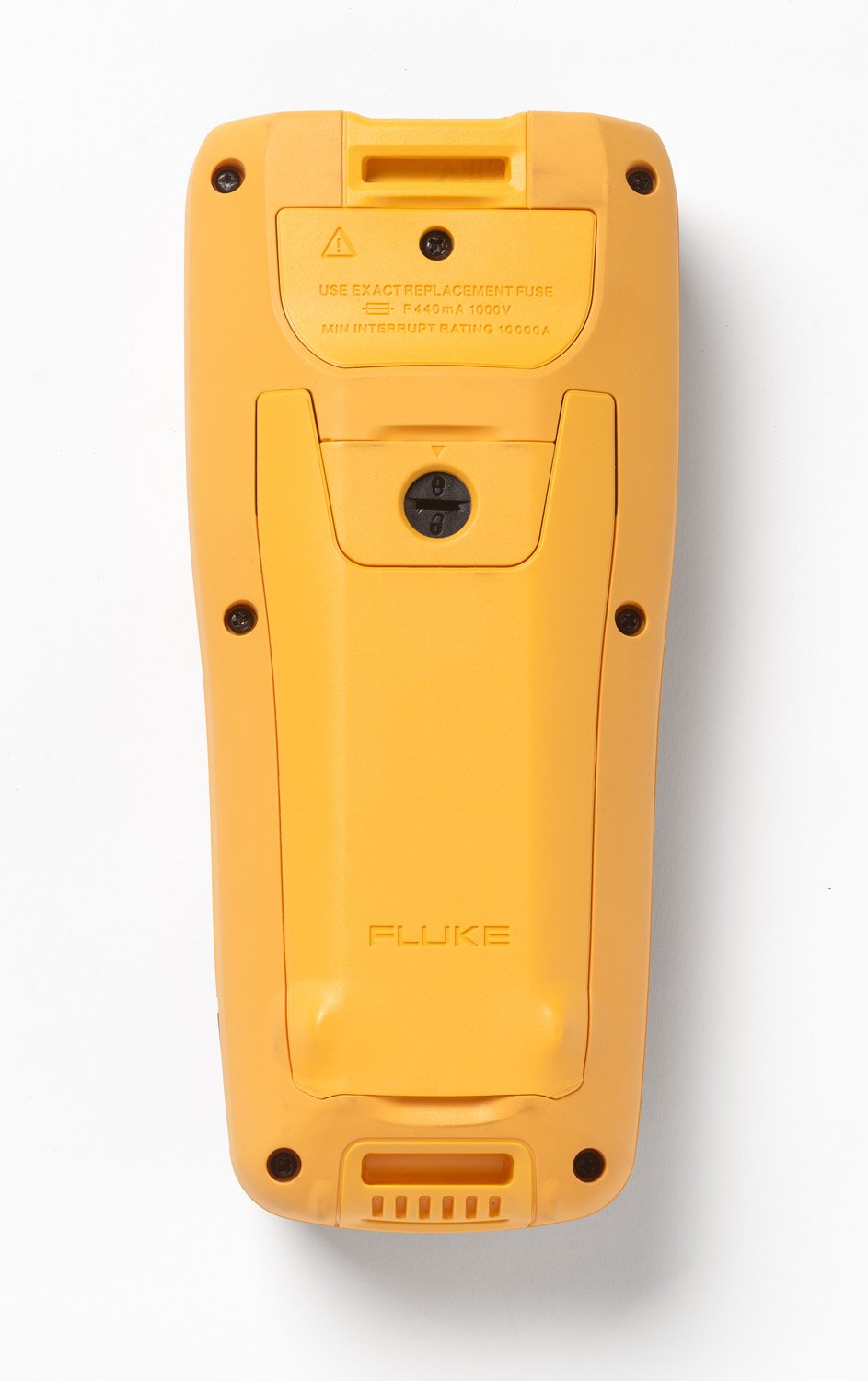
- Locate the battery compartment on the rear of the analyzer (refer to Figure 3.4).
- Yọ ideri iyẹwu batiri kuro.
- Insert the Lithium Ion battery, ensuring correct polarity.
- Rọpo ideri ki o ni aabo pẹlu awọn skru.
4.2. Connecting Test Probes
Proper connection of the test probes is crucial for accurate measurements.
- Identify the input jacks on the analyzer.
- Connect the intelligent test probe (e.g., BTL21) or standard test leads to the appropriate jacks. Ensure a secure connection.
- For temperature measurements, ensure the BTL21 intelligent test probe is correctly connected and positioned.

5. Awọn ilana Iṣiṣẹ
This section details the operational procedures for the Fluke FLUKE-BT520 Battery Analyzer.
5.1. Powering On and Basic Measurements
- Press the power button to turn on the analyzer. The display will illuminate.
- Use the rotary dial and navigation buttons to select the desired measurement mode (e.g., Voltage, Resistance, Ripple Volts).
- Connect the test probes to the battery terminals. Ensure proper polarity (red to positive, black to negative).
- Read the measurement values displayed on the screen.

5.2. Sequence Measurement Mode
The sequence measurement mode allows for efficient testing of multiple batteries in a string.
- Select "Sequence Measurement" from the menu.
- Follow the on-screen prompts to connect to each battery in the string.
- The analyzer will automatically record voltage, resistance, and temperature (with BTL21 probe) for each battery.
- Measurements are automatically stored, eliminating the need to press a save button for each reading.

5.3. Data Logging and Review
All measured values are automatically logged. You can review them directly on the instrument.
- Navigate to the "Review" or "Logging" section in the menu.
- Browse through the stored measurements.
- For detailed analysis, connect the analyzer to a computer and download the data using the provided software (if applicable, software not specified in input).
6. Itọju
Proper maintenance ensures the longevity and accuracy of your Fluke FLUKE-BT520 Battery Analyzer.
6.1. Ninu
- Pa ọran naa pẹlu ipolowoamp asọ ati ìwọnba detergent. Maṣe lo awọn abrasives tabi awọn nkan ti a nfo.
- Clean the terminals with a cotton swab dampened pẹlu oti.
- Ensure the analyzer is completely dry before use.
6.2. Ibi ipamọ
- Store the analyzer in a dry, dust-free environment, away from direct sunlight and extreme temperatures.
- Tí o bá ń tọ́jú rẹ̀ fún ìgbà pípẹ́, yọ bátìrì náà kúrò kí ó má baà jò.
6.3. Rirọpo fiusi
The analyzer uses a specific fuse for protection. If the fuse needs replacement:
- Ensure the analyzer is powered off and disconnected from any power source or battery.
- Locate the fuse compartment on the rear of the analyzer (refer to Figure 3.4).
- Unscrew the fuse compartment cover.
- Replace the fuse with an exact replacement: F440mA 1000V, MIN INTERRUPT RATING 10000A.
- Securely replace the fuse compartment cover.
7. Laasigbotitusita
This section provides solutions to common issues you might encounter with your Fluke FLUKE-BT520 Battery Analyzer.
| Isoro | Owun to le Fa | Ojutu |
|---|---|---|
| Analyzer does not power on. | Batiri ti ku tabi ti fi sori ẹrọ ti ko tọ. | Check battery installation. Recharge or replace battery. |
| Ko si kika tabi kika ti ko tọ. | Loose or faulty test leads; incorrect measurement mode selected; fuse blown. | Ensure test leads are securely connected. Select the correct measurement mode. Check and replace fuse if necessary. |
| Ifihan ti wa ni baibai tabi flicker. | Kekere batiri idiyele. | Saji si batiri. |
| Data not saving in sequence mode. | Memory full; software glitch. | Download data to clear memory. Restart the analyzer. |
8. Awọn pato
Detailed technical specifications for the Fluke FLUKE-BT520 Battery Analyzer:
| Sipesifikesonu | Ẹ̀kúnrẹ́rẹ́ |
|---|---|
| Nọmba awoṣe | 4489981 |
| Ọja Mefa | 8.66 x 3.94 x 1.97 inches |
| Iwọn Nkan | 3 kilogram (6.61 poun) |
| Orisun agbara | Agbara Batiri |
| Awọn batiri ti a beere | 1 batiri litiumu ion (pẹlu) |
| Olupese | Fluke |
| Ọjọ Akọkọ Wa | Oṣu Kẹjọ Ọjọ 29, Ọdun 2014 |
| Ara | BT520 |
9. atilẹyin ọja Information
Fluke products are manufactured to the highest quality standards. For specific warranty terms and conditions applicable to your FLUKE-BT520 Battery Analyzer, please refer to the warranty card included with your product or visit the official Fluke webojula. Tọju iwe-ẹri rira rẹ bi ẹri rira fun awọn iṣeduro atilẹyin ọja.
10. Onibara Support
For technical assistance, service, or to inquire about accessories, please contact Fluke customer support. You can find contact information and additional resources by visiting the official Fluke webaaye tabi oju-iwe itaja Amazon wọn:
Visit the Fluke Store on Amazon
Please have your product model number (BT520) and serial number ready when contacting support.
11. Awọn fidio ọja osise
A kò rí fídíò ọjà tí olùtajà náà fi sílẹ̀ nínú dátà tí a pèsè fún àwòṣe yìí.


