1. Ifihan
This manual provides essential information for the safe and effective use of your Trojan T-605 6 Volt 210 AH Deep Cycle Flooded Lead-Acid Battery. The Trojan T-605 is designed for applications requiring reliable, long-lasting power, such as golf carts, solar energy systems, marine vessels, and recreational vehicles. Please read this manual thoroughly before installation, operation, or maintenance to ensure proper handling and to maximize battery life and performance.

Figure 1: Trojan T-605 6 Volt Deep Cycle Battery. This image shows the maroon casing, terminal posts, and product label indicating 'Trojan T-605 Deep-Cycle' and '6 VOLT'.
2. Alaye Aabo
Lead-acid batteries contain sulfuric acid and produce explosive gases. Improper handling can result in severe injury or death. Always follow these safety precautions:
- Ohun elo Idaabobo Ti ara ẹni (PPE): Always wear safety glasses, a face shield, and acid-resistant gloves when working with batteries.
- Afẹfẹ: Ensure adequate ventilation during charging and operation to disperse hydrogen gas. Do not charge or operate batteries in an enclosed area.
- No Sparks or Flames: Keep sparks, flames, and smoking materials away from batteries. Hydrogen gas is highly flammable.
- Corrosive Acid: Battery electrolyte is corrosive sulfuric acid. Avoid contact with skin, eyes, or clothing. In case of contact, flush immediately with water and seek medical attention.
- Ibalẹ itanna: Batteries can deliver a high current. Do not wear metallic jewelry when working with batteries. Use insulated tools.
- Gbigbe: The T-605 battery weighs approximately 58 lbs (26 kg). Use proper lifting techniques or assistance to prevent injury.
- Ilana 65 Ikilọ: Ọja yii ni awọn kemikali ti a mọ si Ipinle California lati fa akàn ati awọn abawọn ibimọ tabi ipalara ibisi miiran.
3. Eto ati fifi sori
Proper installation is crucial for battery performance and safety.
3.1 Unpacking ati ayewo
- Carefully unpack the battery and inspect for any signs of damage during shipping. Do not install a damaged battery.
- Verify that the battery model and specifications match your requirements.
3.2 Battery Location and Ventilation
- Install batteries in a clean, dry, cool, and well-ventilated area.
- Avoid locations where batteries are exposed to direct sunlight or extreme temperatures.
- Ensure sufficient airflow around the batteries to dissipate heat and hydrogen gas.
3.3 ebute Awọn isopọ
- Ensure all cable connections are clean, tight, and free of corrosion. Use a wire brush to clean terminals if necessary.
- Connect batteries in series or parallel according to your system's voltage and capacity requirements. Refer to your system manufacturer's guidelines for proper wiring configurations.
- Connect the positive (+) terminal of the battery to the positive (+) cable and the negative (-) terminal to the negative (-) cable.
- Tighten terminal bolts (5/16” bolt) to the manufacturer's recommended torque specifications. Over-tightening can damage terminals.
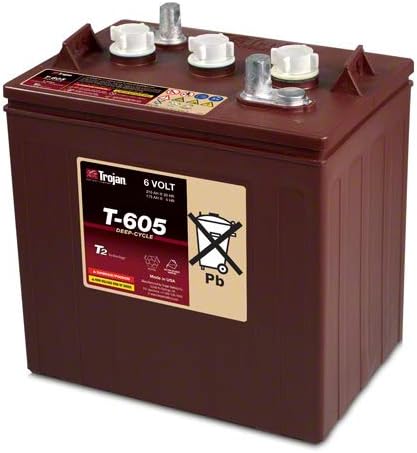
olusin 2: Top view of Trojan T-605 battery showing embedded low profile terminals. This image highlights the terminal posts and caps, which are crucial for proper connection and maintenance.
3.4 Ni ibẹrẹ idiyele
- After installation, it is recommended to fully charge the battery before its first use.
- Lo ṣaja ti a ṣe apẹrẹ pataki fun awọn batiri lead-acid ti o kun fun omi pẹlu vol ti o yẹ.tage and current settings for a 6-volt battery.
4. Awọn ilana Iṣiṣẹ
The Trojan T-605 is a deep cycle battery, designed for sustained discharge and recharge cycles.
- Discharge Limits: Avoid discharging the battery below 50% of its rated capacity to maximize cycle life. Deep discharges (below 20% state of charge) can significantly shorten battery life.
- Gbigba agbara: Always recharge the battery promptly after use. Leaving batteries in a discharged state can lead to sulfation and permanent capacity loss.
- Ibamu Ṣaja: Use a charger compatible with 6-volt flooded lead-acid batteries. Refer to the charger manufacturer's instructions for proper operation.
5. Itọju
Regular maintenance is essential for the longevity and performance of flooded lead-acid batteries.
5.1 agbe
- Check electrolyte levels regularly, typically every 2-4 weeks, or more frequently in hot climates or during heavy use.
- Only add distilled water. Never add tap water, acid, or other chemicals.
- Add water after charging, unless the plates are exposed before charging. If plates are exposed, add just enough water to cover them, then charge, and top off to the correct level after charging.
- Do not overfill. The electrolyte level should be approximately 1/8 to 1/4 inch (3-6 mm) below the bottom of the fill well.
5.2 Ninu
- Keep the battery top and terminals clean and dry. Dirt and moisture can create conductive paths, leading to self-discharge.
- Clean terminals and connectors with a solution of baking soda and water (1 cup baking soda to 1 gallon water). Rinse with clean water and dry thoroughly.
- Apply a thin coat of petroleum jelly or anti-corrosion spray to terminals to prevent corrosion.
5.3 Equalization idiyele
- An equalization charge is an intentional overcharge performed on flooded lead-acid batteries to remove sulfate crystals that may accumulate on the plates over time.
- Perform an equalization charge when specific gravity readings vary significantly between cells (0.015 or more) or when batteries are consistently undercharged.
- Consult your charger's manual or a battery specialist for proper equalization procedures and frequency.
6. Laasigbotitusita
If you experience issues with your battery, perform the following basic checks:
- Kekere Voltage/Short Run Time:
- Check battery charger functionality and settings.
- Verify electrolyte levels and add distilled water if needed.
- Inspect all cable connections for tightness and corrosion.
- Ensure the battery is receiving a full charge cycle.
- Excessive Corrosion:
- Clean terminals as described in Section 5.2.
- Rii daju pe fentilesonu to dara lakoko gbigba agbara.
- Avoid overfilling cells with water.
- Batiri Ko Daduro Agbara:
- Perform an equalization charge if specific gravity readings are inconsistent.
- Check for parasitic loads in your system that may be draining the battery.
- If the battery is old, it may have reached the end of its service life.
For persistent issues, consult a qualified battery technician or contact customer support.
7. Awọn pato
| Ẹya ara ẹrọ | Sipesifikesonu |
|---|---|
| Awoṣe | T-605 LPT MV |
| Voltage | 6 Volts |
| Agbara | 210 Amp Awọn wakati (AH) |
| Batiri Iru | Deep-Cycle Flooded/Wet Lead-Acid Battery |
| Cell Tiwqn | Olori Acid |
| Atunlo | Gbigba agbara |
| Awọn iwọn (L x W x H) | 10.30" (262mm) x 7.11" (181mm) x 11.07" (281mm) |
| Iwọn | 58 LBS (26.3 kg) |
| Ebute Iru | Ifibọ Low Profile Terminal (5/16” bolt) |
8. Ibi ipamọ
For optimal battery life, follow these guidelines for long-term storage:
- Fully charge the battery before placing it into storage.
- Store batteries in a cool, dry, well-ventilated area, protected from direct sunlight and freezing temperatures.
- Disconnect the battery from all loads to prevent parasitic discharge.
- Perform a refresh charge every 3-6 months to maintain a full state of charge.
9. Idasonu
Lead-acid batteries are recyclable. Do not dispose of batteries in household waste. Return spent batteries to an authorized battery recycler or collection center. Improper disposal can harm the environment and human health. Note that these batteries cannot be shipped by standard carriers (USPS, UPS, Fed Ex, or Common Carrier) for disposal due to their nature.
10. Atilẹyin ọja ati Support
For warranty information, technical support, or service inquiries regarding your Trojan T-605 battery, please contact the retailer or the manufacturer, Trojan Battery Company, directly. Keep your proof of purchase for any warranty claims.


