1. Ifihan
Thank you for choosing the Pretul BOAP-1/2P3 Electric Peripheral Water Pump. This manual provides essential information for the safe and efficient operation, installation, and maintenance of your pump. Please read this manual thoroughly before use and keep it for future reference.
Alaye Aabo pataki
WARNING: Failure to follow these safety instructions could result in electric shock, fire, serious injury, or death.
- Always disconnect the pump from the power supply before performing any maintenance or installation.
- Ensure the pump is installed in a covered, dry, and well-ventilated area.
- Do not operate the pump in environments where the ambient temperature exceeds 40°C (104°F).
- Ensure all electrical connections are properly insulated and protected from water.
- Do not run the pump dry. Always ensure the pump is completely filled with clean water before starting.
- Secure the pump horizontally on a flat surface using screws to prevent movement during operation.
- This pump is designed for pumping clean water only. Do not use it for flammable liquids, corrosive chemicals, or water containing abrasive particles.
2. Ọja Ipariview
The Pretul BOAP-1/2P3 is a robust electric peripheral water pump designed to generate high pressure and lift water to significant altitudes. Its compact design and durable components ensure reliable performance.
Awọn ẹya pataki:
- Generates greater pressure and raises water to a higher altitude compared to centrifugal pumps.
- Single-phase electric motor with aluminum coils for efficient operation.
- Durable brass impeller for constant pressure and long lifespan.
- Integrated heat shield for engine protection against overheating.
- Continuous working capacitor for stable performance.
Àwòrán ohun èlò:

Apejuwe aworan: An exploded diagram of the Pretul BOAP-1/2P3 pump, highlighting key internal and external components. Labels indicate: Thermal protector, Continuous working capacitor, Motor with aluminum coils, Metal bearing for longer lifespan, Brass impeller for constant pressure, and Enclosed electric motor with external ventilation.

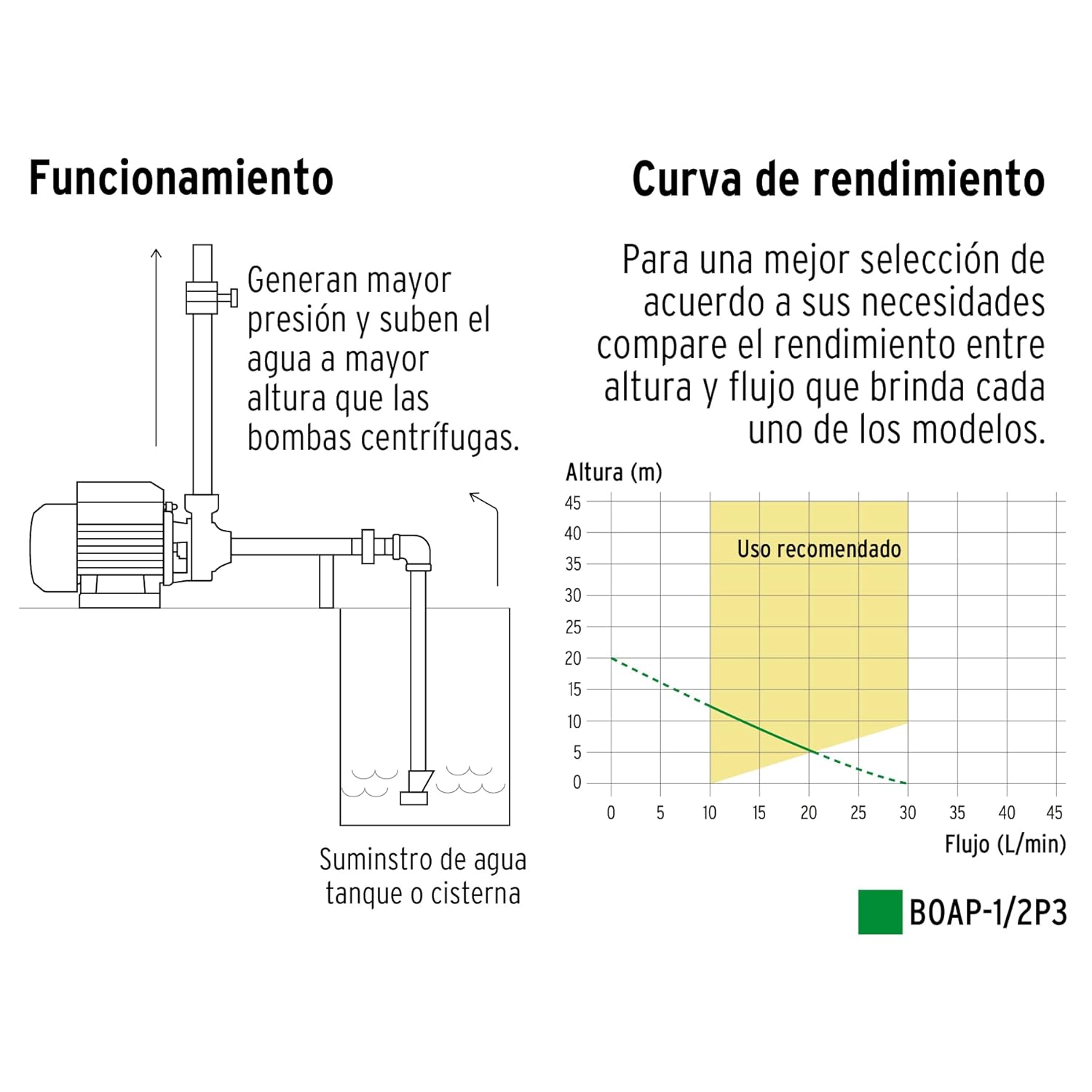
Apejuwe aworan: Two images showing the front and side views of the yellow Pretul BOAP-1/2P3 electric peripheral water pump. The pump has a black motor housing and a yellow pump body with a brass inlet/outlet.
3. Eto ati fifi sori
Proper installation is crucial for the pump's performance and longevity. Follow these guidelines carefully:
- Ibi: Install the pump in a covered, dry, and well-ventilated area. Avoid direct exposure to rain, excessive humidity, or temperatures above 40°C (104°F).
- Iṣagbesori: Place the pump horizontally on a flat, stable surface. Secure the pump firmly using screws through the designated mounting holes to prevent vibration and movement during operation.
- Pipin: Connect the inlet pipe to your water source (e.g., tank or cistern) and the outlet pipe to your desired discharge point. Ensure all connections are airtight to prevent air leaks, which can affect pump performance. Use appropriate thread sealant.
- Ipilẹṣẹ: Before the first use, or if the pump has run dry, completely fill the pump casing with clean water through the priming port. This ensures the pump is ready to create suction.
- Asopọmọra itanna: Connect the pump to a suitable power supply as specified in the technical specifications. Ensure the voltage matches the pump's requirements. Use a grounded outlet and avoid extension cords if possible. If an extension cord is necessary, ensure it is rated for outdoor use and has adequate gauge.
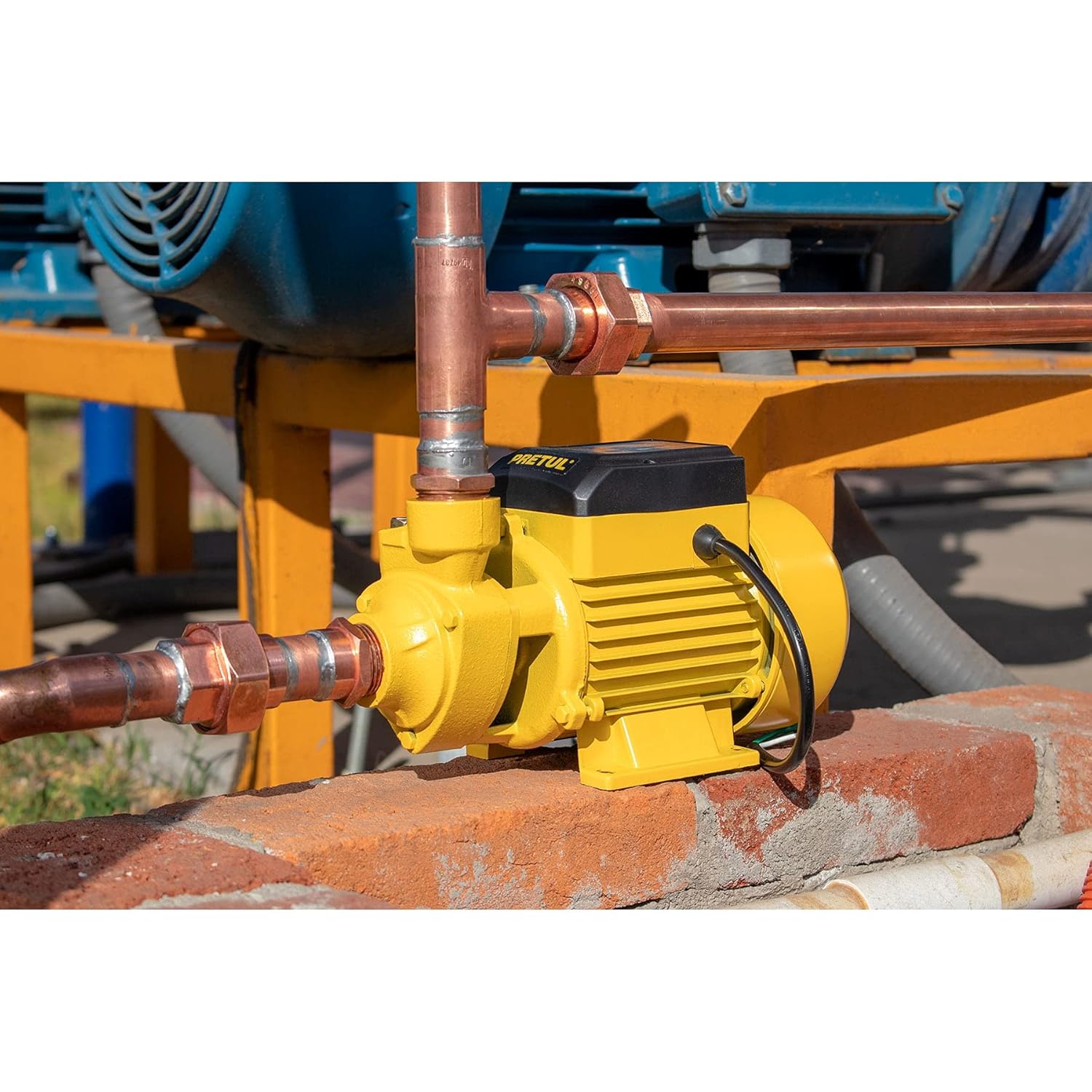
Apejuwe aworan: A diagram illustrating the pump's operation, showing it drawing water from a tank and raising it to a higher point. Alongside, a performance curve graph (Altura (m) vs. Flujo (L/min)) indicates the recommended use area for the BOAP-1/2P3 model, demonstrating its ability to generate pressure and flow.

Apejuwe aworan: An infographic displaying key recommendations for the pump: install in covered places, dry and well-ventilated, in environments not exceeding 40°C, fill completely with clean water before first use, and place horizontally on flat surfaces, securing with screws.
4. Awọn ilana Iṣiṣẹ
Once the pump is properly installed and primed, you can begin operation:
- Rí i dájú pé gbogbo àwọn ìsopọ̀ wà ní ààbò àti pé kò sí ìjókòó.
- Rí i dájú pé fifa náà casing is completely filled with water.
- Connect the pump to the power supply. The pump will start operating.
- Monitor the pump during its initial operation to ensure proper water flow and pressure.
Àyíká Iṣẹ́:
This pump is designed for intermittent use. To ensure optimal performance and longevity, adhere to the following duty cycle:
- Maximum continuous operation: 20 iṣẹju.
- Minimum rest period after operation: 15 iṣẹju.
- Do not operate the pump for more than 6 wakati fun ọjọ kan lapapọ.
Adhering to this duty cycle prevents overheating and extends the life of the motor and components.
5. Itọju
Regular maintenance ensures the efficient and safe operation of your pump. Always disconnect the pump from the power supply before performing any maintenance.
- Ayẹwo igbagbogbo: Periodically check the pump for any signs of damage, leaks, or unusual noises.
- Mimọ: Keep the pump exterior clean and free from dust and debris to ensure proper ventilation.
- Awọn isopọ: Inspect all pipe connections and electrical wiring for tightness and integrity. Tighten any loose connections.
- Igba otutu (ti o ba wulo): If the pump is exposed to freezing temperatures, drain all water from the pump and pipes to prevent damage from ice expansion. Store in a dry, frost-free location.
6. Laasigbotitusita
Apá yìí fún wa ní àwọn ìdáhùn sí àwọn ìṣòro tó wọ́pọ̀ tí o lè bá pàdé pẹ̀lú fifa omi rẹ.
| Isoro | Owun to le Fa | Ojutu |
|---|---|---|
| Pump ko bẹrẹ | No power; Motor overload; Damaged capacitor | Check power supply and circuit breaker; Allow motor to cool down; Contact qualified technician for capacitor replacement. |
| Pọ́m̀pù ń ṣiṣẹ́ ṣùgbọ́n kò sí omi | Pump not primed; Air leak in suction line; Clogged inlet/outlet; Water source empty | Re-prime the pump; Check all connections for leaks; Clear any blockages; Ensure water source is adequate. |
| Ìfúnpá omi/ṣíṣàn omi kékeré | Partial blockage; Air in system; Worn impeller | Check for partial blockages; Bleed air from the system; Contact service for impeller inspection/replacement. |
| Nmu ariwo / gbigbọn | Loose mounting; Air in pump; Bearing wear | Secure pump firmly; Re-prime the pump; Contact service for bearing inspection. |
Ti iṣoro naa ba wa lẹhin igbiyanju awọn iṣeduro wọnyi, jọwọ kan si atilẹyin alabara.
7. Imọ ni pato
| Sipesifikesonu | Iye |
|---|---|
| Brand | Pretul |
| Nọmba awoṣe | BOAP-1/2P3 |
| Àwọ̀ | Yellow |
| Ohun elo | Idẹ |
| Ara | Loke Ilẹ |
| Awọn iwọn Ọja (L x W x H) | 29.3L x 12.7W x 24H centimita |
| Orisun agbara | Okun Itanna |
| Voltage | 110 Volts |
| Iwọn Nkan | 3 kg 550 g |
| Olupese | Truper SA de CV |

Apejuwe aworan: A diagram showing the key dimensions of the Pretul BOAP-1/2P3 pump: Height (Alto) 15 cm, Base 12 cm, and Depth (Fondo) 24 cm.
8. Atilẹyin ọja ati Support
Alaye Atilẹyin ọja:
Pretul products are manufactured to high-quality standards. For specific warranty terms and conditions, please refer to the warranty card included with your product packaging or visit the official Pretul webojula. Tọju iwe-ẹri rira rẹ bi ẹri rira fun awọn iṣeduro atilẹyin ọja.
Atilẹyin Onibara:
If you have any questions, require technical assistance, or need to report an issue with your pump, please contact Pretul customer support. Contact details can typically be found on the product packaging or the official Pretul webojula.
When contacting support, please have your product model number (BOAP-1/2P3) and purchase details ready.


