Ọrọ Iṣaaju
The Electro-Harmonix Oceans 12 is a dual stereo reverb pedal designed to provide a wide array of reverb effects and advanced functionality. It features two independent stereo reverb engines, offering extensive control over reverb parameters, signal routing, and preset management. This manual provides detailed instructions for setup, operation, and maintenance of your Oceans 12 pedal.

olusin 1: Iwaju view of the Electro-Harmonix Oceans 12 Dual Stereo Reverb Pedal, showcasing its controls and footswitches.
Ṣeto
Awọn ibeere agbara
- The Oceans 12 requires a 9V DC power supply.
- Ensure the power supply is center-negative and provides sufficient current for the pedal's operation.
- The pedal is designed for corded electric power and does not operate on 9V batteries.
Awọn isopọ
The Oceans 12 offers flexible input/output options for various setups, including stereo and mono configurations with send/return capabilities.
- IN (L/MONO): Ìgbékalẹ̀ ohùn pàtàkì. Lo èyí fún ìtẹ̀síwájú mono.
- R/RETURN: Right channel input for stereo operation, or return for an effects loop.
- OUT (L/MONO): Ìjáde ohùn pàtàkì. Lo èyí fún ìjáde mono.
- R/SEND: Right channel output for stereo operation, or send for an effects loop.
- EXP/FSW: Input for an external expression pedal or 3-button footswitch for expanded control.

olusin 2: Apa view of the Oceans 12 pedal, illustrating the various input and output jacks for audio and external control.

Figure 3: The Oceans 12 pedal integrated into a guitar setup, demonstrating its stereo input/output or mono send/return capabilities with pre and post reverb options.
Awọn iṣakoso ati Awọn iṣẹ
The Oceans 12 features a comprehensive set of controls to shape your reverb sound. Understanding each control is key to unlocking the pedal's full potential.
Awọn bọtini Iṣakoso
- FX LVL / INF LVL: Controls the wet/dry mix of the reverb effect. In some modes, it also controls infinite attenuation.
- PREDELAY / SEND LVL: Adjusts the pre-delay time before the reverb begins. Can also control send level for effects loop.
- TIME / LO-FI: Sets the decay time of the reverb. In certain modes, it functions as a Lo-fi control.
- TONE / TIDE: Adjusts the tone of the reverb. Also functions as the Tide Control for stereo image alteration.
- Ipo: Selects between different modes for the currently chosen reverb type.
- SELECT (A/B): Toggles between Reverb Engine A and Reverb Engine B.
- TITUN: Rotary switch to select one of the 24 available presets.
- REVERB TYPE: Rotary switch to select one of the 12 distinct reverb algorithms.
Awọn ẹlẹsẹ ẹlẹsẹ
- REVERB A: Activates/deactivates Reverb Engine A. Can also be used for Tap Tempo.
- REVERB B: Activates/deactivates Reverb Engine B.
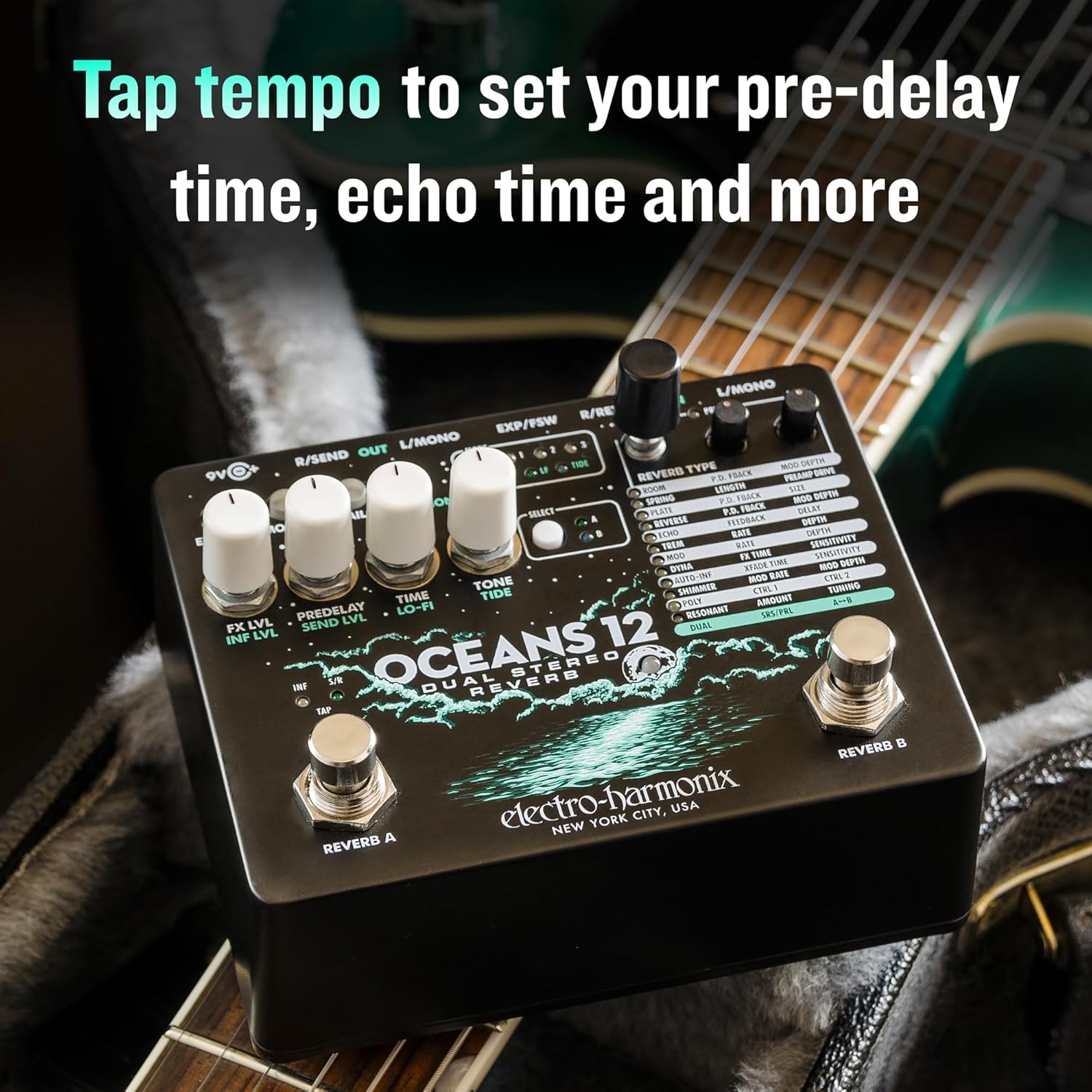
Figure 4: The Oceans 12 pedal's footswitches and controls, illustrating the Tap Tempo function for setting pre-delay and echo times.
Yipada Yipada
- EXP MODE / MOMENT: Configures the external expression pedal behavior or enables momentary footswitch action.
- TAILS: Determines whether the reverb trails naturally after bypass or cuts off immediately.
- IṢẸ: Accesses secondary functions for certain knobs.
Reverb Orisi
The Oceans 12 offers 12 distinct reverb algorithms, each with multiple modes and adjustable parameters:
- YARA: Two modes, simulating lively rooms and spacious performance halls. Parameters: P.D. FBACK, LENGTH, MOD DEPTH.
- Orisun omi: Two modes, emulating vintage tube reverb and the EHX Holy Grail spring algorithm. Parameters: P.D. FBACK, LENGTH, PREAMP ṢỌ.
- Awo: Two modes, emulating smooth metal plate reverbs. Parameters: P.D. FBACK, LENGTH, SIZE.
- Sọ: Two modes, offering reverse reverb and true reversed echoes. Parameters: P.D. FBACK, LENGTH, MOD DEPTH.
- ECHO: Three modes, combining digital delay with various echo rhythms feeding into a plate reverb. Parameters: FEEDBACK, DELAY, MOD DEPTH.
- TREM: Three modes, applying a periodic volume envelope to a hall reverb. Parameters: RATE, DEPTH, MOD DEPTH.
- MOD: Three modes, combining chorus and flange with reverb tails. Parameters: RATE, DEPTH, MOD DEPTH.
- DYNA: Three dynamic, experimental reverb algorithms: swell, gate, and duck. Parameters: FX TIME, SENSITIVITY, MOD DEPTH.
- AUTO-INF: Three modes, auto-infinite reverb that crossfades to new reverb washes. Parameters: XFADE TIME, SENSITIVITY, MOD DEPTH.
- SHIMMER: Two modes, rich octave-shifted reverb washes. Parameters: MOD RATE, DEPTH, MOD DEPTH.
- POLYPHONIC: Two modes, configurable bi-directional pitch shifts for reverb tails. Parameters: CTRL 1, CTRL 2, MOD DEPTH.
- RESONANT: Two modes, reverb excited by tunable resonators and self-oscillating filters. Parameters: AMOUNT, TUNING, MOD DEPTH.
Awọn ọna ṣiṣe
Dual Reverb Engines
The Oceans 12 features two simultaneous, independent stereo reverb engines (A and B). This allows for complex layering of effects or running two distinct reverb sounds concurrently.

Figure 5: The Oceans 12 pedal in a performance setting, highlighting its capability to run two independent stereo reverb engines simultaneously.
Series and Parallel Control
The pedal allows you to configure the two reverb engines in either series or parallel. This routing flexibility significantly impacts how the two reverbs interact and combine.
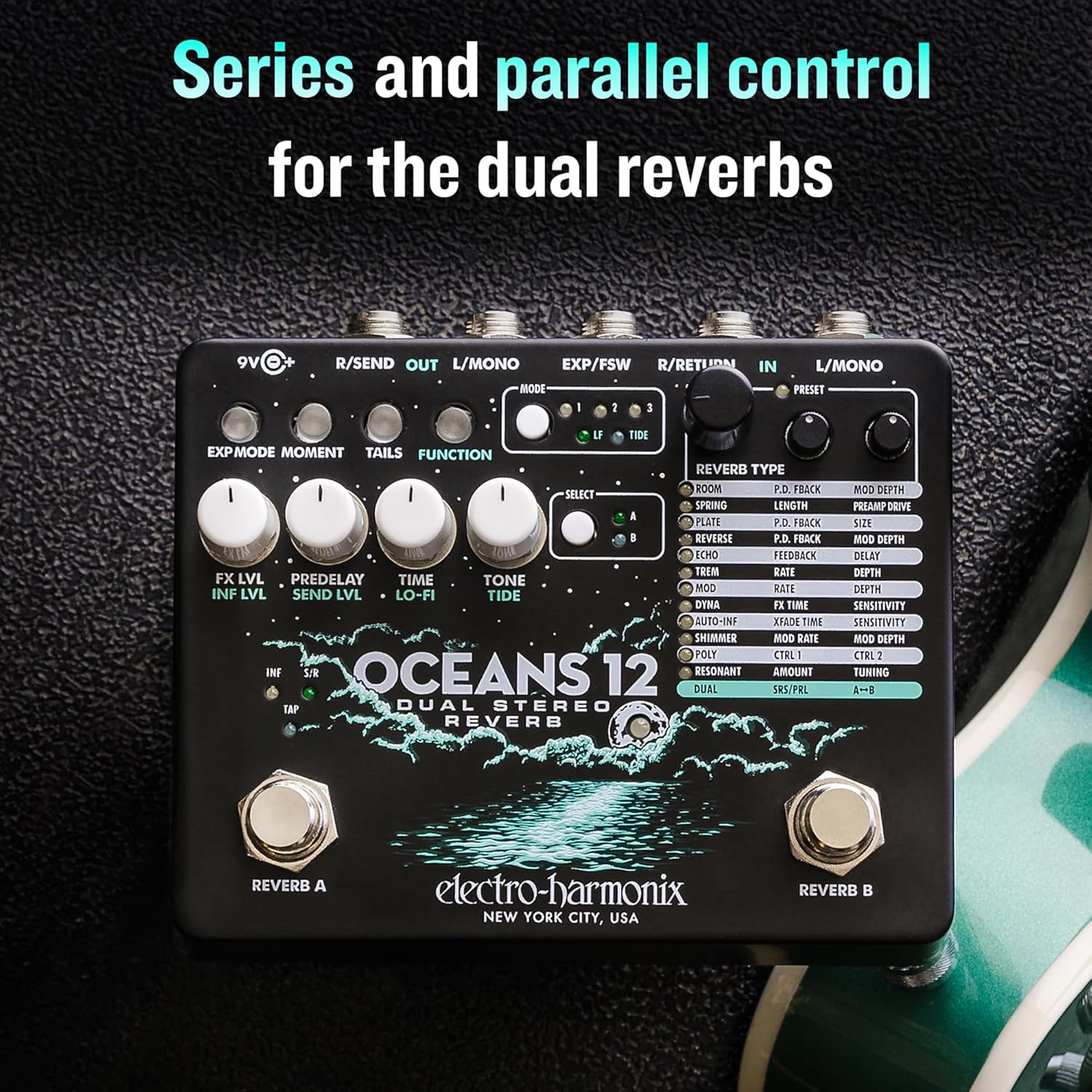
Figure 6: The Oceans 12 pedal, demonstrating its series and parallel control options for combining the two reverb engines.
Awọn tito tẹlẹ
The Oceans 12 includes 24 presets, allowing you to save and recall your favorite reverb settings. Refer to the full manual for detailed instructions on saving and loading presets.
To ti ni ilọsiwaju Awọn ẹya ara ẹrọ
- Tide Control: This feature allows for stereo image alteration, providing dynamic width and movement to the reverb sound.
- Lo-fi Control: Introduces a vintage, degraded quality to the reverb, useful for specific atmospheric effects.
- Infinite Attenuation Control: Enables sustained reverb tails, allowing notes to ring out indefinitely.
- Iṣakoso ita: An input jack is provided for connecting an external expression pedal or a 3-button footswitch, offering hands-free control over various parameters and functions.

Figure 7: The Oceans 12 pedal showcasing its advanced controls, including Tide Control for stereo image alteration, Lo-fi Control, and Infinite Attenuation Control.
Awọn pato
| Ẹya ara ẹrọ | Ẹ̀kúnrẹ́rẹ́ |
|---|---|
| Nọmba awoṣe | OCEANS12 |
| Iwọn Nkan | 1.76 iwon (0.8 kilo) |
| Ọja Mefa | 5.5 x 4 x 1 inches (4.5"L x 2.75"W x 2.1"H) |
| Orisun agbara | Okun Itanna |
| Voltage | 9 Volts |
| Ni wiwo Hardware | 1/4-inch Audio |
| Ilana ifihan agbara | Analog |
| Àwọ̀ | Dudu, Imọlẹ Blue |
| Ara | Reverb, Expression, Advanced |
Itoju
To ensure the longevity and optimal performance of your Electro-Harmonix Oceans 12 pedal, follow these maintenance guidelines:
- Ninu: Use a soft, dry cloth to clean the pedal's exterior. Avoid abrasive cleaners or solvents, as they may damage the finish or internal components.
- Ibi ipamọ: Store the pedal in a cool, dry place away from direct sunlight and extreme temperatures. When not in use for extended periods, disconnect the power supply.
- Awọn isopọ: Periodically check all input/output jacks and power connections for any signs of wear or corrosion. Ensure cables are securely plugged in during operation.
- Foot Switches: Keep footswitches free from debris.
Laasigbotitusita
If you encounter issues with your Oceans 12 pedal, consider the following troubleshooting steps:
- Ko si Ohun:
- Rí i dájú pé agbára ìpèsè náà ti so pọ̀ dáadáa àti pé ó ń ṣiṣẹ́ dáadáa.
- Ṣàyẹ̀wò gbogbo àwọn okùn ohùn fún ìsopọ̀ tó yẹ àti ìdúróṣinṣin.
- Ensure the pedal is not in bypass mode if you expect an effect.
- Confirm the FX LVL knob is not set to minimum.
- Ohun Airotẹlẹ/Ariwo:
- Check for ground loops if using multiple pedals.
- Rí i dájú pé gbogbo àwọn okùn wa ni ààbò àti pé wọ́n wà ní ipò tó dára.
- Review knob settings; extreme settings can produce unusual sounds.
- Stereo Output Issues:
- Ensure both L/MONO and R/RETURN inputs are correctly connected for stereo input, and L/MONO and R/SEND outputs are used for stereo output.
- Verify that the cables used for stereo connections are functioning correctly.
- Test with different cables and amplifiers/interfaces to isolate the issue.
- Footswitch Unresponsive:
- Ensure the footswitch is clean and free of debris.
- If using an external footswitch, verify its connection and functionality.
If problems persist after attempting these steps, contact Electro-Harmonix customer support for further assistance.
Atilẹyin ọja ati Support
Electro-Harmonix products are designed for reliability and performance. For information regarding warranty coverage, product registration, or technical support, please visit the official Electro-Harmonix webojula tabi kan si wọn onibara iṣẹ Eka taara. Tọju iwe-ẹri rira rẹ bi ẹri rira fun awọn iṣeduro atilẹyin ọja.
For additional resources and the most up-to-date information, please refer to the Electro-Harmonix official webojula.


