1. Awọn Ilana Aabo pataki
Jọ̀wọ́ ka gbogbo ìtọ́ni náà dáadáa kí o tó lo ohun èlò yìí kí o sì tọ́jú wọn fún ìtọ́kasí ọjọ́ iwájú. Àìtẹ̀lé àwọn ìtọ́ni wọ̀nyí lè yọrí sí ìkọlù iná mànàmáná, iná, tàbí ìpalára ńlá.
- Nigbagbogbo so ẹrọ pọ mọ iṣan agbara ti ilẹ.
- Ma ṣe ṣiṣẹ ẹyọ naa pẹlu okun ti o bajẹ tabi pulọọgi.
- Pa ẹrọ naa mọ kuro ninu awọn ohun elo ti o le jona ati awọn ina ti o ṣii.
- Rii daju pe fentilesonu to dara ni ayika ẹyọ naa lakoko iṣẹ.
- Ma ṣe fi awọn nkan sii sinu ẹnu-ọna afẹfẹ tabi iṣan.
- Yọọ kuro ṣaaju ṣiṣe mimọ tabi ṣiṣe itọju eyikeyi.
- Ohun elo yii kii ṣe ipinnu fun lilo nipasẹ awọn eniyan (pẹlu awọn ọmọde) pẹlu idinku ti ara, imọlara tabi awọn agbara ọpọlọ, tabi aini iriri ati imọ, ayafi ti wọn ba ti fun wọn ni abojuto tabi itọnisọna nipa lilo ohun elo nipasẹ eniyan ti o ni iduro fun aabo wọn.
2. Ọja Ipariview
The FlinQ Mobile Air Conditioner is a versatile unit designed to provide cooling, dehumidification, and fan functions for your living space. It is equipped with an energy-efficient design and comes with a window kit for easy installation.

olusin 2.1: Iwaju view of the FlinQ Mobile Air Conditioner, showing the main air outlet and control panel area.

Figure 2.2: The mobile air conditioner unit, displaying its energy efficiency label (Class A) and the included remote control for convenient operation.
3. Irinše ati Parts
Familiarize yourself with the main components of your mobile air conditioner:
- Main Unit (with control panel)
- eefi Hose
- Window Sealing Kit (adjustable window slider/plate)
- Isakoṣo latọna jijin
- Drain Hose (for continuous drainage in dehumidification mode)
- Air Filters (located on the back/side)
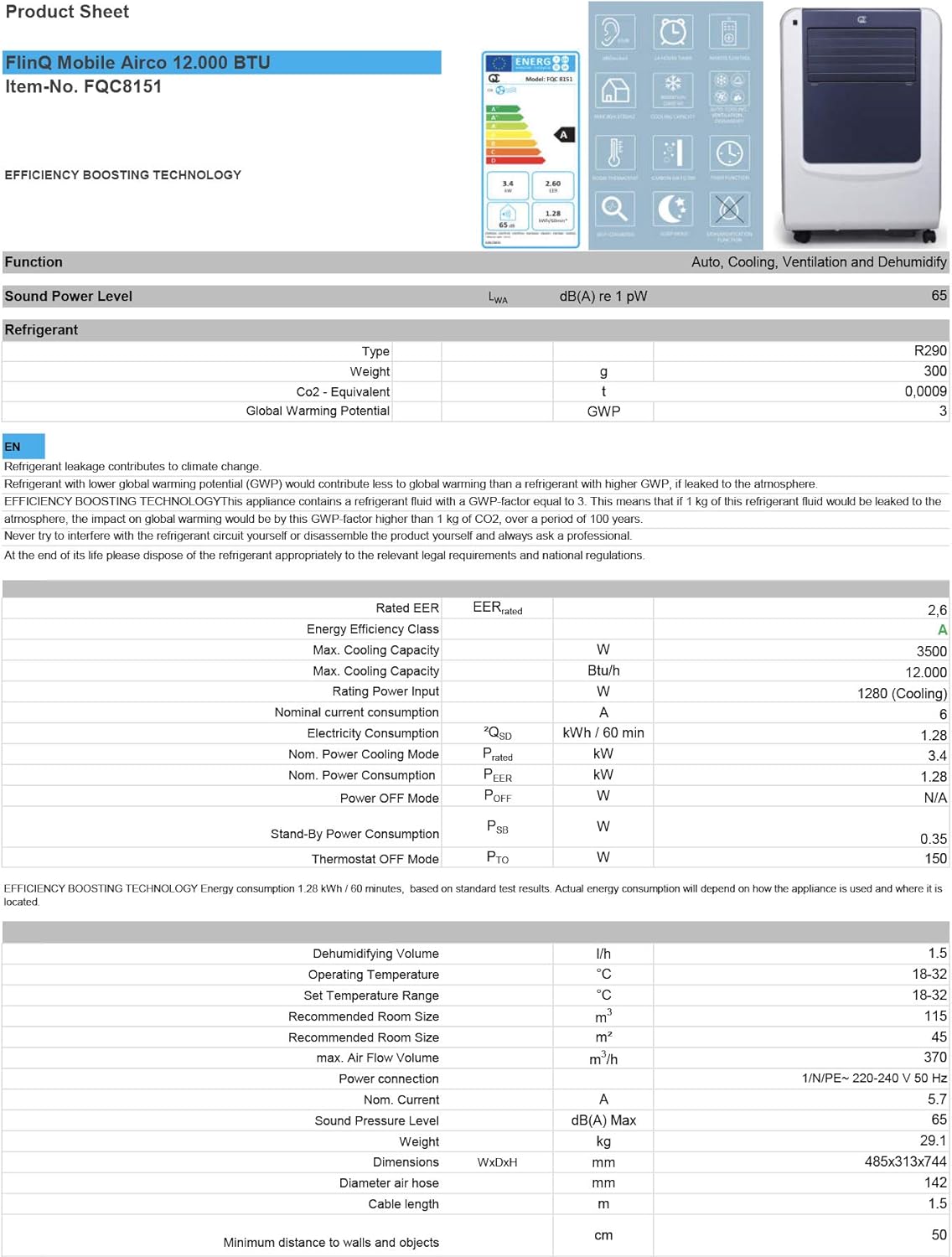
Figure 3.1: The remote control and a visual representation of the unit's key features, including noise level (65dB), 24-hour timer, cooling capacity (12000 BTU/h), room thermostat, carbon air filter, self-diagnosis, sleep mode, remote control function, timer function, auto cooling/fan/dehumidification, and dehumidification function.
4. Eto ati fifi sori
4.1 Ṣiṣii silẹ
Carefully remove the air conditioner and all accessories from the packaging. Inspect for any damage during transit. Keep the original packaging for future storage or transport.
4.2 Ibi
Place the unit on a flat, stable surface. Ensure there is at least 30 cm (12 inches) of clear space around the unit for proper airflow. Do not place it near heat sources or in direct sunlight.
4.3 Window Apo fifi sori
To ensure efficient cooling, the hot air extracted by the unit must be vented outside. Use the provided window sealing kit for this purpose.
- So asopọ okùn eefin mọ́ ibi tí afẹ́fẹ́ ti ń jáde ní ẹ̀yìn ẹ̀rọ náà.
- Fa okun eefin naa siwaju ki o si so ohun ti nmu badọgba ferese naa mọ opin keji.
- Adjust the window slider/plate to fit your window opening.
- Insert the window adapter into the opening of the window slider/plate.
- Close the window as much as possible to seal the opening around the kit, minimizing air leakage.

olusin 4.1: Apa view of the mobile air conditioner, illustrating the connection point for the exhaust hose, which expels hot air from the room.
5. Awọn ilana Iṣiṣẹ
5.1 Iṣakoso igbimo
The control panel is located on the top of the unit and features various buttons and an LED display for setting modes, temperature, and timer functions.
5.2 Iṣakoso latọna jijin
The remote control allows you to operate all functions of the air conditioner from a distance. Ensure the remote control batteries are inserted correctly.
5.3 Awọn ọna ṣiṣe
Press the 'Mode' button to cycle through the available operating modes:
- Ipo itutu: For cooling the room. Set your desired temperature using the temperature adjustment buttons.
- Ipò Ìtújáde: Removes excess moisture from the air. The fan speed is typically fixed in this mode. Consider connecting a drain hose for continuous drainage.
- Ipo Ipele: Circulates air without cooling. You can adjust the fan speed (Low, Medium, High).

olusin 5.1: Isunmọ view of the adjustable louvers on the air conditioner's front panel, which direct the airflow.
6. Itọju
Itọju deede ṣe idaniloju iṣẹ ṣiṣe ti o dara julọ ati fa igbesi aye afẹfẹ afẹfẹ rẹ pọ si.
6.1 Ninu Air Ajọ
The air filters should be cleaned every two weeks or more frequently depending on usage and air quality. Dirty filters reduce efficiency and can damage the unit.
- Yọọ air kondisona kuro ninu iṣan agbara.
- Locate and remove the air filters (usually on the back or side of the unit).
- Wash the filters under running water (warm, not hot) or use a vacuum cleaner to remove dust.
- Allow the filters to air dry completely before reinserting them. Do not expose them to direct sunlight.

Figure 6.1: Illustration of how to remove the air filter from the mobile air conditioner for cleaning, highlighting the accessible filter panel.
6.2 Sisọ Omi
The unit collects condensed water during cooling and dehumidification. The internal tank will fill up, and the unit may stop operating when full. Drain the water regularly.
- Place a shallow pan or tray under the drain port (usually at the bottom rear of the unit).
- Yọ plug sisan kuro lati jẹ ki omi san jade.
- For continuous drainage in dehumidification mode, attach the provided drain hose to the drain port.
6.3 Ibi ipamọ
Nigbati o ba tọju ẹyọ naa fun igba pipẹ:
- Fa gbogbo omi kuro ninu ẹrọ naa.
- Mọ awọn asẹ afẹfẹ.
- Yọọ okun agbara naa ki o si ṣa o daradara.
- Tọ́jú ẹ̀rọ náà sí ibi gbígbẹ àti tútù, ó dára jù láti kó o sínú àpótí ìpamọ́ àtilẹ̀wá rẹ̀.
7. Laasigbotitusita
Ṣaaju ki o to kan si atilẹyin alabara, jọwọ tọka si tabili atẹle fun awọn ọran ti o wọpọ ati awọn ojutu wọn:
| Isoro | Owun to le Fa | Ojutu |
|---|---|---|
| Ẹka ko ni tan-an | Kò sí agbára; Kò sí okùn agbára; okùn omi kíkún | Ṣàyẹ̀wò ibi tí agbára ń jáde; So okùn agbára pọ̀ mọ́ ọn; Fa omi kúrò nínú ọkọ̀ omi |
| Ẹyọ náà kò tutu tó | Dirty air filters; Exhaust hose blocked/leaking; Room too large; Doors/windows open | Clean filters; Check hose for blockages/proper sealing; Ensure room size is within capacity; Close doors/windows |
| Unit jẹ alariwo | Unit not on a flat surface; Air filters dirty | Place on flat surface; Clean air filters |
| Omi jijo lati kuro | Drain plug not properly sealed; Unit tilted | Rí i dájú pé páálí ìṣàn omi wà ní ààbò; Gbé ẹ̀rọ náà sí ojú ilẹ̀ tí ó tẹ́jú; |
8. Awọn pato
Technical details for the FlinQ Mobile Air Conditioner:
| Ẹya ara ẹrọ | Iye |
|---|---|
| Nọmba awoṣe | 8720168680396 |
| Ọja Mefa | 74 x 48 x 31 cm |
| Iwọn Nkan | 29 g (Note: This weight seems unusually low for an AC unit, please refer to product packaging for accurate weight) |
| Ariwo Ipele | 65 dB |
| Agbara Itutu | 12000 BTU / h |
| Niyanju Yara Iwon | Ti o to 45 m² |
| Pataki Awọn ẹya ara ẹrọ | Isakoṣo latọna jijin |
| Agbara Kilasi | A |

Figure 8.1: Official product sheet detailing technical specifications, energy consumption, cooling capacity, and dimensions of the FlinQ Mobile Air Conditioner.
9. Atilẹyin ọja ati Support
This FlinQ Mobile Air Conditioner comes with a limited warranty. Please refer to the warranty card included with your purchase for specific terms and conditions.
For technical support, service, or warranty claims, please contact your retailer or the manufacturer directly. Keep your proof of purchase for warranty validation.
Ibi iwifunni:
- Brand: FLINQ
- Webojula: www.flinq.nl (Eksample, please refer to actual product documentation for correct webaaye)
- Imeeli: support@flinq.nl (Eksample, please refer to actual product documentation for correct email)


