1. Ifihan
The Watts BT-D03 RF is a wireless digital room thermostat designed for precise temperature control in various heating and cooling installations. It features a backlit LCD screen and operates via 868 MHz radio frequency communication. This manual provides comprehensive instructions for the proper installation, operation, and maintenance of your thermostat.

olusin 1: Iwaju view of the Watts BT-D03 RF Thermostat, showing the display and control buttons.
2. Alaye Aabo
- Ka gbogbo awọn ilana ni pẹkipẹki ṣaaju fifi sori ẹrọ ati ṣiṣẹ.
- Installation should only be performed by a qualified electrician or heating engineer.
- Rii daju pe ipese agbara ti ge-asopo ṣaaju ṣiṣe eyikeyi onirin tabi itọju.
- Ma ṣe fi ẹrọ naa han si awọn iwọn otutu to gaju, ọriniinitutu, tabi imọlẹ orun taara.
- Pa ẹrọ kuro lati awọn ọmọde.
3. Package Awọn akoonu
Jẹrisi pe gbogbo awọn paati wa ninu package:
- Watts BT-D03 RF Wireless Digital Room Thermostat
- Iduro tabili
- Iṣagbesori skru ati odi plugs
- Itọsọna olumulo
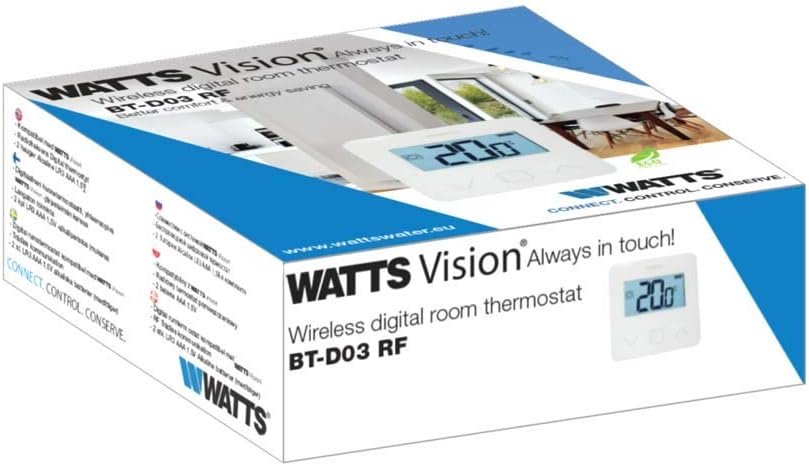
Figure 2: Product packaging of the Watts BT-D03 RF Thermostat.
4. Ọja Ipariview
4.1 irinše
- Ifihan LCD: Backlit screen showing temperature, battery level, and operating status.
- Awọn bọtini Iṣakoso: Up, Down, and OK/Menu buttons for navigation and setting adjustments.
- Awọn sensọ inu: For detecting ambient room temperature.
- External Sensor Port: For optional NTC 10 kOhm external sensor (not included).
- Atọka LED: Shows active heating/cooling signal.
- Internal Reset Button: For quick RF pairing or system reset.
- Buzzer: Provides audible feedback for certain operations.

olusin 3: Alaye iwaju view of the thermostat display.

olusin 4: Pada view of the thermostat, showing battery compartment and mounting points.
4.2 Awọn iwọn
The physical dimensions of the thermostat are provided below for installation planning.
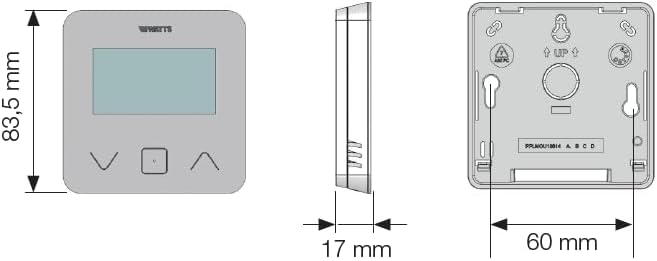
Figure 5: Dimensional drawing of the Watts BT-D03 RF Thermostat.
5. Eto
5.1 Fifi sori batiri
- Remove the back cover of the thermostat.
- Fi awọn batiri AAA meji sii, ni idaniloju polarity ti o pe.
- Rọpo ideri ẹhin.
5.2 iṣagbesori Aw
The thermostat can be installed in two ways:
- Iṣagbede ogiri: Use the provided screws and wall plugs to secure the thermostat to a wall at an appropriate height (typically 1.5 meters from the floor).
- Ibi Tabili: Attach the included stand to the back of the thermostat for placement on a flat surface.

Figure 6: Thermostat with tabletop stand attached.
5.3 RF Pairing
To establish wireless communication with the receiver unit (sold separately), follow the pairing instructions provided with your receiver. The thermostat features an internal reset button for quick RF pairing, typically requiring a short press during the receiver's pairing mode.
6. Awọn ilana Iṣiṣẹ
6.1 Titan / Pa a
The thermostat powers on automatically upon battery insertion. There is no dedicated on/off button for the thermostat unit itself; it remains active as long as batteries are present.
6.2 Atunṣe iwọn otutu
Use the Up and Down buttons to adjust the desired setpoint temperature. The LCD will display the current setpoint during adjustment.
6.3 Ifihan Awọn ipo
You can choose to display either the detected ambient temperature or the currently set temperature on the LCD. Refer to the full installation parameters mode for configuration details.
6.4 Keypad Lock (PIN Code)
To prevent unauthorized changes, the keypad can be locked using a PIN code. This feature is particularly useful for installations in public areas. Consult the advanced settings menu for PIN code setup and activation.
6.5 Ṣii Window erin
The thermostat includes an open window detection feature. When a sudden drop in temperature is detected, the thermostat can temporarily suspend heating/cooling to conserve energy. This function can be configured in the settings.
6.6 Proportional Band Setting (PWM)
The thermostat supports proportional band setting (PWM) or configurable institutions (0.2÷3) for precise control of heating/cooling systems. This advanced setting allows for fine-tuning the system's response to temperature changes.
7. Itọju
7.1 Batiri Rirọpo
When the battery charge level indicator on the LCD shows low power, replace the two AAA batteries promptly to ensure continuous operation. Follow the battery installation steps in Section 5.1.
7.2 Ninu
Clean the thermostat's exterior with a soft, dry cloth. Do not use abrasive cleaners, solvents, or spray directly onto the device.
8. Laasigbotitusita
- Ko si Ifihan: Ṣayẹwo fifi sori batiri ati ipele idiyele. Rọpo awọn batiri ti o ba wulo.
- No Communication with Receiver: Ensure the thermostat and receiver are within range. Re-perform the RF pairing procedure (Section 5.3).
- Kika iwọn otutu ti ko tọ: Rii daju pe thermostat ko farahan si imọlẹ orun taara, awọn iyaworan, tabi awọn orisun ooru.
- Bọtini foonu Ko dahun: Check if the keypad lock (PIN Code) is active. Unlock the keypad as per instructions.
8.1 Tun iṣẹ
If the thermostat is not functioning as expected, an internal reset button can be used. Consult the full installation parameters mode for specific reset procedures, as this may clear custom settings.
9. Imọ ni pato
| Brand | Wattis |
| Nọmba awoṣe | BT-D03-RF-GT |
| Awọn iwọn Ọja (L x W x H) | 6.2 x 1.7 x 8.35 cm |
| Iwọn Nkan | 0.18 g |
| Voltage | 230 Volts (for connected system, thermostat is battery powered) |
| Orisun agbara | Batiri agbara |
| Adarí Iru | Iṣakoso Afowoyi |
| Ifihan Iru | LCD |
| Imọlẹ ẹhin | Bẹẹni |
| Awọn iwọn otutu ti nṣiṣẹ | 0 si 40 °C |
10. Alaye ibamu
The Watts BT-D03 RF Wireless Digital Room Thermostat complies with the following directives:
- Ọdun 2014/35/EU
- Ọdun 2014/30/EU
- Ọdun 2014/53/EU
- Ọdun 2011/65/EU
- Ọdun 2012/19/EU
- Ọdun 2015/1188/EU


