Ọja Pariview
The Daytech Wireless Door Sensor Chime system provides a reliable alert solution for various applications. It consists of a wireless magnetic sensor and one or more plug-in receivers. When the sensor detects an opening (e.g., a door or window), it sends a signal to the receiver, which then emits an audible chime and activates an LED indicator. This system is designed to enhance security and convenience in homes, businesses, and care settings.
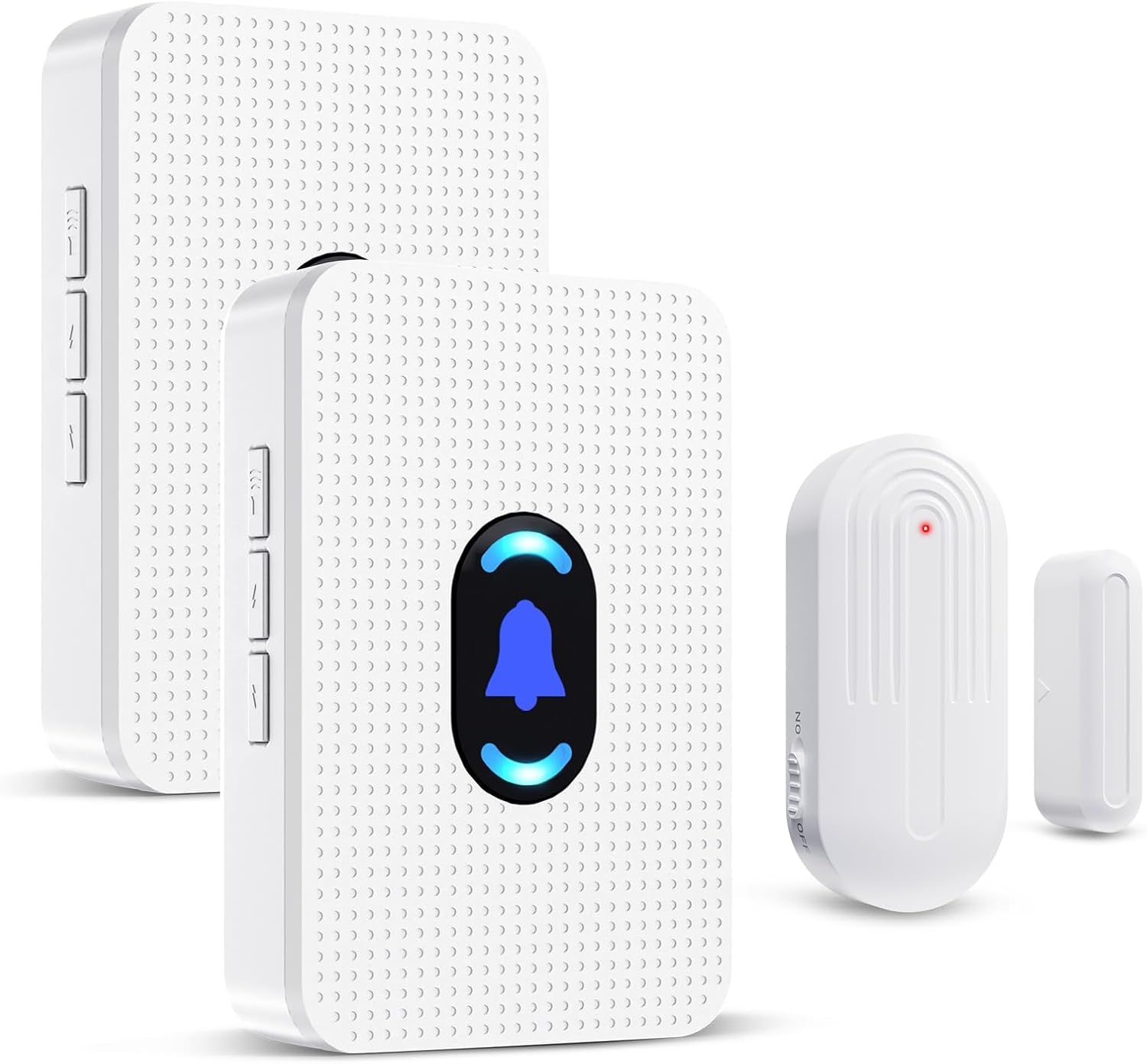
Image: Daytech Wireless Door Sensor Chime system, showing two plug-in receivers and a magnetic door/window sensor.
Awọn ẹya pataki:
- Isẹ Alailowaya: Provides flexible placement without the need for complex wiring.
- Ibi ti o gbooro sii: Operates effectively up to 800 feet (240 meters) in open areas.
- Awọn Itaniji Iṣatunṣe: Offers 20 selectable chimes and 5 adjustable volume levels (0-110 dB), including a mute mode.
- Atọka wiwo: Features an LED indicator on the receiver for visual alerts.
- Ohun elo to pọ: Suitable for home security, business entry alerts, child safety, and monitoring for elderly individuals.
- Fifi sori Rọrun: Simple setup with adhesive tape for the sensor and plug-and-play for the receiver.
- Durable Sensor: IP44 waterproof rating for the sensor, designed for long-term use.
Package Awọn akoonu
- 1 x Wireless Magnetic Door Sensor
- Àwọn Olùgbà Àfikún 2 x
- Mounting Hardware (e.g., double-sided adhesive tape)
- Itọsọna olumulo
Eto ati fifi sori
1. Powering the Receiver:
Plug the receiver into any standard electrical outlet. The receiver will power on and be ready for operation.
2. Fifi sensọ sori ẹrọ:
The wireless sensor consists of two parts: the main sensor unit and a smaller magnetic strip. These two parts must be installed in close proximity to each other, typically on a door/window frame and the door/window itself.
- Identify a suitable location on your door, window, drawer, or cabinet. Ensure the two sensor parts can be aligned when the door/window is closed.
- Clean the surface where the sensor will be mounted to ensure proper adhesion.
- Peel the backing from the double-sided adhesive tape provided.
- Attach one part of the sensor to the door/window frame and the other part to the moving door/window. Ensure the alignment marks on both parts are facing each other and the gap between them is less than 0.6 inches (1.5 cm) when closed.

Aworan: Examples of sensor installation on doors, windows, drawers, and cabinets.

Image: Visual guide for mounting the door sensor using adhesive tape.
3. Pairing (if necessary):
The sensor and receiver are typically pre-paired from the factory. If re-pairing is needed or if you are adding new sensors/receivers, follow these steps:
- Pulọọgi sinu olugba.
- On the receiver, long press the volume button for 5-7 seconds until the LED indicator starts blinking rapidly. This indicates pairing mode.
- Quickly separate the two parts of the door sensor to activate the transmitter and send a signal to the receiver.
- Upon successful pairing, the receiver will sound a chime and the LED will stop blinking, confirming the connection.
Awọn ilana Iṣiṣẹ
1. Chime Activation:
When the two parts of the magnetic sensor are separated (e.g., a door or window opens), the sensor will trigger the paired receiver(s) to sound the selected chime and illuminate the LED indicator.

Image: Applications for home security, child safety, and elderly care.

Image: Applications for business, store, and office environments.
2. Iṣatunṣe Iwọn didun:
The receiver features a volume control button. Press this button repeatedly to cycle through 5 adjustable volume levels, ranging from 0 dB (mute) to 110 dB (maximum volume).

Image: Receiver with adjustable volume levels and LED indicator.
3. Changing Chime Melodies:
The receiver offers 20 different chime melodies. Use the "forward" and "backward" buttons on the side of the receiver to select your preferred melody.
4. Ibiti iṣẹ:
The system has a wireless operating range of up to 800 feet (240 meters) in an open environment. Walls, metal structures, and other electronic devices may reduce the effective range.

Image: Illustration of the system's 800ft wireless range.
Itoju
1. Sensor Battery Replacement:
The wireless sensor is powered by a CR2450 3V lithium battery. When the sensor's performance degrades or it stops transmitting signals, the battery may need replacement.
- Fara ṣii sensọ casing using a small screwdriver.
- Yọ batiri CR2450 atijọ kuro.
- Insert a new CR2450 3V lithium battery, ensuring correct polarity.
- Pa sensọ casing ni aabo.
Image: Visual guide for battery replacement in the sensor.
The sensor battery is designed for long life, supporting up to 100,000 uses or 3-5 years of typical operation.

Image: Details on sensor battery life and durability features.
2. Ninu:
Wipe the sensor and receiver with a soft, dry cloth. Do not use abrasive cleaners or immerse the units in water.
3. Awọn ipo Ayika:
The sensor is IP44 waterproof, suitable for outdoor use in various weather conditions. The operating temperature range is -4°F (-20°C) to 140°F (60°C).
Laasigbotitusita
| Isoro | Owun to le Fa | Ojutu |
|---|---|---|
| Receiver does not chime when sensor is triggered. |
|
|
| Iwọn chime ti lọ silẹ tabi ga ju. | Eto iwọn didun nilo atunṣe. | Press the volume control button on the receiver to cycle through the 5 volume levels. |
| Chime melody is not desired. | Incorrect melody selected. | Use the "forward" and "backward" buttons on the receiver to select a different melody. |
| A ti dinku ibiti alailowaya wa. | Environmental interference or excessive distance. |
|
Awọn pato
| Ẹya ara ẹrọ | Ẹ̀kúnrẹ́rẹ́ |
|---|---|
| Nọmba awoṣe | AUB094VDX2J6 |
| Brand | Daytech |
| Orisun Agbara (Olugba) | Afikún-in (Agbara AC) |
| Orisun Agbara (Sensọ) | 1 x CR2450 3V Lithium Battery (included) |
| Voltage | 260 Volts (for receiver, typical for plug-in devices) |
| Alailowaya Ibiti | Títí dé ẹsẹ̀ bàtà 800 (mítà 240) ní ibi tí ó ṣí sílẹ̀ |
| Àwọn Orin Orin Ariwo | 20 awọn ohun orin ipe yiyan |
| Awọn ipele iwọn didun | 5 adjustable levels (0 dB to 110 dB) |
| Ọna ẹrọ | Contact Sensor (Magnetic) |
| Iṣagbesori Iru | Door Mount, Window Mount (Adhesive Tape) |
| Sensor Gap Requirement | Less than 0.6 inches (1.5 cm) when closed |
| Ohun elo | ABS |
| Idiyele Omi Sensọ | IP44 |
| Awọn iwọn otutu ti nṣiṣẹ | -4°F (-20°C) si 140°F (60°C) |
| Iwọn Nkan | 8.1 iwon (apapọ lapapọ) |
| Package Mefa | 4.33 x 3.82 x 3.58 inches |
Atilẹyin ọja ati Support
For any product inquiries, technical support, or warranty information, please contact Daytech Customer Service. Refer to the product packaging or the official Daytech webAaye fun awọn alaye olubasọrọ lọwọlọwọ julọ.
Daytech is committed to providing quality products and customer satisfaction.


