1. Ifihan
This manual provides detailed instructions for the ANBERNIC RG351MP Handheld Game Console. Please read this manual thoroughly before using the device to ensure proper operation and to maximize your gaming experience. Keep this manual for future reference.
2. Alaye Aabo
- Ma ṣe fi ẹrọ naa han si awọn iwọn otutu to gaju, imọlẹ orun taara, tabi ọriniinitutu giga.
- Yago fun sisọ silẹ tabi tẹriba ẹrọ si awọn ipa to lagbara.
- Jeki ẹrọ naa kuro ninu omi ati awọn olomi miiran.
- Má ṣe gbìyànjú láti tú tàbí tún ẹ̀rọ náà ṣe fúnra rẹ. Kan si àwọn òṣìṣẹ́ iṣẹ́ tí a fún ní àṣẹ fún ìrànlọ́wọ́.
- Lo okun gbigba agbara ti a pese nikan ati ohun ti nmu badọgba.
- Rii daju pe fentilesonu to dara lakoko lilo ati gbigba agbara.
- This product contains a Lithium Polymer battery. Dispose of batteries responsibly according to local regulations.
3. Package Awọn akoonu
Jẹrisi pe gbogbo awọn ohun kan wa ninu package:
- 1 x RG351MP Game Console
- 1 x WIFI Module
- 1 x 64G SD Card
- 1 x Okun Ngba agbara USB
- 1 x Itọsọna olumulo
- 1 x Olugbeja iboju
- 1 x Wipes
4. Ọja Ipariview
Familiarize yourself with the various components and controls of your ANBERNIC RG351MP console.
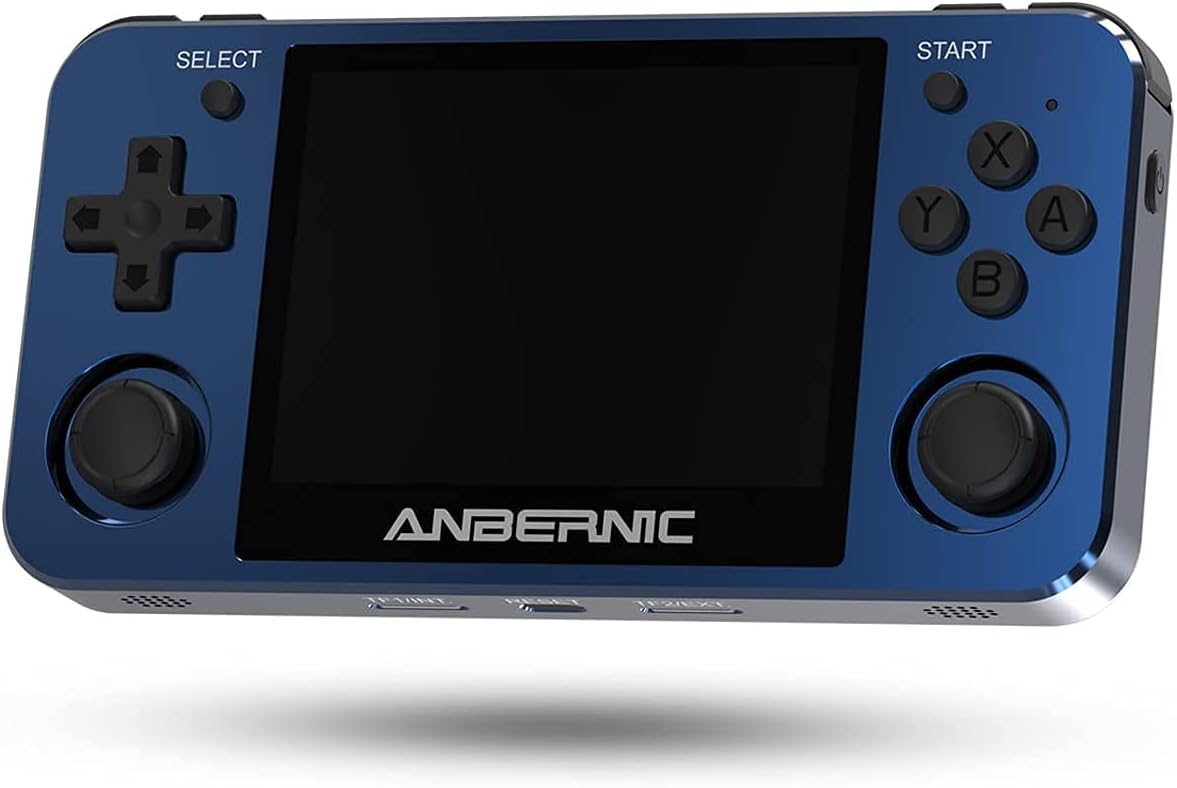
olusin 4.1: Iwaju View. This image displays the front of the ANBERNIC RG351MP console, featuring the 3.5-inch IPS screen, D-pad, action buttons (X, Y, A, B), SELECT and START buttons, and dual analog joysticks.

Figure 4.2: Console Layout. This image provides various angles of the console, highlighting the L1/L2/R1/R2 shoulder buttons, OTG and DC ports on the top, volume controls on the side, and TF/EXT, Reset, and TF2/EXT slots on the bottom.

olusin 4.3: Pada View. The rear of the console is shown, displaying the ANBERNIC logo, model number RG351MP, and regulatory markings. This view also indicates the location of the internal Li-Po battery.

Figure 4.4: Screen Display. This image emphasizes the console's 3.5-inch IPS screen with OCA full lamination and 640x480 resolution, providing a clear visual experience.
5. Eto
5.1 Ngba agbara si Ẹrọ
Before initial use, fully charge the console. Connect the provided USB charging cable to the DC port on the top of the console and the other end to a compatible USB power adapter (maximum load 2A). A full charge typically takes approximately 4 hours.
5.2 Fi sii kaadi TF
The console supports dual TF card slots. The primary TF1/EXT slot is for the operating system and pre-installed games. The TF2/EXT slot can be used to expand storage up to 256GB for additional games.
- Locate the TF1/EXT slot on the bottom of the console.
- Gently insert the pre-installed 64GB TF card into the slot until it clicks into place.
- If using an additional TF card for games, insert it into the TF2/EXT slot.

Figure 5.1: TF Card Insertion. This image illustrates the process of inserting a TF card into the console's expansion slot, demonstrating how to properly seat the card.
5.3 Titan / Pa a
- Lati Fi agbara: Press and hold the Power button (located on the side) for a few seconds until the screen illuminates.
- Lati Paarẹ: Press and hold the Power button until the power-off menu appears, then select "Shutdown" or "Power Off". Alternatively, a quick press of the Power button may put the device into sleep mode, depending on system settings.
5.4 Connecting the WIFI Module
The console supports an external WIFI module for network connectivity. Insert the provided WIFI module into one of the OTG USB ports (located on the top of the console). Once connected, you can configure network settings within the system menu.
6. Awọn ilana Iṣiṣẹ
6.1 Ipilẹ Lilọ kiri
- D-pad / Analog Joysticks: Use these to navigate through menus and control in-game characters.
- Bọtini kan: Confirm selection or perform primary action.
- B Bọtini: Go back or perform secondary action.
- X / Y Buttons: Perform specific in-game actions as defined by the game.
- Bọtini Ibẹrẹ: Pause game, open in-game menus, or confirm selections.
- Bọtini Yan: Access system menus or perform specific in-game functions.
- Awọn bọtini L1/L2/R1/R2: Shoulder buttons for various in-game controls.
6.2 Game Selection and Launching
From the main menu, navigate to the desired game system (e.g., PS1, GBA, NES). Select a game from the list using the D-pad or analog stick and press the A button to launch it.
6.3 Saving and Loading Game States
Most emulators support "save states" which allow you to save your progress at any point in a game, independent of the game's internal save system. Refer to the specific emulator's hotkey combinations (often a combination of SELECT + L1/R1 or similar) for saving and loading states.
6.4 Eto eto
Access the system settings menu (usually via the SELECT button or a dedicated menu option) to adjust:
- Èdè: Yí èdè ètò padà.
- Ifihan: Adjust screen brightness, aspect ratio, and video filters.
- Ohun: Control volume levels and audio output.
- Nẹtiwọọki: Configure Wi-Fi settings (requires external Wi-Fi module).
- Eto Alakoso: Map buttons or calibrate joysticks.
6.5 Adding New Games
To add new games, you will need to transfer game ROMs to the TF2/EXT card. Ensure the ROMs are in a format supported by the console's emulators. Connect the TF2/EXT card to a computer using a card reader and copy the game files to the appropriate system folders on the card. After reinserting the card into the console, refresh the game list in the system menu.
7. Itọju
7.1 Ninu ẹrọ naa
Use a soft, dry, lint-free cloth to clean the console's exterior. For the screen, use a screen-specific cleaning solution and a microfiber cloth. Do not use abrasive cleaners or solvents.
7.2 batiri Itọju
- Yago fun gbigba agbara si batiri ni kikun nigbagbogbo.
- Tọju ẹrọ naa ni itura, aye gbigbẹ nigbati o ko ba wa ni lilo fun awọn akoko gigun.
- If the device will not be used for a long time, charge it to about 50% before storing.
7.3 Software imudojuiwọn
Periodically check the official ANBERNIC website or community forums for firmware updates. Updates can improve performance, add features, or fix bugs. Follow the provided instructions carefully when performing any software updates.
8. Laasigbotitusita
| Isoro | Owun to le Fa | Ojutu |
|---|---|---|
| Ẹrọ naa ko ṣiṣẹ. | Low battery; TF card not properly inserted; System crash. | Charge the device for at least 30 minutes. Ensure TF1/EXT card is correctly inserted. Press the Reset button (located on the bottom of the console) with a thin object. |
| Games are not loading or crashing. | Corrupt game file; Incorrect emulator settings; TF card issue. | Verify game file integrity. Check emulator settings (e.g., core, video driver). Reinsert or try a different TF card. |
| Iboju naa ṣofo tabi o n tan imọlẹ. | Ọrọ sọfitiwia; Hardware aiṣedeede. | Restart the device. If the problem persists, contact customer support. |
| Ko si ohun. | Volume too low; Muted; Headphone jack issue. | Increase volume using the side buttons. Check system sound settings. Ensure no headphones are partially inserted. |
9. Awọn pato
| Ẹya ara ẹrọ | Ẹ̀kúnrẹ́rẹ́ |
|---|---|
| Awoṣe | RG351MP |
| Ohun elo | Aluminum alloy shell, CNC process |
| Iboju | 3.5 inch IPS screen, OCA full lamination, 640*480 resolution |
| Sipiyu | RK3326 quad core 1.5 GHz |
| GPU | Mali-G31 MP2 |
| Àgbo | DDR3L 1GB |
| Ti abẹnu Memory | 16GB (for system) |
| Eto | Open source Linux system |
| Game Support | Vibrating motor, supports 20+ game formats. Users can download relevant game formats. |
| Agbọrọsọ | High quality double horn stereo speaker |
| Batiri | Li-polymer 3500 mAh, lasting approximately 6 hours |
| Gbigba agbara | 1.3A charging, matching maximum load 2A, USB charging cable, 4 hours for full charge |
| TF Card Support | Supports TF card max to 256GB (dual TF card slots) |
| Awọn iṣẹ miiran | Support external network card WIFI, Double OTG, Double 3D rocker, Support 3.5mm stereo earphones. |
| Awọn iwọn | 6.6 x 3.8 x 1.9 inches (Awọn iwọn idii) |
| Iwọn Nkan | 15.2 iwon |
10. Atilẹyin ọja ati Support
10.1 atilẹyin ọja Alaye
ANBERNIC products are covered by a limited warranty. Please refer to the warranty card included in your package or visit the official ANBERNIC webAaye fun alaye atilẹyin ọja ofin ati ipo. Jeki ẹri rira rẹ fun awọn iṣeduro atilẹyin ọja.
10.2 Onibara Support
If you encounter any issues or have questions not covered in this manual, please contact ANBERNIC customer support. You can usually find contact information on the official ANBERNIC webaaye tabi nipasẹ alagbata ti o ti ra ọja naa.


