Ọrọ Iṣaaju
This manual provides detailed instructions for the installation, operation, and maintenance of the Turing TP-MFD4A4 Smart Series TwilightVision 4MP IR Dome IP Camera. This camera is designed for outdoor surveillance, featuring 4MP resolution, TwilightVision for low-light clarity, Smart IR up to 30m (98ft), and robust protection ratings (IP67, IK10).
Key Awọn ẹya ara ẹrọ
- Max. 4MP (2688x1520) resolution at 30/25fps.
- TwilightVision technology for optimal image clarity in low light conditions.
- Support for up to 256 GB microSD card for local storage.
- Advanced analytics including line crossing detection, enter area detection, motion detection (up to four areas), tampering alarm, and audio detection.
- Smart IR illumination up to 30 meters (98 feet).
- IP67 weather resistance and IK10 vandal resistance.
- Atilẹyin agbara lori Ethernet (PoE) fun fifi sori ẹrọ ti o rọrun.
- Wide Dynamic Range (WDR) for clear images in varying light conditions.
Ohun ti o wa ninu Apoti
Upon unpacking, verify that all items are present and in good condition:
- Turing TP-MFD4A4 Smart Series TwilightVision 4MP IR Dome IP Camera
- Ohun elo iṣagbesori (awọn skru, awọn ìdákọró)
- Itọsọna Ibẹrẹ kiakia (ko si ninu iwe afọwọkọ yii)
Ṣeto
1. Fifi sori ti ara
The TP-MFD4A4 camera is designed for ceiling mount installation. Ensure the mounting surface is strong enough to support the camera's weight.
Aworan: Iwaju view of the Turing TP-MFD4A4 Dome IP Camera, showing its compact design suitable for ceiling mounting.
- Yan Ibi: Choose a suitable outdoor location for optimal surveillance coverage, considering the 4mm fixed lens angle of view (H: 83.7°, V: 44.9°, D: 89.2°).
- Iṣagbesori: Use the provided mounting template (if applicable) to drill pilot holes. Secure the camera base to the ceiling using the screws and anchors.
- Ṣatunṣe Igun: Once mounted, adjust the camera's dome to achieve the desired viewigun igun.
2. Agbara ati Asopọ nẹtiwọki
The camera supports Power over Ethernet (PoE) for simplified installation, allowing both power and data transmission over a single Ethernet cable. Alternatively, it can be powered via a DC 12V power adapter (not included).

Image: A standard Ethernet cable with an RJ45 connector, used for both power (PoE) and data connection to the camera.
- Asopọmọra PoE: Connect one end of an Ethernet cable to the camera's RJ45 port and the other end to a PoE-enabled switch or NVR.
- Agbara DC (Àṣàyàn): If not using PoE, connect a 12V DC power adapter to the camera's power input and an Ethernet cable to a standard network switch or router.
- Iṣeto Nẹtiwọọki: The camera will obtain an IP address automatically via DHCP. For advanced network settings, refer to the Turing Vision software or NVR manual.
3. Fifi kaadi MicroSD sori (aṣayan)
The camera supports a microSD card up to 256 GB for onboard storage. This allows for local recording even if network connectivity is temporarily lost.
- Access Slot: Carefully open the camera housing to locate the microSD card slot. Refer to the camera's physical diagram for exact location.
- Fi Kaadi sii: Insert the microSD card into the slot with the contacts facing down until it clicks into place.
- Ọna kika: After installation, it is recommended to format the microSD card via the camera's web interface or connected NVR for optimal performance.
Ṣiṣẹ kamẹra
The Turing TP-MFD4A4 camera integrates with Turing Smart Series NVRs and the Turing Vision Cloud platform for comprehensive surveillance management.

Image: A tablet screen showing a multi-view display of live video feeds from several surveillance cameras, demonstrating remote monitoring capabilities.
1. Wíwọlé sí Lóòtọ́ọ́ View àti Àwọn Ìgbàsílẹ̀
- Turing Smart Series NVR: Connect the camera to a compatible Turing Smart Series NVR to view live feeds, manage recordings, and configure settings.
- Turing Vision Cloud: Utilize the Turing Vision Cloud platform for remote access, monitoring, and cloud storage features. This requires a compatible NVR, Bridge, and CORE AI license.
- Web Ni wiwo: Wọle si kamẹra naa web interface directly via its IP address for detailed configuration and live view.
2. Understanding Key Technologies
- TwilightVision: This technology enhances image clarity in extremely low-light environments, providing color images where traditional cameras would switch to black and white.
- Smart IR: The camera's Smart IR automatically adjusts the intensity of its infrared LEDs to prevent overexposure of objects closer to the camera, ensuring balanced night vision up to 30m (98ft).
- WDR (Ibiti Dynamic Wide jakejado): WDR technology balances areas of high contrast in a scene, ensuring details are visible in both very bright and very dark regions simultaneously.
3. Configuring Analytics
The TP-MFD4A4 camera offers advanced onboard analytics. These features must be used with Turing Smart Series NVRs for full functionality.
- Iwari Ikọja Laini: Nfa itaniji nigbati ohun kan ba kọja laini foju ti a ti yan tẹlẹ.
- Enter Area Detection: Generates an alert when an object enters a specified virtual area.
- Iwari išipopada: Detects movement within the camera's field of view. Up to four distinct motion detection areas can be configured.
- TampItaniji itaniji: Alerts if the camera is obstructed, moved, or spray-painted.
- Wiwa ohun: Triggers an alert based on detected sound levels.
Refer to your Turing NVR or Turing Vision Cloud documentation for detailed instructions on configuring these analytics.
Itoju
Regular maintenance ensures optimal performance and longevity of your Turing TP-MFD4A4 camera.
- Ninu: Lokọọkan nu lẹnsi kamẹra ati ideri dome pẹlu asọ, damp cloth. Avoid abrasive cleaners that could scratch the surface.
- Awọn imudojuiwọn famuwia: Ṣayẹwo Turing website or your NVR/Cloud platform for available firmware updates. Keeping the firmware updated ensures the latest features and security patches.
- Iṣakoso kaadi MicroSD: If using a microSD card for storage, regularly review ati ṣe afẹyinti awọn foo patakitage. Consider setting up automatic overwriting for continuous recording.
- Ayẹwo USB: Periodically inspect all cables (Ethernet, power) for any signs of wear or damage, especially in outdoor installations.
Laasigbotitusita
This section addresses common issues you might encounter. For more complex problems, contact Turing technical support.
Ko si Fidio kikọ sii
- Ṣayẹwo Agbara: Ensure the camera is receiving power, either via PoE or a 12V DC adapter. Verify the PoE switch or injector is functioning.
- Ṣayẹwo Asopọ nẹtiwọki: Confirm the Ethernet cable is securely connected at both ends and that the network switch/router is operational.
- Ija Adirẹsi IP: Ensure the camera has a unique IP address on your network. Check your router's DHCP client list.
- NVR/Software Connection: Verify the camera is properly added and configured within your Turing NVR or Turing Vision Cloud platform.
Didara Aworan Ko dara
- Lẹnsi mimọ: Ensure the camera lens and dome cover are clean and free from dirt, dust, or smudges.
- Awọn ipo itanna: While TwilightVision and WDR improve image quality, extreme lighting conditions can still affect performance. Adjust camera placement if possible.
- Bandiwidi Nẹtiwọọki: Insufficient network bandwidth can lead to pixelated or choppy video. Ensure your network can handle the 4MP video stream.
- Atunṣe idojukọ: Although it has a fixed lens, ensure the camera is correctly positioned for the desired focal area.
Awọn ọrọ igbasilẹ
- Kaadi MicroSD: Verify the microSD card is correctly inserted, formatted, and has sufficient free space. Check if it's corrupted.
- Eto Gbigbasilẹ: Ensure recording schedules are correctly configured on the NVR or through the camera's web ni wiwo.
- Awọn Eto Iwari išipopada: If recording is motion-triggered, check the sensitivity and area settings for motion detection.
Awọn pato
Detailed technical specifications for the Turing TP-MFD4A4 Smart Series TwilightVision 4MP IR Dome IP Camera.
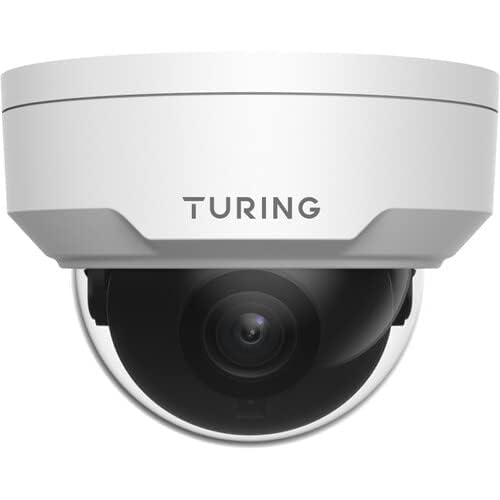
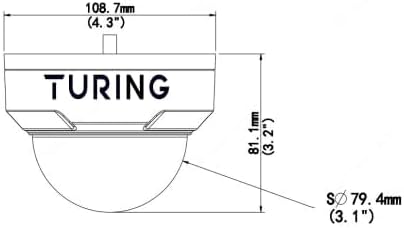
Image: Technical diagram showing the dimensions of the Turing TP-MFD4A4 Dome IP Camera, including height (81.1mm / 3.2") and diameter (108.7mm / 4.3").
| Ẹya ara ẹrọ | Sipesifikesonu |
|---|---|
| Awoṣe | TP-MFD4A4 |
| Sensọ | 1/3-inch 4MP 16:9 Progressive Scan CMOS |
| Lẹnsi | 4 mm ti o wa titi lẹnsi |
| Igun ti View | H: 83.7°; V: 44.9°; D: 89.2° |
| Imọlẹ ti o kere julọ | Àwọ̀: 0.002 Lux (F1.6, AGC lórí); 0 Lux pẹ̀lú IR lórí |
| IR Ran | Smart IR up to 30m (98ft) |
| Ipinnu fidio | Max. 4MP (2688x1520) at 30/25fps |
| Fidio fifi koodu | Ultra 265, H.265, H.264, MJPEG |
| Ṣiṣe Digital | 120 dB WDR; 2D/3D DNR; Defog |
| Ohun | G.711; 64 Kbps; 8 KHz; noise suppression |
| Ibi ipamọ inu inu | microSD (not included), up to 256 GB |
| Agbara | DC 12V+/-25% PoE (IEEE 802.3af); up to 4.5W |
| Idaabobo-wonsi | IP67, IK10, 4KV Surge Protection |
| Awọn iwọn (D x H) | 4.3 x 3.2 inches (108.7 x 81.1 mm) |
| Iwọn | 0.93 lbs (0.42 kg) |
| Awọn ẹrọ ibaramu | Turing SMART Series NVRs, Turing Vision Cloud platform |
| Ifaramọ NDAA | Bẹẹni |
Alaye atilẹyin ọja
The Turing TP-MFD4A4 Smart Series TwilightVision 4MP IR Dome IP Camera comes with a 3-odun atilẹyin ọja lati ọjọ ti o ra. Atilẹyin ọja yi ni wiwa awọn abawọn ninu awọn ohun elo ati iṣẹ ṣiṣe labẹ lilo deede. Jọwọ ṣe idaduro ẹri rira rẹ fun awọn iṣeduro atilẹyin ọja.
For detailed warranty terms and conditions, please refer to the official Turing webojula tabi kan si atilẹyin alabara.
Atilẹyin
For technical assistance, product inquiries, or warranty service, please contact Turing customer support through their official webaaye tabi alaye olubasọrọ ti a pese pẹlu apoti ọja rẹ.
Awọn orisun Ayelujara: Visit the Turing official website for FAQs, software downloads, and additional documentation.


