1. Awọn Ilana Aabo pataki
Jọwọ ka gbogbo awọn itọnisọna ni pẹkipẹki ṣaaju lilo ohun elo naa ki o da wọn duro fun itọkasi ọjọ iwaju. Ikuna lati tẹle awọn ilana wọnyi le ja si mọnamọna, ina, tabi ipalara nla.
- Aabo Itanna: Rii daju voltage indicated on the appliance matches your local power supply. Do not operate with a damaged cord or plug. Unplug the appliance during thunderstorms or when not in use for long periods.
- Ibi: Place the mini-refrigerator on a stable, flat surface. Ensure adequate ventilation around the unit. Do not block ventilation openings. Keep away from direct sunlight, heat sources, and moisture.
- Lilo: This appliance is designed for household and similar applications. Do not use it for commercial purposes. Do not store explosive substances such as aerosol cans with a flammable propellant in this appliance.
- Ninu: Always unplug the appliance before cleaning. Do not immerse the appliance in water or other liquids.
- Awọn ọmọde: Keep the appliance out of reach of children. Supervision is necessary when the appliance is used by or near children.
2. Ọja Ipariview
The Cecotec Bolero MiniColing 20L is a versatile mini-refrigerator designed for portability and convenience. It features a 20-liter capacity, dual cooling and heating functions, and compatibility with both 12V DC (car/caravan) and 220V AC (home) power sources. Its compact design and quiet operation make it ideal for various settings.

olusin 2.1: Iwaju view of the Cecotec Bolero MiniColing 20L Mini Refrigerator. This image displays the compact and sleek design of the appliance, highlighting its 20L capacity, 12V and 220-240V compatibility, and cooling/heating functions.
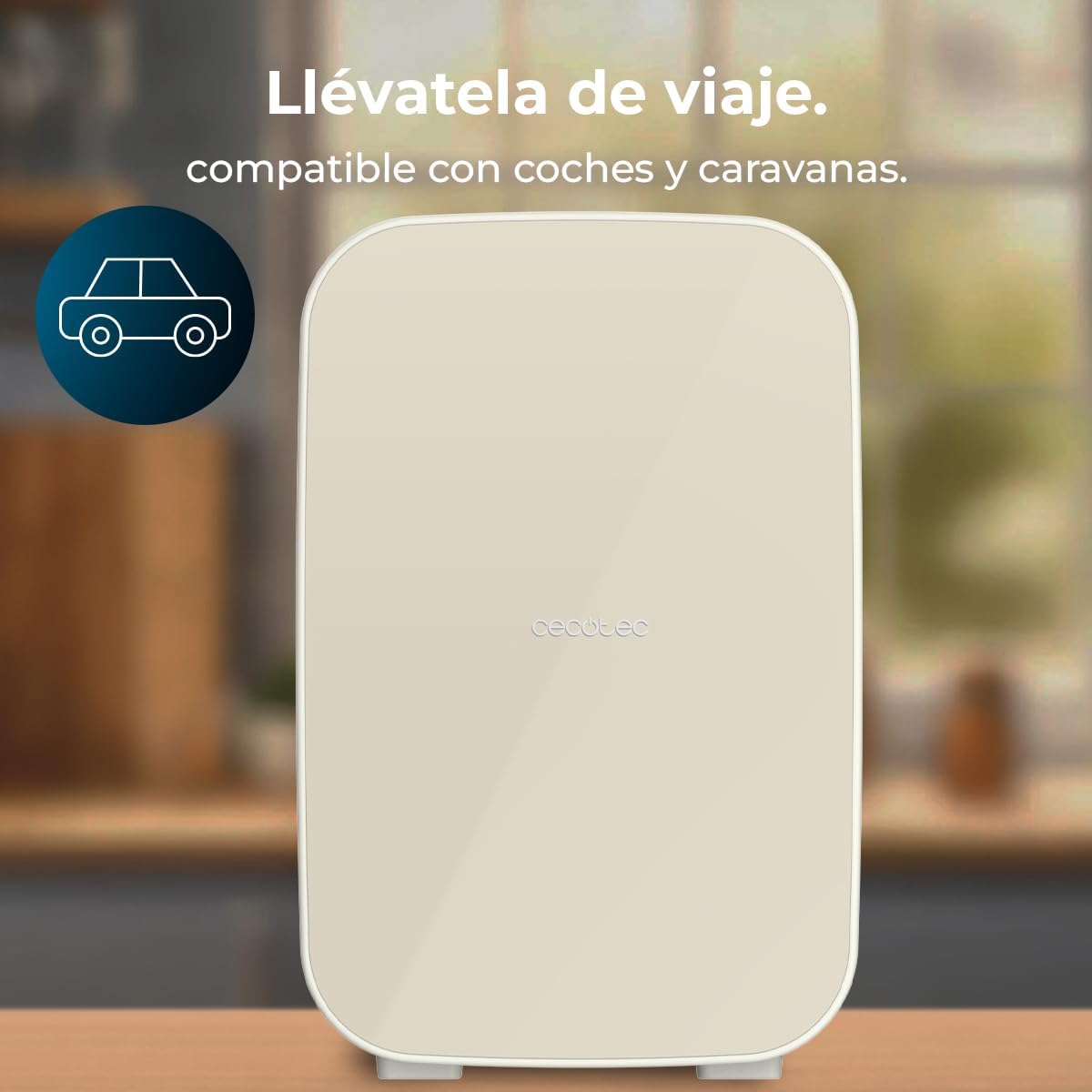
olusin 2.2: inu ilohunsoke view ifihanasing the 20-liter capacity. The image illustrates the spacious interior, capable of holding various items like beverages and cosmetics, emphasizing its practical storage volume.
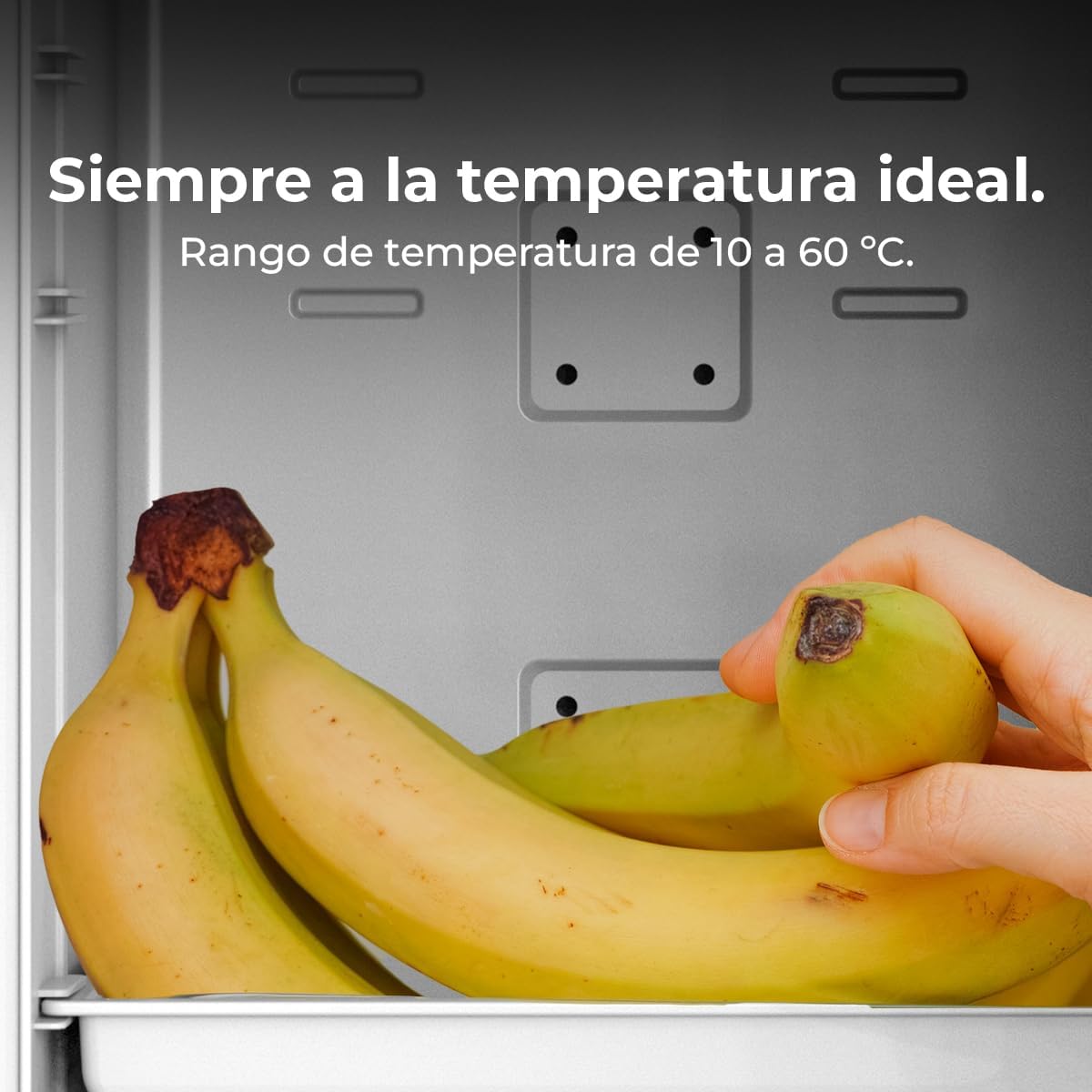
Figure 2.3: The mini refrigerator operating silently in a bedroom setting. This image highlights the appliance's quiet operation, making it suitable for use in personal spaces without causing disturbance.
3. Eto
Follow these steps to set up your mini-refrigerator for the first time.
- Ṣii silẹ: Carefully remove the appliance from its packaging. Retain the packaging materials for future transport or storage if needed.
- Ibi: Place the mini-refrigerator on a firm, level surface. Ensure there is at least 10 cm (4 inches) of space around all sides for proper ventilation. Avoid placing it near direct heat sources or in direct sunlight.
- Asopọ agbara:
- For home use (AC 220V): Connect the AC power cord to the appliance's AC input port and then plug it into a standard wall outlet.
- For car/caravan use (DC 12V): Connect the DC power cord to the appliance's DC input port and then plug it into your vehicle's 12V cigarette lighter socket.
- Lilo akọkọ: After connecting to power, allow the unit to stand for at least 30 minutes before turning it on to allow refrigerants to settle.

Figure 3.1: Close-up of the power input panel. This image shows the 12V DC and 220V AC input ports, illustrating how to connect the mini-refrigerator to different power sources for home or vehicle use.

Figure 3.2: The mini refrigerator placed in a car, demonstrating its compatibility with vehicles. This image emphasizes the portability and convenience for travel, allowing users to keep items cool or warm on the go.
4. Awọn ilana Iṣiṣẹ
Your Cecotec MiniColing 20L offers both cooling and heating functions. Follow these instructions to operate the unit.
- Titan/Apapa: Locate the power switch on the control panel. Flip it to the 'ON' position to power on the unit. Flip to 'OFF' to power off.
- Selecting Mode (Cooling/Heating):
- To activate cooling: Set the mode switch to the 'COOL' position. The internal temperature can be regulated from 7°C.
- To activate heating: Set the mode switch to the 'HEAT' position. The internal temperature can be regulated up to 65°C.
- Atunṣe iwọn otutu: Use the temperature control dial or buttons (if present) to set your desired temperature within the operating range (7°C to 65°C). Allow time for the unit to reach the set temperature.
- Switching Between AC/DC: Ensure the correct power cord is connected for your desired power source (AC for home, DC for vehicle). The unit automatically detects the connected power source.
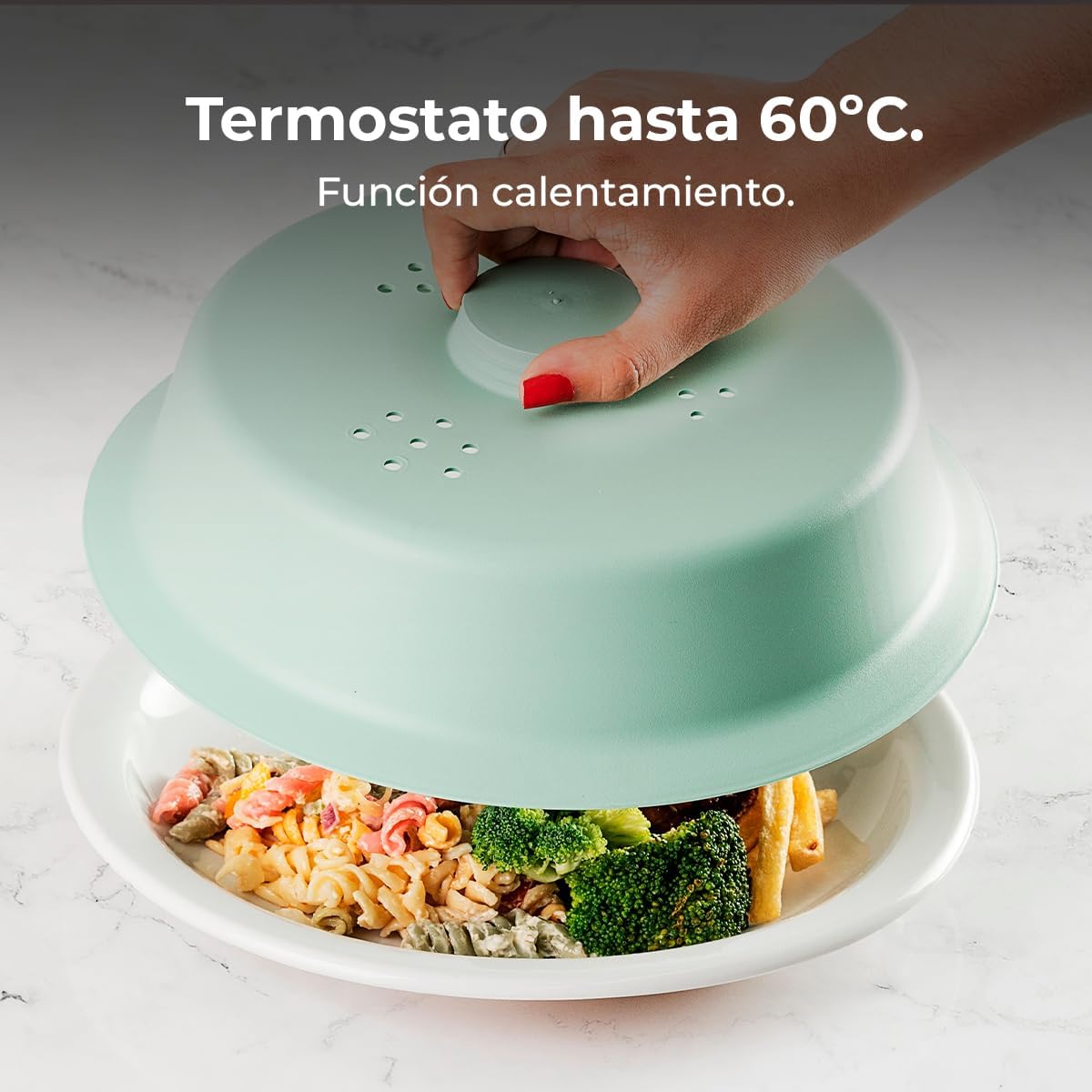
Figure 4.1: Demonstration of the cooling function, capable of cooling items down to 10°C. This image visually represents the refrigerator's ability to keep drinks and other perishables chilled.

Figure 4.2: Demonstration of the heating function, maintaining temperatures up to 60°C. This image shows the versatility of the appliance, allowing it to keep food warm.
Figure 4.3: The internal temperature range of 10°C to 60°C. This image highlights the precise temperature control feature, ensuring items are kept at their ideal temperature, whether hot or cold.
5. Itọju ati Cleaning
Regular maintenance ensures optimal performance and longevity of your mini-refrigerator.
- Mimọ inu inu:
- Yọọ ohun elo ṣaaju ki o to sọ di mimọ.
- Fi aṣọ rirọ nu inu ile naa dampened pẹlu ìwọnba ọṣẹ ati omi.
- Ma ṣe lo abrasive ose tabi epo.
- Dry thoroughly before plugging back in.
- Ninu Ode: Mu ese ita gbangba pẹlu asọ, damp asọ.
- Afẹfẹ: Periodically check and clean the ventilation openings to ensure they are free from dust and debris. This helps maintain efficient operation.
- Iyọkuro: While the unit features automatic defrosting, if ice buildup occurs, unplug the unit and allow the ice to melt naturally. Do not use sharp objects to remove ice.
- Ibi ipamọ: If storing the appliance for an extended period, ensure it is clean and dry. Leave the door slightly ajar to prevent odors and mold growth.
Figure 5.1: The interior of the mini refrigerator with shelves, illustrating areas for cleaning. This image provides a clear view of the internal compartments, useful for understanding how to access and clean the storage areas.
6. Laasigbotitusita
If you encounter any issues with your mini-refrigerator, refer to the following common problems and their solutions.
| Isoro | Owun to le Fa | Ojutu |
|---|---|---|
| Ohun elo ko tan. | Ko si ipese agbara; okun agbara ko ni asopọ daradara. | Check if the power cord is securely plugged into both the appliance and the power outlet. Ensure the outlet is functional. |
| Insufficient itutu / alapapo. | Ventilation blocked; door not closed properly; ambient temperature too high/low. | Ensure ventilation openings are clear. Check that the door is fully closed. Avoid placing the unit in extreme temperatures. |
| Ariwo ti o pọju. | Ẹka kii ṣe ipele; àìpẹ idiwo. | Place the unit on a level surface. Check for any obstructions around the fan. |
| Ìkójọpọ̀ omi nínú. | Condensation; door left open too long. | This is normal condensation. Wipe with a cloth. Ensure the door is closed promptly after opening. |
Ti iṣoro naa ba wa lẹhin igbiyanju awọn solusan wọnyi, jọwọ kan si atilẹyin alabara.
7. Awọn pato
| Ẹya ara ẹrọ | Ẹ̀kúnrẹ́rẹ́ |
|---|---|
| Brand | Cecotec |
| Nọmba awoṣe | 00142 |
| Agbara | 20 liters |
| Voltage | 12V DC / 220V AC |
| Awọn iwọn (H x D x W) | 52 cm x 33.8 cm x 28.5 cm |
| Iwọn | 1 kilo |
| Ohun elo | Irin ti ko njepata |
| Pataki Awọn ẹya ara ẹrọ | Cooling and Heating Function, DC and AC Power Compatibility, Portable |
| Iwọn otutu | 7°C si 65°C |

olusin 7.1: Apa view of the mini refrigerator with indicated dimensions. This image provides a visual reference for the appliance's height (52 cm), depth (33.8 cm), and width (28.5 cm), useful for planning placement.
8. Atilẹyin ọja ati Support
Cecotec is committed to providing high-quality products and customer satisfaction.
- Alaye Atilẹyin ọja: This product comes with a standard manufacturer's warranty. Please refer to the warranty card included in your product packaging for specific terms and conditions.
- Wiwa Awọn apakan apoju: Spare parts for this model are available for up to 10 years from the date of purchase.
- Atilẹyin Onibara: For technical assistance, troubleshooting beyond this manual, or warranty claims, please contact Cecotec customer support through their official webaaye tabi alaye olubasọrọ ti a pese ninu iwe ọja rẹ.