1. Ifihan
Thank you for choosing the KONIX Folding Piano Keyboard. This portable 88-key electronic piano is designed for musicians of all levels, offering a full-size semi-weighted keyboard with innovative light-up keys to assist in learning. Its foldable design ensures maximum portability, allowing you to enjoy music anywhere.
Awọn ẹya pataki pẹlu:
- Apẹrẹ Kika Agbekale: Folds 180 degrees for compact storage and easy transport.
- Full-Size Semi-Weighted Keys: Provides a realistic piano feel with adjustable touch response.
- Awọn bọtini Imọlẹ: Guides users during learning and practice sessions.
- Asopọmọra Wapọ: Bluetooth for app integration and MIDI/USB for computer connection.
- Ile-ikawe Ohun Nla: 128 tones, 128 rhythm patterns, and 20 built-in demo songs.
- Awọn iṣẹ lọpọlọpọ: Includes dual keyboard, split, teach mode, dual voice, record, playback, polyphonic metronome, and transpose.
- Igbesi aye batiri gigun: Built-in rechargeable lithium battery for 6-8 hours of play time.
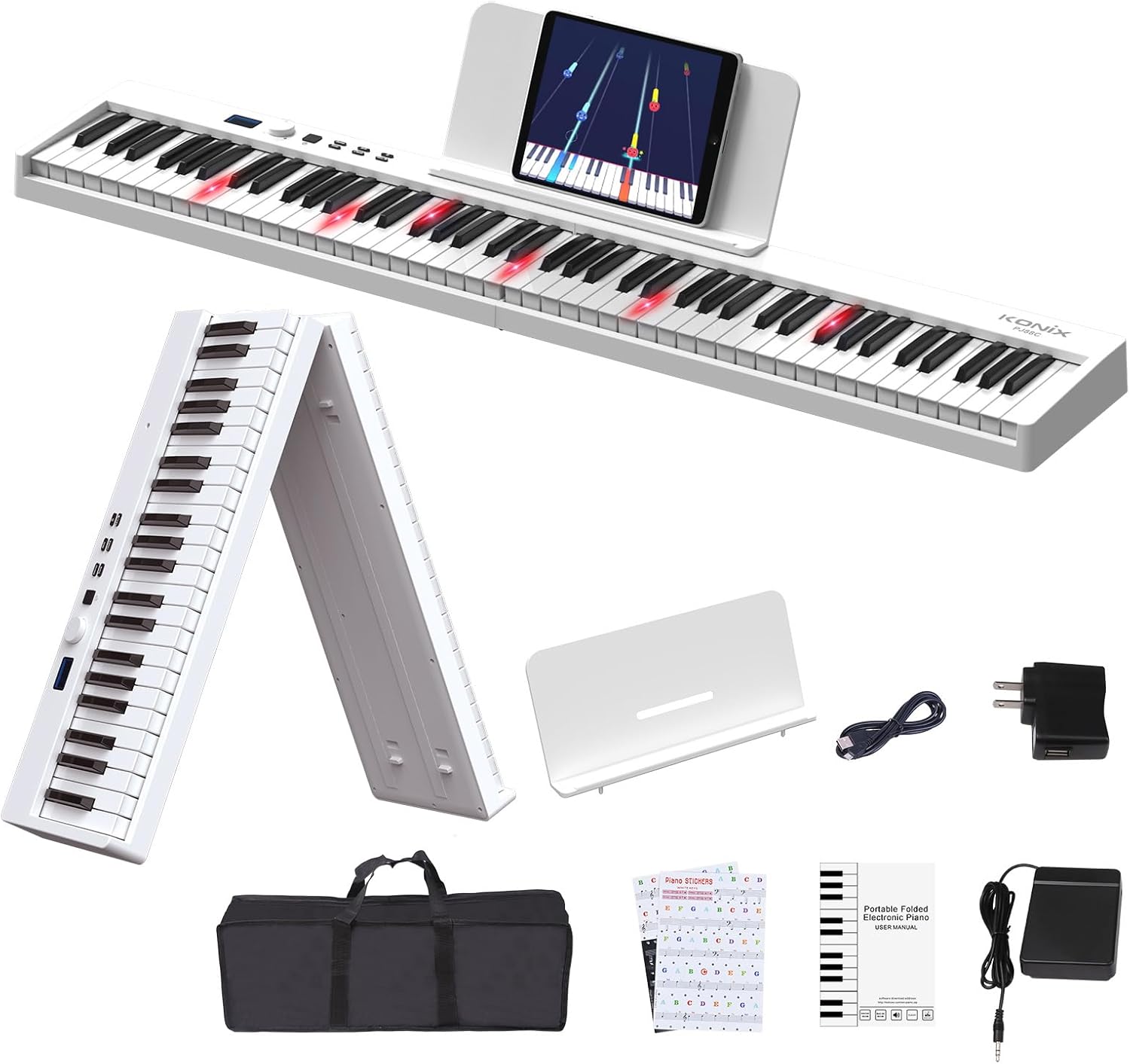
Figure 1.1: The KONIX Folding Piano Keyboard with all included accessories, showcasing iwapọ ati apẹrẹ to ṣee gbe.
2. Package Awọn akoonu
Jọwọ rii daju pe gbogbo awọn ohun kan wa ninu apo rẹ:
- KONIX Folding Piano Keyboard (White)
- Efatelese idaduro
- Keyboard Stickers
- Music Stand (for sheet music or tablet)
- Piano Bag (portable travel carry bag)
- Okun Ngba agbara USB
- Adapter agbara
- Afowoyi Olumulo (iwe-ipamọ yii)
3. Eto Itọsọna
3.1 Unfolding the Keyboard
The KONIX Folding Piano Keyboard is designed for easy setup. To unfold:
- Place the folded keyboard on a flat, stable surface.
- Gently pull the two halves apart until they fully extend and lock into place. Ensure the locking mechanism engages securely.

Figure 3.1: Illustration of the one-click folding mechanism, showing how the two halves of the keyboard separate and lock into place.
3.2 Agbara Lori
The keyboard can be powered via the included power adapter or its built-in rechargeable battery.
- Lilo Adapter Agbara: Connect the USB charging cable to the keyboard's USB port and the power adapter, then plug into a wall outlet.
- Lilo Batiri: Ensure the built-in lithium battery is charged. The keyboard can play for 6-8 hours on a full charge.
3.3 Nsopọ Awọn ẹya ẹrọ
- Efatelese idaduro: Plug the sustain pedal into the 'SUS' port on the keyboard.
- Agbekọri/Agbọrọsọ: Connect 3.5mm headphones or external speakers to the headphone jack for private practice or amplified ohun.
- Iduro Orin: Attach the included music stand to the designated slots on the keyboard for holding sheet music or a tablet.

Olusin 3.2: Pariview of the various connection ports on the keyboard, including headphone/speaker, MP3/PC/Phone/Tablet, Microphone, Sustain pedal, and Power/MIDI.
Video 3.1: This video demonstrates the folding and unfolding of the KONIX Piano Keyboard, showing its compact storage and quick setup. It also highlights the various connectivity options and the light-up key feature in action.
4. Awọn ilana Iṣiṣẹ
4.1 Ipilẹ isẹ
- Titan/Apapa: Press and hold the power button to turn the keyboard on or off.
- Iṣakoso iwọn didun: Use the rotary knob to adjust the master volume.
- Aṣayan ohun orin: Rotate the knob to browse through 128 different tones displayed on the LCD screen. Press the 'Tone' button to confirm.
- Aṣayan Rhythm: Rotate the knob to select from 128 rhythm patterns. Press the 'Rhythm' button to confirm.
- Awọn orin Ririnkiri: Rotate the knob to choose from 20 built-in demo songs. Press the 'Demo' button to play.

olusin 4.1: Isunmọ view of the full-size semi-weighted keys, illustrating the 1:1 ratio to traditional piano keys and the concept of adjustable touch response for dynamic playing.
4.2 Àwọn Ẹ̀yà Ẹ̀kọ́
- Awọn bọtini Imọlẹ: The light-up keys illuminate to guide you on which notes to play, making learning easier, especially with demo songs or connected apps.
- Ipò Kọ́ni: Activate teach mode to follow along with built-in lessons or app-based tutorials.
- Keyboard Stickers: Apply the included keyboard stickers to help identify notes for beginners.
4.3 Awọn iṣẹ ilọsiwaju
- Asopọmọra Bluetooth: Enable Bluetooth on the keyboard and your smart device (phone, tablet, computer). Pair with piano learning apps like Garage Band, Perfect Piano, or Pop Piano for interactive lessons and games.
- MIDI/USB Interface: Connect the keyboard to a computer via USB to use it as a MIDI controller. This allows you to edit music, compose, and use various music production software (e.g., Cakewalk, Sonar, Cubase, Nuendo, VST/VSTi).
- Igbasilẹ & Sisisẹsẹhin: Use the record function to capture your performances and the playback function to listen to them.
- Dual Keyboard/Split: Divide the keyboard into two sections, allowing two players or different instrument sounds in each section.
- Ohùn Meji: Layer two different instrument sounds to be played simultaneously with each key press.
- Polyphonic Metronome: Use the built-in metronome to practice with precise timing.
- Yipada: Adjust the pitch of the entire keyboard up or down to play in different keys without changing your finger positions.

Figure 4.2: The MIDI function allows connection to educational apps like Garageband, Perfect Piano, and Pop Piano, enhancing the learning experience.

olusin 4.3: An loriview of the various function options available on the keyboard, designed to assist users in their musical journey.
5. Itọju
5.1 Ninu
To maintain the appearance and functionality of your keyboard:
- Pa dada nu pẹlu asọ ti o gbẹ.
- Fun idoti alagidi, die-die dampfi omi àti omi ọṣẹ díẹ̀ bò aṣọ náà, lẹ́yìn náà, fi nù ún gbẹ lẹ́sẹ̀kẹsẹ̀.
- Avoid using abrasive cleaners, solvents, or chemical sprays, as these can damage the finish.
5.2 Ibi ipamọ
When not in use, store the keyboard in its included piano bag to protect it from dust and scratches. Store in a cool, dry place away from direct sunlight and extreme temperatures.
5.3 batiri Itọju
To prolong the life of the built-in lithium battery:
- Gba agbara si batiri ni kikun ṣaaju lilo akọkọ.
- Yago fun mimu batiri kuro patapata nigbagbogbo.
- Ti o ba tọju fun akoko ti o gbooro sii, gba agbara si batiri si iwọn 50% ni gbogbo oṣu diẹ.

Figure 5.1: The keyboard supports USB/Power Bank/Lithium Battery power, offering ultra-long battery life for use anywhere.
6. Laasigbotitusita
If you encounter issues with your KONIX Folding Piano Keyboard, please refer to the following common problems and solutions:
| Isoro | Owun to le Fa | Ojutu |
|---|---|---|
| Kò sí ohùn láti inú keyboard. | Volume is too low; headphones are plugged in; power issue. | Increase volume. Unplug headphones if not needed. Ensure keyboard is powered on and charged. |
| Keys are not lighting up. | Light-up feature is off; low battery. | Check keyboard settings to ensure light-up feature is enabled. Charge the battery. |
| Asopọ Bluetooth kuna. | Kííbọọ̀dù kò sí ní ipò ìsopọ̀; ẹ̀rọ Bluetooth ti pa; ìdènà. | Ensure keyboard Bluetooth is active. Restart both keyboard and device. Move closer to the device. |
| Efatelese idaduro ko ṣiṣẹ. | Pedal not fully inserted; faulty pedal. | Ensure the sustain pedal is firmly plugged into the 'SUS' port. Test with another compatible pedal if available. |
If the problem persists, please contact KONIX customer support for further assistance.
7. Awọn pato
| Ẹya ara ẹrọ | Ẹ̀kúnrẹ́rẹ́ |
|---|---|
| Orukọ awoṣe | KONIX 88 Key Folding Electric Progressive Counterweight Keyboard Piano |
| Nọmba awoṣe | PJ88CD-W |
| Nọmba ti Awọn bọtini | 88 |
| Iru bọtini | Full Size Semi-Weighted, Light-Up Keys |
| Awọn mefa (Ti ṣe pọ) | 24.8" x 8" x 4.7" (isunmọ) |
| Awọn iwọn (Ṣiṣiṣi) | 50" x 8.5" x 4.5" (isunmọ) |
| Iwọn Nkan | kilo 4.05 (8.91 poun) |
| Orisun agbara | Battery Powered (3.7V/1800mAh), Corded Electric (USB 5V/1A) |
| Igbesi aye batiri | Wákàtí 6-8 (gba agbara ni kikun) |
| Asopọmọra | Bluetooth, MIDI/USB |
| Awọn agbekọri Jack | 3.5mm Jack |
| Awọn ohun orin | 128 |
| Awọn Ilana Rhythm | 128 |
| Awọn orin Demo | 20 |
| OS atilẹyin | Win XP/Vista/7/8, Mac OSX |
| Software atilẹyin | Cakewalk, Sonar, Cubase, Nuendo, VST/VSTi |
| Olorijori Ipele | Olubere |
| Pari Iru | Glossy or Lacquered |
| Àwọ̀ | Funfun |

Figure 7.1: Detailed product information including weight, number of keys, and folded/unfolded dimensions.
8. Atilẹyin ọja ati Support
KONIX products are manufactured to high-quality standards. For specific warranty information, please refer to the warranty card included in your product packaging or visit the official KONIX webojula.
If you require technical support, have questions about product operation, or need assistance with troubleshooting, please contact KONIX customer service. Contact details can typically be found on the product packaging, the official KONIX webojula, tabi nipasẹ rẹ alagbata.


