1. Ifihan
This user manual provides detailed instructions for the MicroZone MC6C 2.4G 6-channel remote control transmitter and receiver system. This system is designed for controlling various remote-controlled models, including fixed-wing airplanes, unmanned aerial vehicles (UAVs), ground vehicles, and ships. Please read this manual thoroughly before operating your MC6C system to ensure safe and correct usage.
2. Ọja Ipariview
The MicroZone MC6C is a 2.4GHz 6-channel radio control system featuring FSK modulation for reliable communication. It provides 6 PWM signal outputs and 1 SBUS signal output, offering versatility for various model types. The system includes a transmitter and a compatible receiver (e.g., MC7RB or MC6REmini).
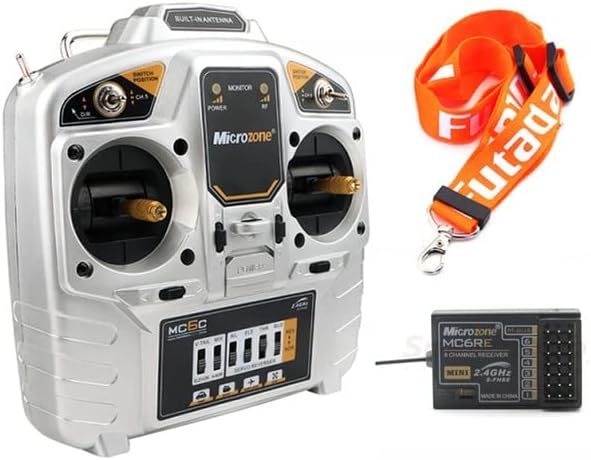
Figure 2.1: The MicroZone MC6C 2.4G 6-channel remote control transmitter and a compatible receiver, along with a neck strap.
Awọn ẹya pataki:
- 2.4GHz FHSS (Frequency Hopping Spread Spectrum) technology for interference-free operation.
- 6 proportional channels for precise control.
- Supports 6 PWM signals and 1 SBUS signal output.
- Vol kekeretage alarm with LED indicator and buzzer.
- Suitable for fixed-wing aircraft, UAVs, vehicles, and ships.
- Ground control range exceeding 800 meters.

olusin 2.2: Iwaju view of the MicroZone MC6C transmitter, showing the gimbals, switches, and display panel.

olusin 2.3: Angled view of the MicroZone MC6C transmitter, highlighting the ergonomic design and control layout.
3. Awọn pato
| Paramita | Iye |
|---|---|
| Awoṣe | MC6C |
| Iwọn ti RF | 2401MHz - 2479MHz |
| RF agbara | ≤ 100MW |
| Ṣiṣẹ Lọwọlọwọ | <120MA |
| Ṣiṣẹ Voltage | 4.5V - 8.5V |
| Ipo Awose | FSK (Kokoro iyipada Yiyi igbohunsafẹfẹ) |
| Ifamọ | 1024 |
| Ijade ifihan agbara | 6 PWM signals, 1 SBUS signal |
| Ground Control Range | > 800m |
| Kekere Voltage Itaniji | LED indicator and buzzer alarm |
| Ibi ti ina elekitiriki ti nwa | 6V (4 x 1.5V AA batteries) |
| Awọn iwọn | 180mm x 185mm |
| Apapọ iwuwo | 426g |
| Àwọn Ìlànà Ìjẹ́rìísí | FCC, CE_RED |
4. Eto
4.1 Fifi sori batiri
- Locate the battery compartment on the back of the MC6C transmitter.
- Ṣii ideri iyẹwu batiri naa.
- Insert four (4) 1.5V AA batteries, ensuring correct polarity (+/-) as indicated inside the compartment.
- Pa ideri batiri naa ni aabo.

olusin 4.1: Ẹyìn view of the MC6C transmitter with the battery compartment open, showing the slots for four AA batteries.
4.2 Ìsopọ̀ pẹ̀lú Olùgbà
The binding process establishes a secure communication link between the transmitter and the receiver. Refer to your receiver's specific manual for detailed binding instructions, as procedures may vary slightly. Generally, the steps involve:
- Rii daju pe o ti pa agbara ti transmitter naa.
- Connect power to the receiver. The receiver's LED indicator will typically flash, indicating it is in binding mode or awaiting a binding signal.
- While holding the bind button (if present) on the receiver, or following a specific power-on sequence, power on the transmitter.
- Observe the receiver's LED. A solid light usually indicates successful binding.
- Power off both the transmitter and receiver, then power them on again in the normal sequence (transmitter first, then receiver) to confirm the binding.
5. Awọn ilana Iṣiṣẹ
5.1 Titan / Pa a
- Lati Fi agbara: Ensure batteries are correctly installed. Flip the power switch on the transmitter to the "ON" position. The power indicator LED will illuminate. Then, power on your model's receiver.
- Lati Paarẹ: First, power off your model's receiver. Then, flip the power switch on the transmitter to the "OFF" position.
5.2 Ipilẹ idari
The MC6C transmitter features two primary control sticks (gimbals) and several switches for controlling your model. The specific functions of each channel and switch depend on your model's configuration.

olusin 5.1: Alaye iwaju view of the MC6C transmitter, showing the gimbals, trim levers, and various switches for channel control.
- Gimbals: Control primary functions like throttle, aileron, elevator, and rudder.
- Awọn iyipada: Used for auxiliary functions such as landing gear, flaps, flight modes, or channel 5 and 6 control.
- Awọn gige: Small levers near the gimbals used to fine-tune the neutral position of control surfaces.
5.3 Iwọn kekeretage Itaniji
The MC6C transmitter is equipped with a low voltage alarm system. When the battery voltage drops below a safe operating level, the LED indicator will flash, and a buzzer will sound. This indicates that the batteries need to be replaced or recharged immediately to prevent loss of control.
6. Itọju
- Ninu: Lo aṣọ rírọrùn tí ó gbẹ láti nu ẹ̀rọ ìfọ̀rọ̀wérọ̀ náà. Yẹra fún lílo àwọn ohun èlò ìfọṣọ tàbí àwọn ohun èlò ìfọṣọ.
- Ibi ipamọ: Tọ́jú ẹ̀rọ ìfọ̀rọ̀wérọ̀ náà sí ibi tí ó tutù tí ó sì gbẹ, tí kò sí ìmọ́lẹ̀ oòrùn tààrà àti ooru tó le koko. Yọ àwọn bátìrì kúrò tí o bá ń tọ́jú rẹ̀ fún ìgbà pípẹ́ láti dènà jíjò.
- Ayewo: Periodically check all switches, gimbals, and connections for any signs of wear or damage.
- Itọju Batiri: Máa lo àwọn bátìrì AA tuntun tó ní agbára gíga nígbà gbogbo. Tí o bá ń lo àwọn bátìrì tó lè gba agbára, rí i dájú pé wọ́n ti gba agbára dáadáa kí o tó lò ó.
7. Laasigbotitusita
| Isoro | Owun to le Fa | Ojutu |
|---|---|---|
| Atagba ko ni agbara. | Awọn batiri ti o ku tabi ti ko tọ ti fi sori ẹrọ. | Ṣayẹwo polarity batiri ki o rọpo pẹlu awọn batiri titun. |
| No control response from model. | Receiver not bound, receiver not powered, or out of range. | Ensure receiver is powered and bound. Check range. |
| Vol kekeretage itaniji ṣiṣẹ nigbagbogbo. | Batteries are low or nearing end of life. | Rọpo awọn batiri pẹlu awọn tuntun. |
| Intermittent control or signal loss. | Interference, transmitter/receiver too far apart, or damaged antenna. | Operate in an open area. Check antennas for damage. Re-bind if necessary. |
8. Alaye Aabo
- Always operate your RC model in a safe and open area, away from people, animals, and property.
- Never operate your RC model near power lines, roads, or water bodies.
- Ensure the transmitter is powered on before the receiver, and powered off after the receiver, to prevent accidental activation.
- Regularly inspect your model and control system for any damage or loose connections.
- Do not operate the system if you are tired, under the influence of alcohol, or otherwise impaired.
- Jeki ọja naa kuro ni arọwọto awọn ọmọde nigbati o ko ba wa ni lilo.
9. Atilẹyin ọja ati Support
Fún àlàyé nípa àtìlẹ́yìn àti ìrànlọ́wọ́ ìmọ̀ ẹ̀rọ, jọ̀wọ́ wo àwọn ìwé tí a pèsè pẹ̀lú ohun tí o rà tàbí kí o kan sí olùtajà tí wọ́n ti ra ọjà náà. Pa ẹ̀rí ìrajà rẹ mọ́ fún àwọn ẹ̀tọ́ àtìlẹ́yìn.


