1. Ifihan
This manual provides essential instructions for the safe operation, setup, maintenance, and troubleshooting of your TOUCAN RC HOBBY Yikong DF7 V2 1/7 RC Car. Please read this manual thoroughly before operating the vehicle to ensure proper function and longevity.

Figure 1.1: The TOUCAN RC HOBBY Yikong DF7 V2 1/7 RC Car and its remote control.
2. Alaye Aabo
- Iṣeduro ọjọ ori: This product is recommended for users 14 years and up. Adult supervision is advised for younger users.
- Aabo Batiri: Always use recommended batteries and chargers. Do not overcharge or short-circuit batteries. Disconnect batteries when not in use.
- Ayika Ṣiṣẹ: Operate the RC car in open areas, away from people, pets, and obstacles. Avoid public roads and wet conditions.
- Awọn ẹya gbigbe: Keep fingers, hair, and loose clothing away from moving parts such as wheels and gears.
- Ooru: Motors and electronic speed controllers (ESCs) can become hot during operation. Allow components to cool before handling.
3. Package Awọn akoonu
The following items are included with your TOUCAN RC HOBBY Yikong DF7 V2 RC Car:
- 1 x DF7 V2 1/7 RC Car (Assembled and Painted)
- 1 x Motor (4274 1600KV Brushless Motor)
- 1 x Electronic Speed Controller (HobbyWing MAX8 150A/950A)
- 1 x Servo (35KG)
- 1 x Remote Controller & Receiver
Akiyesi: The package does kii ṣe include a light system, sound system, car battery, or charger. A 3S high-capacity lithium battery and a balancing charger for lithium batteries are recommended (not included).

olusin 3.1: Ẹgbẹ profile of the DF7 V2 RC Car, highlighting its desert crawler design.
4. Eto
Follow these steps to prepare your RC car for operation:
- Accessing the Battery Compartment: Carefully remove the body pins securing the car's shell. Lift the shell to expose the internal components and battery tray.
- Nsopọ batiri naa: Insert your charged 3S high-capacity lithium battery (not included) into the battery tray. Connect the battery's power connector to the ESC's power input. Ensure a secure connection.
- Ngba agbara: Locate the power switch on the Electronic Speed Controller (ESC) and switch it to the 'ON' position. The car's electronics will initialize.
- Eto Iṣakoso Latọna jijin: Install batteries (not included) into your remote controller. Power on the remote controller. The car and remote should automatically bind. Refer to the remote controller's specific manual for detailed binding instructions if needed.
Video 4.1: This video demonstrates the process of connecting the battery and powering on the RC car (0:23-0:29).

olusin 4.1: Underside view of the DF7 V2 chassis, showing the robust frame and drivetrain.
5. Ṣiṣẹ
Once the car is set up and powered on, you can begin operation:
- Itọnisọna: Use the steering wheel on the remote controller to turn the front wheels left or right.
- Acceleration/Braking: Use the trigger on the remote controller to control forward and reverse movement, as well as braking. Pull the trigger for acceleration, push for braking/reverse.
- Ètò Ìmọ́lẹ̀: The DF7 V2 features an integrated light system for enhanced visibility and realism.
- Idaduro: The advanced suspension system is designed to absorb shocks and maintain traction over uneven terrain.
Video 5.1: This video demonstrates the light system (0:31-0:35), steering (0:36-0:42), speed test (0:43-0:53), and suspension articulation (0:54-1:09) of the RC car.

olusin 5.1: Iwaju view of the DF7 V2, showcasing the detailed grille and headlight design.
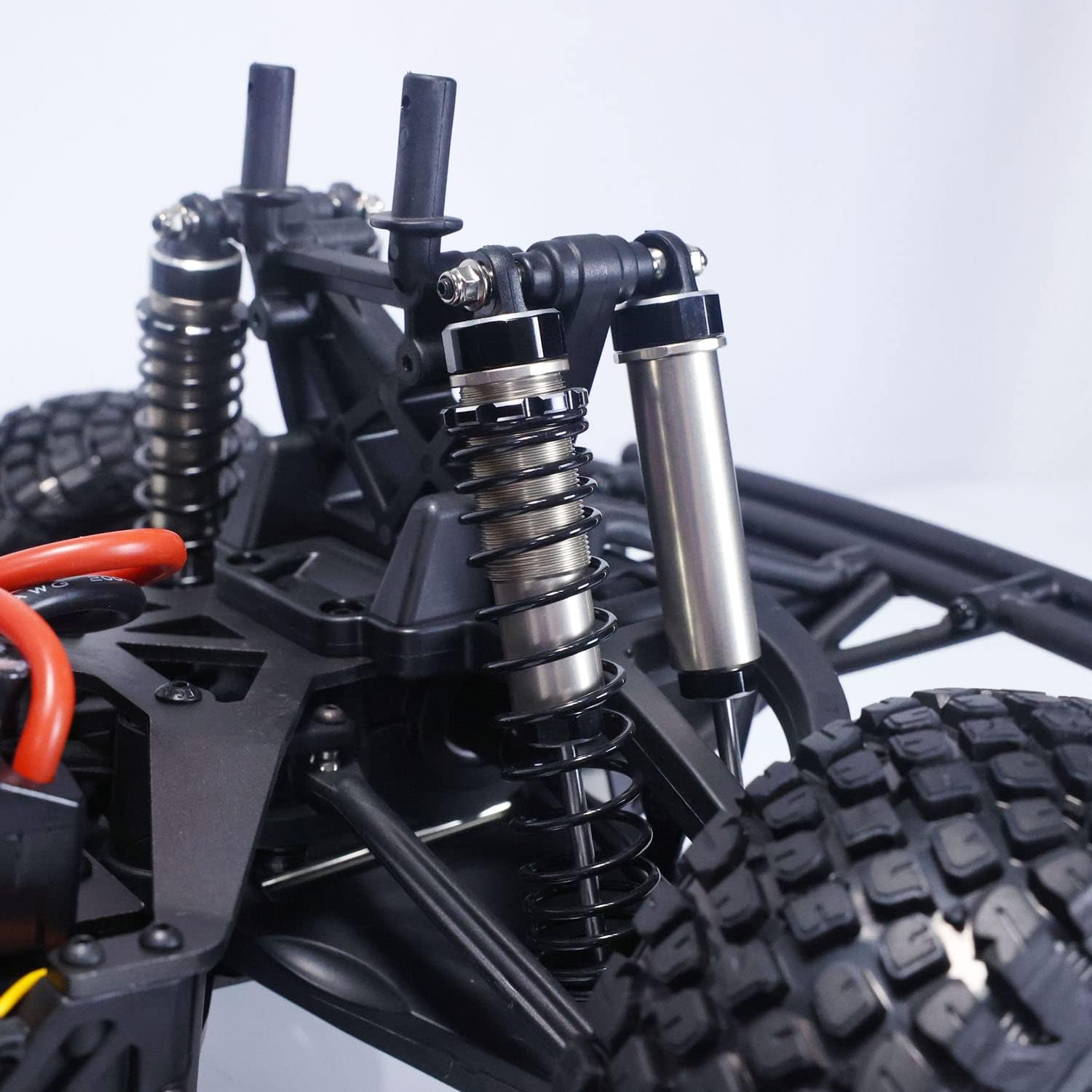
Nọmba 5.2: Alaye view of the robust suspension components.
6. Itọju
Regular maintenance ensures optimal performance and extends the lifespan of your RC car:
- Ninu: After each use, especially off-road, clean dirt and debris from the chassis, wheels, and suspension components. Use a soft brush or compressed air.
- Ayewo: Periodically check all screws, nuts, and bolts for tightness. Inspect the tires for wear and tear.
- Idaduro: Check the shock absorbers for leaks or damage. Ensure smooth operation of the suspension arms.
- Awọn ẹrọ itanna: Keep electronic components clean and dry. Avoid exposing them to moisture.
- Itọju Batiri: Store batteries in a cool, dry place. Do not store fully charged or fully discharged for extended periods.

olusin 6.1: Top view of the DF7 V2, highlighting the roof-mounted light bar.
7. Laasigbotitusita
Ti o ba pade awọn ọran, tọka si awọn iṣoro ti o wọpọ ati awọn ojutu wọnyi:
- Car Not Responding:
- Check if the car and remote controller are both powered on.
- Ensure batteries in both the car and remote are charged and correctly installed.
- Verify that the car and remote are properly bound.
- Poor Performance/Reduced Speed:
- Battery may be low; recharge or replace.
- Check for debris obstructing moving parts.
- Inspect motor and ESC for overheating.
- Awọn Iṣoro Itọsọna:
- Check servo connections and functionality.
- Ensure no physical obstructions are preventing steering.
Fun awọn ọran ti o tẹsiwaju, kan si atilẹyin alabara.
8. Awọn pato
| Ẹya ara ẹrọ | Sipesifikesonu |
|---|---|
| Olupese | YIKONG |
| Iwọn | 1/7 |
| Ipo Nkan | Tuntun, Ti a pejọ ati Ti a kun |
| Ohun elo | Irin, Ṣiṣu |
| Àwọ̀ | Blue (as per product image, other colors may vary) |
| Gigun | 700mm |
| Ìbú | 300mm |
| Wheelbase | 430mm |
| Iwọn Track | 300mm |
| ESC | HobbyWing MAX8 150A/950A |
| Mọto | Mọ́tò 4274 1600KV Láìsí Fọ́rọ́ọ̀ṣì |
| Servo | 35KG |
| Eto Redio | 6CH |
| Car Battery (Recommended) | 3S high-capacity lithium battery (Not Included) |
| Charger (Recommended) | Balancing charger for lithium batteries (Not Included) |
| Nọmba Awoṣe Nkan | EG-1-7-DF2-V2-ARTR-BU |
| Ọja Mefa | 39.6 x 32 x 16 inches |
| Iwọn Nkan | 42.2 iwon |
| Olupese niyanju ori | 14 ọdun ati si oke |
9. Atilẹyin ọja ati Support
For any questions regarding your TOUCAN RC HOBBY Yikong DF7 V2 RC Car, or if you are unsure about any aspect of its operation or maintenance, please feel free to contact the seller or manufacturer directly before purchasing or for support. Specific warranty details may vary; please retain your proof of purchase for any warranty claims.


