Ọrọ Iṣaaju
This manual provides essential information for the safe and efficient operation, maintenance, and troubleshooting of your Cecotec Conga Rockstar Wet & Dry Steel Max vacuum cleaner. Please read this manual thoroughly before using the appliance and keep it for future reference.
The Cecotec Conga Rockstar Wet & Dry Steel Max is a high-power solid and liquid vacuum cleaner designed with a durable metal tank, capable of cleaning various types of dirt, including liquids, from any area of your home or workshop.
Awọn Itọsọna Aabo
Nigbagbogbo tẹle awọn iṣọra aabo ipilẹ nigba lilo awọn ohun elo itanna lati dinku eewu ina, mọnamọna, ati ipalara ti ara ẹni.
- Rii daju pe ipese agbara voltage baamu aami igbelewọn lori ohun elo naa.
- Ma ṣe lo ẹrọ igbale lati gbe awọn olomi ina tabi ijona, gẹgẹbi petirolu, tabi lo ni awọn agbegbe nibiti wọn le wa.
- Maṣe gbe ohunkohun ti o njo tabi ti nmu siga, gẹgẹbi awọn siga, awọn ere-kere, tabi eeru gbigbona.
- Maṣe fi ohun elo, okun agbara, tabi pulọọgi sinu omi tabi awọn olomi miiran.
- Máa yọ ẹ̀rọ ìfọṣọ kúrò nínú ihò iná mànàmáná kí o tó sọ ọ́ di mímọ́ tàbí kí o ṣe àtúnṣe èyíkéyìí.
- Jeki irun, aṣọ alaimuṣinṣin, awọn ika ọwọ, ati gbogbo awọn ẹya ara kuro lati awọn ṣiṣi ati awọn ẹya gbigbe.
- Lo nikan gẹgẹbi a ti ṣalaye ninu itọnisọna yii. Lo awọn asomọ iṣeduro olupese nikan.
- Abojuto sunmọ jẹ pataki nigbati eyikeyi ohun elo ba lo nipasẹ tabi sunmọ awọn ọmọde.
Ọja Pariview
Familiarize yourself with the components of your Cecotec Conga Rockstar Wet & Dry Steel Max vacuum cleaner.

Figure 1: Main unit and included accessories, showing the vacuum's wet and dry capabilities.

Nọmba 2: Alaye view of the vacuum cleaner and its various attachments for different cleaning tasks.
Awọn eroja:
- Main Vacuum Unit with Metal Tank
- Tube rọ
- Extensible Tube (Wand)
- Fẹlẹ iyẹfun
- 2-in-1 Accessory (Crevice tool and brush)
- Corner Accessory
- Awọn kẹkẹ fun irọrun arinbo
- Eto Ajọ Cartridge

Figure 3: Close-up of one of the durable wheels, highlighting the vacuum's mobility.

Figure 4: The included accessories: a crevice tool, a brush attachment, and a floor nozzle.
Ṣeto
- Ṣii silẹ: Ni ifarabalẹ yọ gbogbo awọn paati kuro ninu apoti. Ṣayẹwo fun eyikeyi bibajẹ.
- So Awọn kẹkẹ: Insert the wheels into the designated slots on the base of the vacuum cleaner until they click into place.
- Sopọ okun: Attach the flexible tube to the suction inlet on the front of the vacuum unit. Ensure it is securely fastened.
- Assemble Wand and Nozzle: Connect the extensible tube (wand) to the flexible tube. Then, attach the desired cleaning nozzle (e.g., floor brush, 2-in-1 accessory, or corner accessory) to the end of the wand.
- Fifi sori ẹrọ Filter: Ensure the cartridge filter is correctly installed inside the tank for dry vacuuming. For wet vacuuming, the filter may need to be removed or replaced with a foam filter (if included and specified by manufacturer). Refer to the maintenance section for filter details.
Awọn ilana Iṣiṣẹ
Igbale gbigbe:
For dry vacuuming, ensure the cartridge filter is properly installed. Plug the vacuum cleaner into a suitable electrical outlet. Turn on the appliance using the power switch. Guide the nozzle over the dry surfaces you wish to clean.

Figure 5: A user demonstrating dry vacuuming on an outdoor patio, effectively cleaning solid debris.

Figure 6: The vacuum cleaner being used to clear leaves and dirt from an outdoor area, showcasing awọn oniwe-versatility.

Figure 7: Using the vacuum with a specialized attachment to clean the interior of a car, reaching tight spaces.
Igbale tutu:
Before wet vacuuming, ensure the dry filter is removed and, if applicable, a wet-specific foam filter is installed. Do not overfill the tank; monitor the liquid level. The vacuum is designed to pick up spilled liquids. When the tank is full, the float mechanism will automatically shut off suction to prevent overflow.

Figure 8: The vacuum effectively cleaning up a liquid spill on a hard floor, demonstrating its wet vacuuming capability.

Figure 9: A close-up showing the vacuum's nozzle collecting water from a surface, indicating its wet function.
Iṣe Afunfun:
The vacuum cleaner also features a blower function. To use it, detach the flexible tube from the suction inlet and connect it to the blower outlet, usually located on the rear or side of the unit. This function is useful for clearing debris from hard-to-reach areas or blowing leaves.
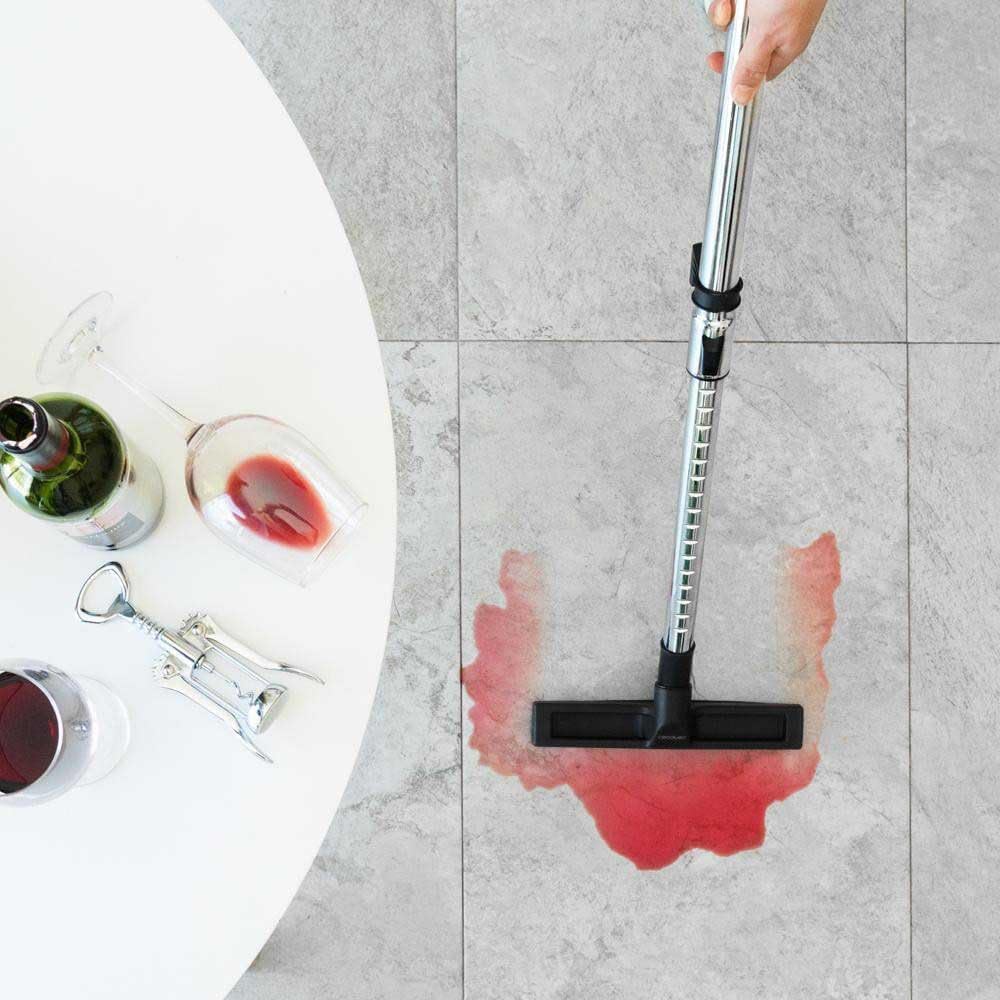
Figure 10: A user utilizing the blower function to clear debris from around a rock wall, demonstrating its utility beyond vacuuming.
Itoju
Itọju deede ṣe idaniloju iṣẹ ṣiṣe ti o dara julọ ati fa gigun igbesi aye ẹrọ igbale rẹ.
Ṣofo Tanki naa:
After each use, especially after wet vacuuming, empty the tank. Unlatch the top motor unit from the tank and carefully pour out the contents. Clean the inside of the tank with water and mild detergent if necessary, then dry thoroughly.

Figure 11: The vacuum cleaner being carried, illustrating its portability for emptying or transport.
Fifọ ati Rirọpo:
The cartridge filter is crucial for dry vacuuming. Periodically remove and clean it by tapping off dust or rinsing with water. Ensure the filter is completely dry before re-installing for dry use. For wet vacuuming, ensure the appropriate filter (e.g., foam filter) is used and cleaned as per its specific instructions.

Figure 12: A close-up of the vacuum's filter, emphasizing the importance of regular cleaning for optimal performance.

Figure 13: Diagram illustrating the multi-layer filter system, designed for efficient dust and debris capture.
Isọsọ gbogboogbo:
Pa ode ti ẹrọ igbale kuro pẹlu ipolowoamp Aṣọ. Má ṣe lo àwọn ohun ìfọṣọ tàbí àwọn ohun èlò ìfọṣọ. Rí i dájú pé gbogbo àwọn ẹ̀yà ara gbẹ kí o tó kó wọn pamọ́.
Laasigbotitusita
| Isoro | Owun to le Fa | Ojutu |
|---|---|---|
| Igbale ko ni tan. | Ko edidi ni; pipa agbara; Circuit fifọ tripped. | Check power cord connection; ensure switch is ON; reset circuit breaker. |
| Isonu ti afamora. | Full tank; clogged hose/nozzle; dirty filter. | Empty tank; clear any blockages; clean or replace filter. |
| Mọ́tò máa ń dúró nígbà tí a bá ń fi omi wẹ̀. | Ojò ti kun (ṣiṣẹ leefofo siseto). | Sofo ojò. |
| Ariwo ti ko wọpọ. | Blockage in hose/nozzle; damaged motor. | Ṣàyẹ̀wò kí o sì mú àwọn ìdènà kúrò. Tí ariwo bá ń bá a lọ, kan si olùrànlọ́wọ́ oníbàárà. |
Awọn pato
- Brand: Cecotec
- Nọmba awoṣe: 08114
- Àwọ̀: Grẹy
- Awọn iwọn (L x W x H): 36 x 36 x 45 cm
- Ìwúwo: 6.8 kilo
- Agbara: 20 liters
- Agbara: 1400 Wattis
- Voltage: 1400 Volts (as per product specifications, typically refers to power input)
- Orisun Agbara: Okun Itanna
- Àlẹmọ Iru: Katiriji
- Ilẹ ti a ṣeduro: Ilẹ lile, capeti

Figure 14: Visual representation of the 1400W power output, indicating strong suction capabilities.

Figure 15: Illustration of the 20-liter tank capacity, allowing for extended cleaning sessions.
Atilẹyin ọja ati Support
Cecotec provides support for its products. Spare parts for this model are available for up to 10 years from the date of purchase. For warranty claims, technical assistance, or to inquire about spare parts, please refer to the contact information provided with your purchase or visit the official Cecotec webojula.