Ọrọ Iṣaaju
Thank you for choosing the Scheppach TBL400 Panel Lift. This manual provides essential information for the safe and efficient operation, maintenance, and troubleshooting of your panel lift. Please read this manual thoroughly before assembly or operation to ensure proper use and to prevent injury or damage.
The Scheppach TBL400 Panel Lift is designed to assist with overhead work, making the installation of drywall, chipboard, wood, and metal panels easier and safer. Its robust design and versatile features make it an indispensable tool for both professional and DIY applications.
Awọn Itọsọna Aabo
Always observe the following safety precautions to prevent personal injury and damage to the equipment:
- Read and understand all instructions before operating the panel lift.
- Rii daju pe agbegbe iṣẹ ko kuro ninu awọn idena ati ina daradara.
- Always wear appropriate personal protective equipment (PPE), including safety glasses, gloves, and a hard hat.
- Maṣe kọja agbara fifuye ti o pọju ti 68 kg (150 lbs).
- Ensure the panel lift is on a stable, level surface before loading or lifting.
- Engage the wheel brakes when the lift is in position and before lifting.
- Jeki ọwọ ati aṣọ kuro ninu awọn ẹya gbigbe lakoko iṣẹ.
- Do not attempt to modify the panel lift. Use only original replacement parts.
- Store the panel lift in a dry, secure location when not in use.
Irinše Loriview
Familiarize yourself with the main components of your Scheppach TBL400 Panel Lift:
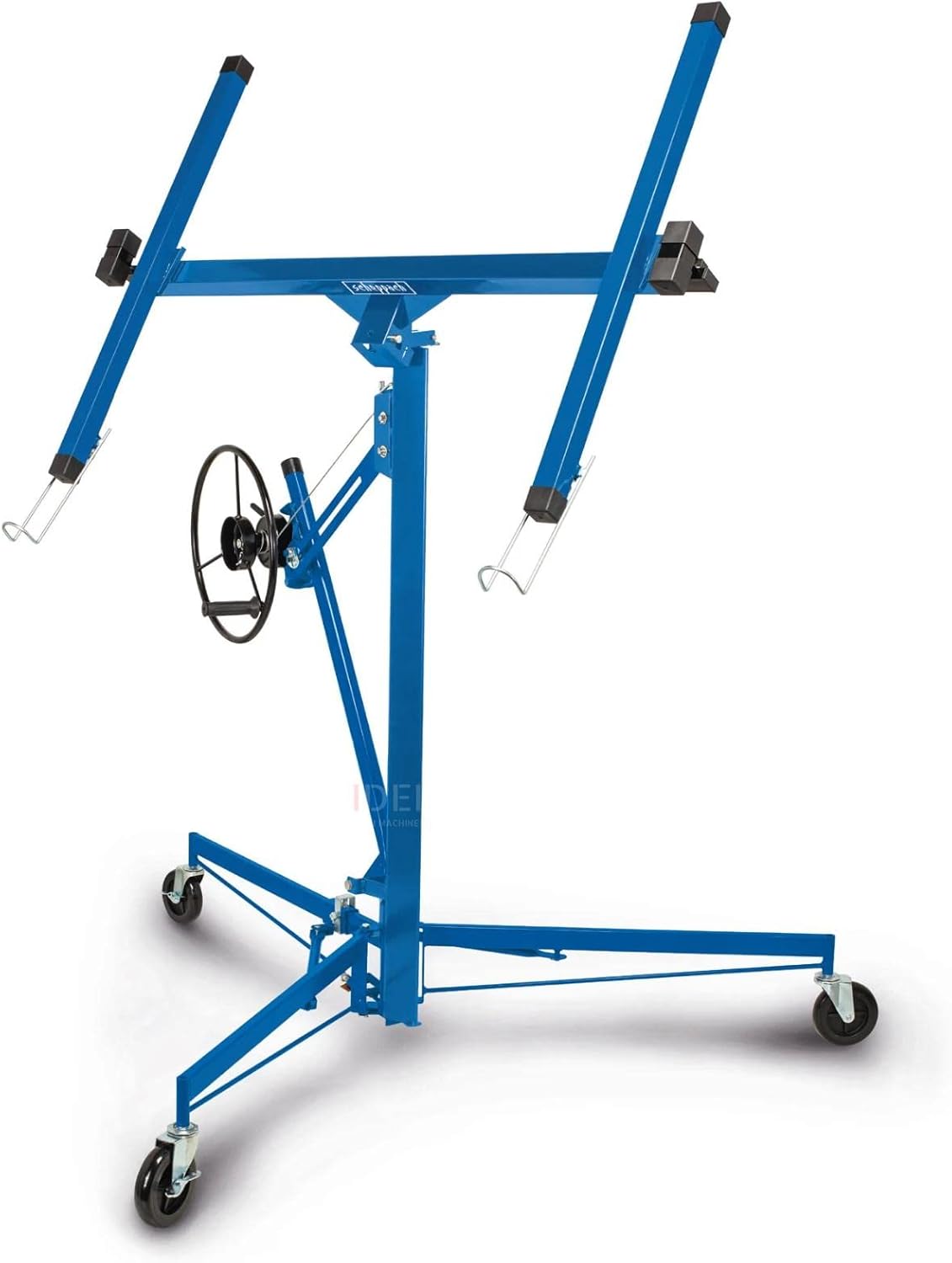
Figure 1: Fully assembled Scheppach TBL400 Panel Lift, showing the main frame, lifting mechanism, panel support arms, and swivel wheels.
- Aṣa akọkọ: The central support structure of the lift.
- Ilana Igbega: Includes the hand wheel and cable system for raising and lowering panels.
- Panel Support Arms: Two extendable arms with protective caps and stop hooks to hold panels securely.
- Swivel Wheels with Brakes: Three 360-degree rotating wheels for easy maneuverability, each equipped with a brake.
- Ipilẹ: The wide, stable base provides support and balance.
Eto ati Apejọ
The Scheppach TBL400 Panel Lift is designed for easy assembly and disassembly for transport and storage.

Figure 2: The panel lift disassembled into its main components for compact storage and transport.
Awọn Igbesẹ Apejọ:
- Ṣii gbogbo awọn paati ati rii daju lodi si atokọ awọn ẹya (tọkasi apoti fun atokọ ni kikun).
- Assemble the main frame and base according to the diagrams in the separate assembly guide (if provided). Ensure all bolts and fasteners are securely tightened.
- Attach the panel support arms to the main frame. Ensure they are correctly oriented and secured.
- Verify that the hand wheel and lifting cable system operate smoothly.
- Ensure all three swivel wheels are properly attached and their brakes function correctly.
Awọn ilana Iṣiṣẹ
Follow these steps for safe and effective operation of your panel lift:
1. Positioning the Lift:
- Roll the panel lift to the desired working area.
- Ensure the floor is level and free of debris.
- Engage the brakes on all three swivel wheels to secure the lift in place.
2. Loading the Panel:

Figure 3: A worker carefully positioning a large panel onto the support arms of the lift.
- Lower the panel support arms to a comfortable height using the hand wheel.
- Carefully place the panel onto the support arms, ensuring it rests securely against the stop hooks.
- Adjust the extension arms to match the panel size, ensuring even support. The arms extend in 3 stages (1280 / 2340 / 2950 mm).
3. Lifting and Tilting:
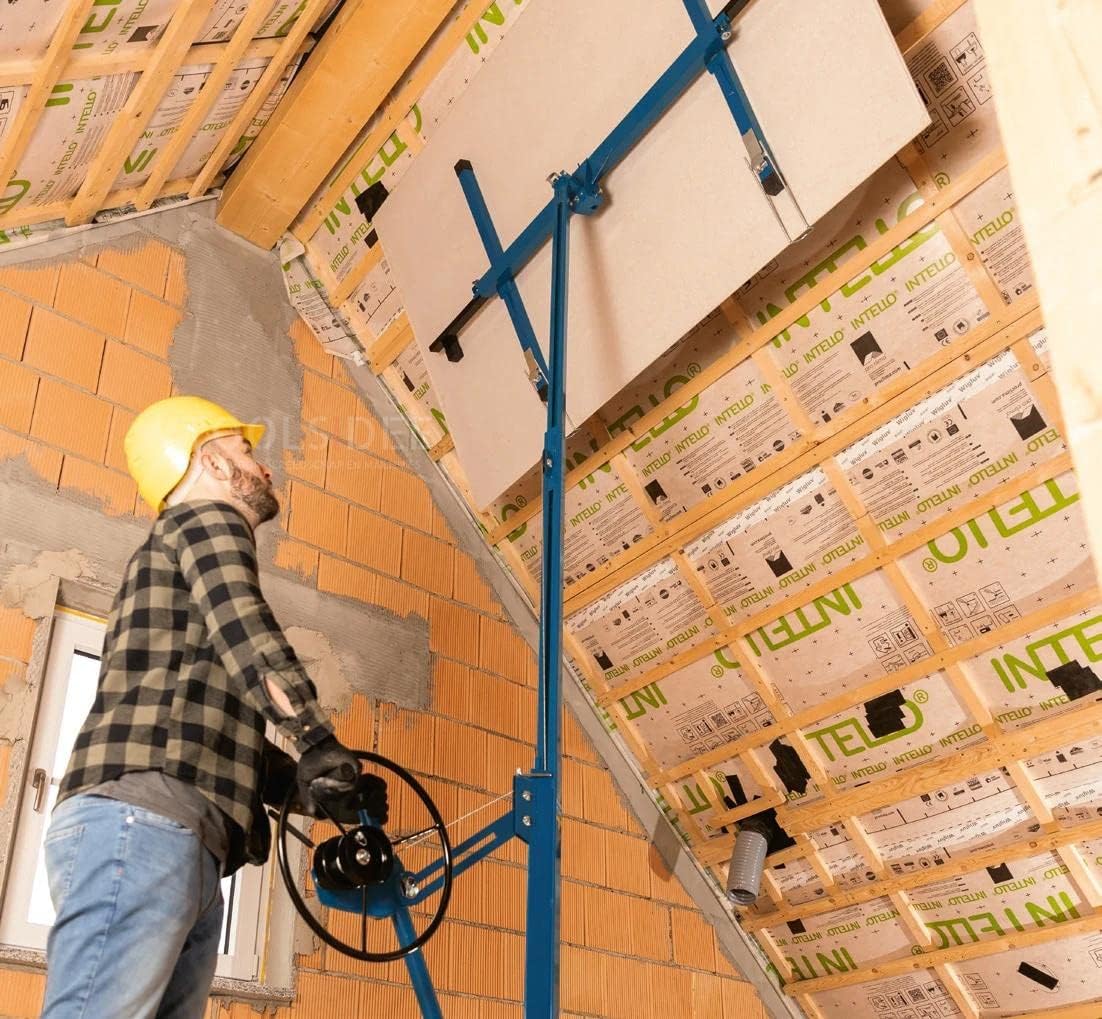
Figure 4: The panel lift with a panel raised to ceiling height and tilted for angled installation.
- Slowly turn the hand wheel to raise the panel to the desired height. The automatic brake will hold the panel in position when you stop turning.
- The lift has a large lifting range from 1220 mm to 3350 mm.
- For sloped ceilings or walls, the panel can be tilted up to 60 degrees. Adjust the tilt mechanism as needed.
- Once the panel is in position, secure it to the ceiling or wall.
4. Lowering and Unloading:
- After securing the panel, slowly turn the hand wheel in the opposite direction to lower the support arms.
- Once the arms are fully lowered, carefully remove any remaining panel pieces or the lift itself.
Itoju
Regular maintenance ensures the longevity and safe operation of your Scheppach TBL400 Panel Lift:
- Ninu: Wipe down the lift after each use to remove dust and debris. Use a damp asọ ati ìwọnba detergent ti o ba wulo.
- Lubrication: Periodically lubricate moving parts, such as the lifting cable, pulleys, and wheel axles, with a suitable lubricant.
- Ayewo: Before each use, inspect the lift for any signs of wear, damage, or loose fasteners. Pay close attention to the lifting cable, support arms, and wheel brakes.
- Ibi ipamọ: When not in use, store the panel lift in a dry, protected area. It can be disassembled for compact storage (refer to Figure 2).
Laasigbotitusita
If you encounter issues with your panel lift, refer to the following common problems and solutions:
| Isoro | Owun to le Fa | Ojutu |
|---|---|---|
| Lift not raising/lowering smoothly | Cable tangled or worn; lack of lubrication; obstruction. | Inspect cable for tangles or damage; lubricate moving parts; check for obstructions. |
| Wheels not rolling freely | Brakes engaged; debris in wheels; damaged wheel. | Release brakes; clean wheels; replace damaged wheel if necessary. |
| Panel slipping on support arms | Panel not properly seated; stop hooks not engaged; excessive load. | Ensure panel is fully seated against stop hooks; verify load is within capacity. |
| Lift feels unstable | Not on a level surface; brakes not engaged; loose fasteners. | Move to a level surface; engage all wheel brakes; tighten all fasteners. |
If the problem persists after attempting these solutions, please contact Scheppach customer service.
Awọn pato
Key technical specifications for the Scheppach TBL400 Panel Lift:
| Ẹya ara ẹrọ | Sipesifikesonu |
|---|---|
| Nọmba awoṣe | 17312 |
| Olupese | Schepach |
| Gbigbe Ibiti | 1220 mm si 3350 mm (48 inches si 131.9 inches) |
| O pọju fifuye Agbara | 68 kg (150 lbs) |
| Maximum Panel Size | 1220 x 4880 mm (48 x 192 inches) |
| Titẹ Igun | Titi di iwọn 60 |
| Extension Arm Stages | 3 iṣẹju-aayatages (1280 / 2340 / 2950 mm) |
| Awọn kẹkẹ | 3x 360-degree swivel wheels with brakes |
| Iwọn Nkan | 34.5 kg (76 lbs) |
| Product Dimensions (disassembled) | Approx. 0.1 x 0.1 x 0.1 cm (0.04 x 0.04 x 0.04 inches) - Note: This dimension appears to be a placeholder and may not reflect actual disassembled size. |
Alaye atilẹyin ọja
Scheppach products are manufactured to high-quality standards. For specific warranty terms and conditions, please refer to the warranty card included with your purchase or visit the official Scheppach webojula. Jeki ẹri rira rẹ fun eyikeyi awọn ibeere atilẹyin ọja.
Onibara Support
If you have any questions, require technical assistance, or need to order replacement parts, please contact Scheppach customer service. Contact information can typically be found on the official Scheppach webaaye tabi lori apoti ọja rẹ.


