1. Ifihan
This manual provides essential information for the safe and efficient operation of your ShockFlo Type 2 EV Charger, Model 1490EVS0026. This portable EV charging station is designed for electric vehicles and plug-in hybrids with Type 2 or CCS charging ports, offering 16A, 11KW charging at 380V.
Jọ̀wọ́ ka ìwé ìtọ́ni yìí dáadáa kí o tó lo ọjà náà, kí o sì tọ́jú rẹ̀ fún ìtọ́kasí ọjọ́ iwájú.
2. Alaye Aabo
Your ShockFlo EV charger is TÜV-certified and incorporates 10 safety protection features to ensure secure operation. Adhere to the following safety guidelines:
- Awọn ẹya Idaabobo: The charger is equipped with protection against flash, current leak, grounding faults, low voltage, ju voltage, overcharging, overheating, and over current.
- Idiwon ti ko ni omi: The control box and charger are IP65 waterproof, and the overall unit is IP67 waterproof, making it suitable for outdoor use.
- Ikole ti o tọ: Made from high-quality, drop-resistant and roll-resistant materials.
- Iwọn Iṣiṣẹ: Designed to operate safely in temperatures ranging from -30°C to 55°C.
- Always ensure the charging cable and connectors are free from damage before use.
- Do not attempt to open or repair the charger yourself. Contact qualified personnel for service.
- Ensure proper grounding for the power outlet used.
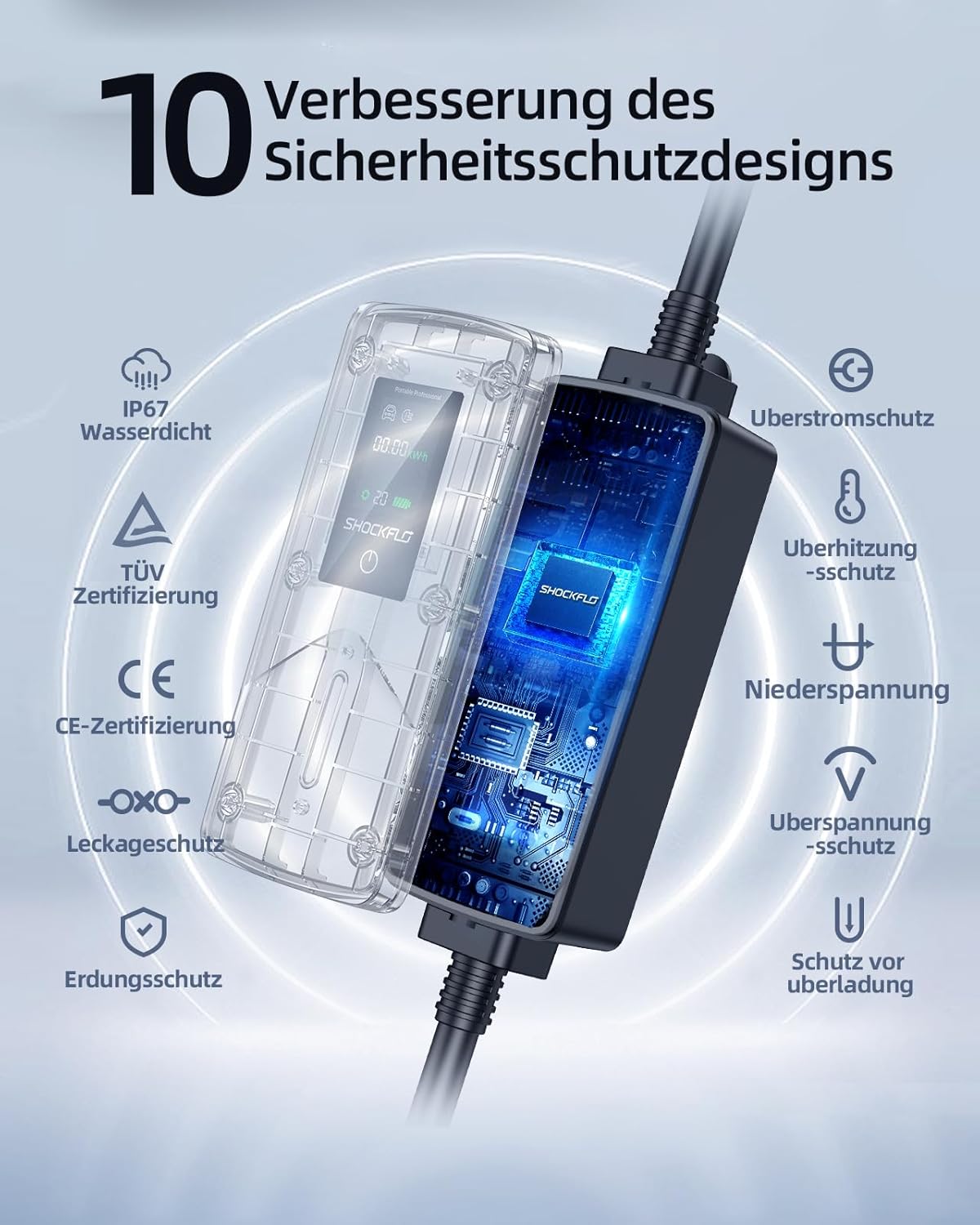
Aworan: Pariview of the 10 safety protection features integrated into the ShockFlo EV charger, highlighting its robust design and certifications.
3. Ọja irinše
The ShockFlo Type 2 EV Charger package includes:
- ShockFlo Portable EV Charging Station (Control Box and Charger Unit)
- 6-meter Charging Cable with Type 2 connector
- 3-Phase CEE Plug
- Apo ipamọ

Image: The ShockFlo EV charger's compact storage bag, illustrating its portability and ease of transport.
4. Eto
The ShockFlo Type 2 EV Charger is designed for plug-and-play convenience, requiring no complex installation.
- Yọọ kuro: Remove the charging station and cable from the storage bag.
- Sopọ si Agbara: Plug the 3-Phase CEE plug into a compatible and properly grounded power outlet.
- Mura Ọkọ: Ensure your electric vehicle is ready for charging.
- Sopọ mọ Ọkọ: Insert the Type 2 charging connector into your vehicle's charging port. The 6-meter cable provides ample length for most driveways or garages.

Image: The ShockFlo EV charger in use, demonstrating its 6-meter cable length and suitability for charging in various locations.
5. Awọn ilana Iṣiṣẹ
5.1 Gbigba agbara ilana
- After connecting the charger to both the power source and your vehicle, the LED indicator lights on the control box will illuminate, indicating the charging status.
- The charger will begin charging at the default or previously set current.
- The charger provides approximately 60 km/hour of range (at 380V, 16A, 11KW), offering a significantly faster charging speed than standard chargers.
- Note that charging speed may slow down when the battery reaches approximately 80% capacity or if the charger's temperature rises, to protect your car battery.
5.2 Adjusting Current and Setting Start Time
The charger allows for flexible power settings and delayed start times.
- Step 1: Adjust Power (Current): Touch the button on the charger's screen to cycle through available current settings (6A, 8A, 10A, 13A, 16A). The green lights will flash to indicate the selection. Choose a setting that safely adapts to your charging circuit.
- Step 2: Set Start Charging Time (Delay): After adjusting the power, wait for the green lights to stabilize. You can then set a delayed start time (1-12 hours). This function helps manage charging peaks and optimize your charging schedule.

Image: Visual guide on how to intelligently adjust the charging current and set a delayed start time using the charger's interface.
5.3 Ọkọ ibamu
The ShockFlo Type 2 EV charger is compatible with all electric vehicles and plug-in hybrids that utilize Type 2 or CCS charging ports. This includes, but is not limited to, models from Tesla, BMW (iX3, iX, i4), Benz (EQA, EQB), VW ID series, Audi e-tron series, Kia, Ford, Hyundai Ioniq 5, Renault, Volvo XC40, and SMART.
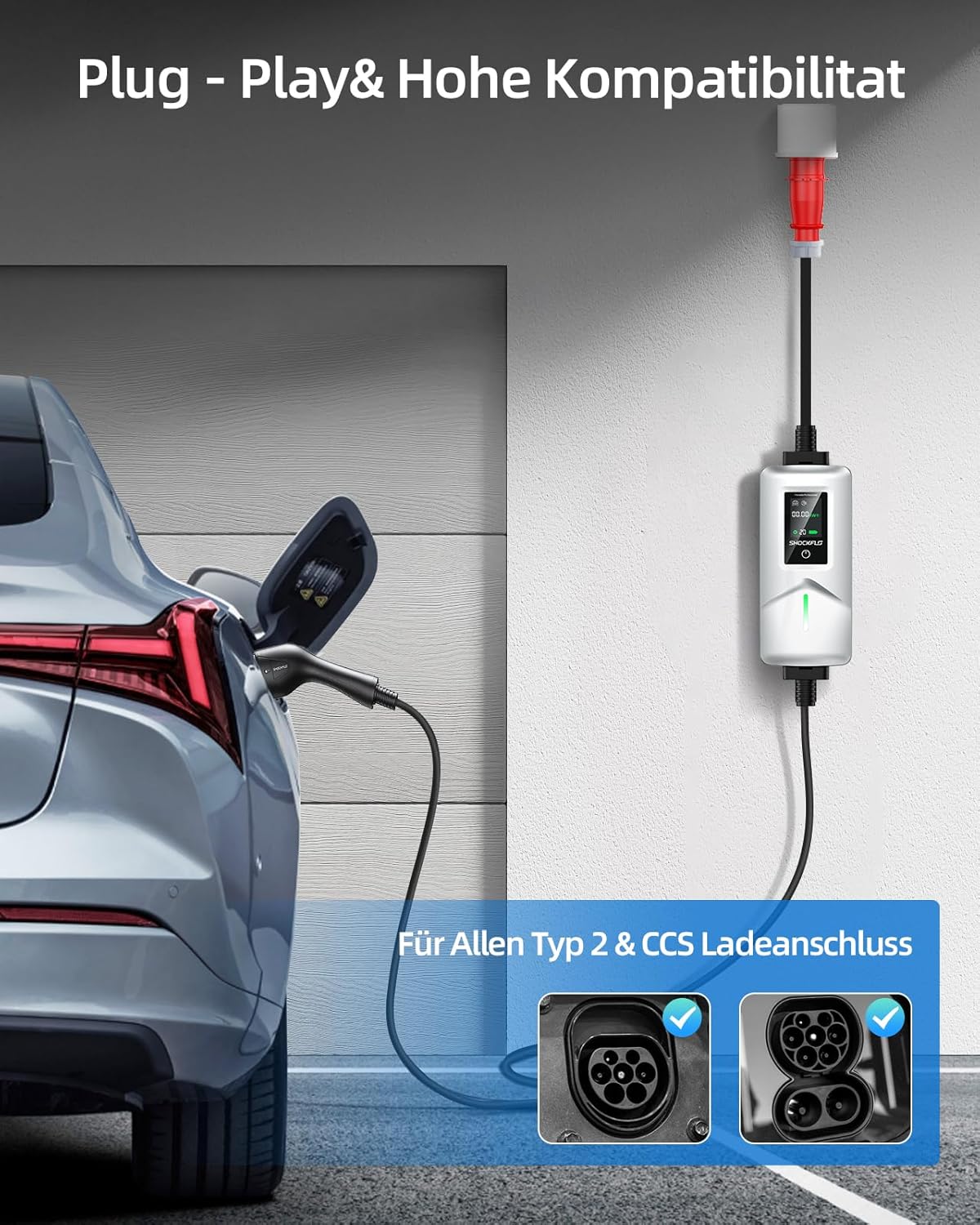
Image: The ShockFlo EV charger connected to a vehicle, demonstrating its plug-and-play functionality and compatibility with both Type 2 and CCS charging ports.
6. Itọju
To ensure the longevity and optimal performance of your ShockFlo EV Charger, follow these maintenance guidelines:
- Ninu: Regularly wipe the charger unit and cable with a dry, soft cloth to remove dust and dirt. Do not use abrasive cleaners or solvents.
- Ayewo: Periodically inspect the charging cable, connectors, and the charger unit for any signs of damage, wear, or corrosion. If any damage is found, discontinue use immediately and contact customer support.
- Ibi ipamọ: When not in use, store the charger in its provided storage bag in a cool, dry place, away from direct sunlight and extreme temperatures.
- Awọn ipo Ayika: While the charger is designed for outdoor use within its specified temperature range (-30°C to 55°C) and is IP65/IP67 rated, avoid prolonged exposure to harsh weather conditions when possible.
7. Laasigbotitusita
If you encounter issues with your ShockFlo EV Charger, refer to the following common troubleshooting steps:
- Charger Not Starting:
- Ensure the 3-Phase CEE plug is securely connected to a live power outlet.
- Verify that the Type 2 connector is fully inserted into the vehicle's charging port.
- Check the vehicle's dashboard or infotainment system for any charging error messages.
- Gbigba agbara lọra:
- Confirm the current setting on the charger's screen. Adjust to a higher amperage if your electrical circuit supports it.
- Note that charging speed naturally slows down when the vehicle's battery reaches approximately 80% capacity to protect the battery.
- High ambient temperatures can also cause the charger to reduce power output to prevent overheating.
- Awọn itọkasi aṣiṣe:
- If the LED indicators display an error code or unusual pattern, refer to the specific error code in a more detailed product manual (if available) or contact customer support.
- Disconnect and reconnect the charger from both the power source and the vehicle to reset the unit.
- No Power to Charger:
- Check the circuit breaker for the power outlet being used.
- Ensure the power outlet itself is functional by testing it with another device.
If these steps do not resolve the issue, please contact ShockFlo customer support for further assistance.
8. Awọn pato
| Ẹya ara ẹrọ | Sipesifikesonu |
|---|---|
| Brand | ShockFlo |
| Nọmba awoṣe | 1490EVS0026 |
| O wujade Voltage | 380 Volts |
| Ti isiyi Rating | 16 Amps (Adjustable: 6/8/10/13/16A) |
| Gbigba agbara agbara | 11 KW |
| USB Ipari | 6 mita |
| Pulọọgi Iru | 3-Phase CEE Plug |
| Asopọmọra Iru | Type 2 / CCS Compatible |
| Ijẹrisi aabo | TÜV-ifọwọsi |
| Mabomire Rating | IP65 (Control Box), IP67 (Overall) |
| Awọn iwọn otutu ti nṣiṣẹ | -30°C si 55°C |
| Ọja Mefa | 35 x 35 x 15 cm |
| Iwọn Nkan | 3.38 kg |
9. Atilẹyin ọja ati Support
For warranty information, please refer to the documentation provided with your purchase or visit the official ShockFlo website. If you require technical assistance, have questions about product operation, or need to report an issue, please contact ShockFlo customer support through their official channels.


