Ọrọ Iṣaaju
The Electro-Harmonix Pico POG is a compact and powerful polyphonic octave generator pedal designed to add octave effects to your guitar signal. It features precise tracking for both single notes and chords, offering sub-octave and octave-up voices in addition to your dry signal. The pedal also includes a versatile tone control with three distinct filter modes to shape your sound. Its small footprint makes it ideal for pedalboards with limited space.

Aworan: A taara iwaju view of the Electro-Harmonix Pico POG pedal. The pedal is bright red with white control knobs for 'FILTER', 'SUB OCTAVE', 'OCTAVE UP', 'DRY', and 'TONE'. A single footswitch is located at the bottom center. The 'POG NYC+DSP' logo is prominently displayed.
Ṣeto
Awọn ibeere agbara
The Pico POG operates on a 9-volt power supply. Ensure you use a compatible power adapter to prevent damage to the unit. The power input is located at the rear of the pedal.
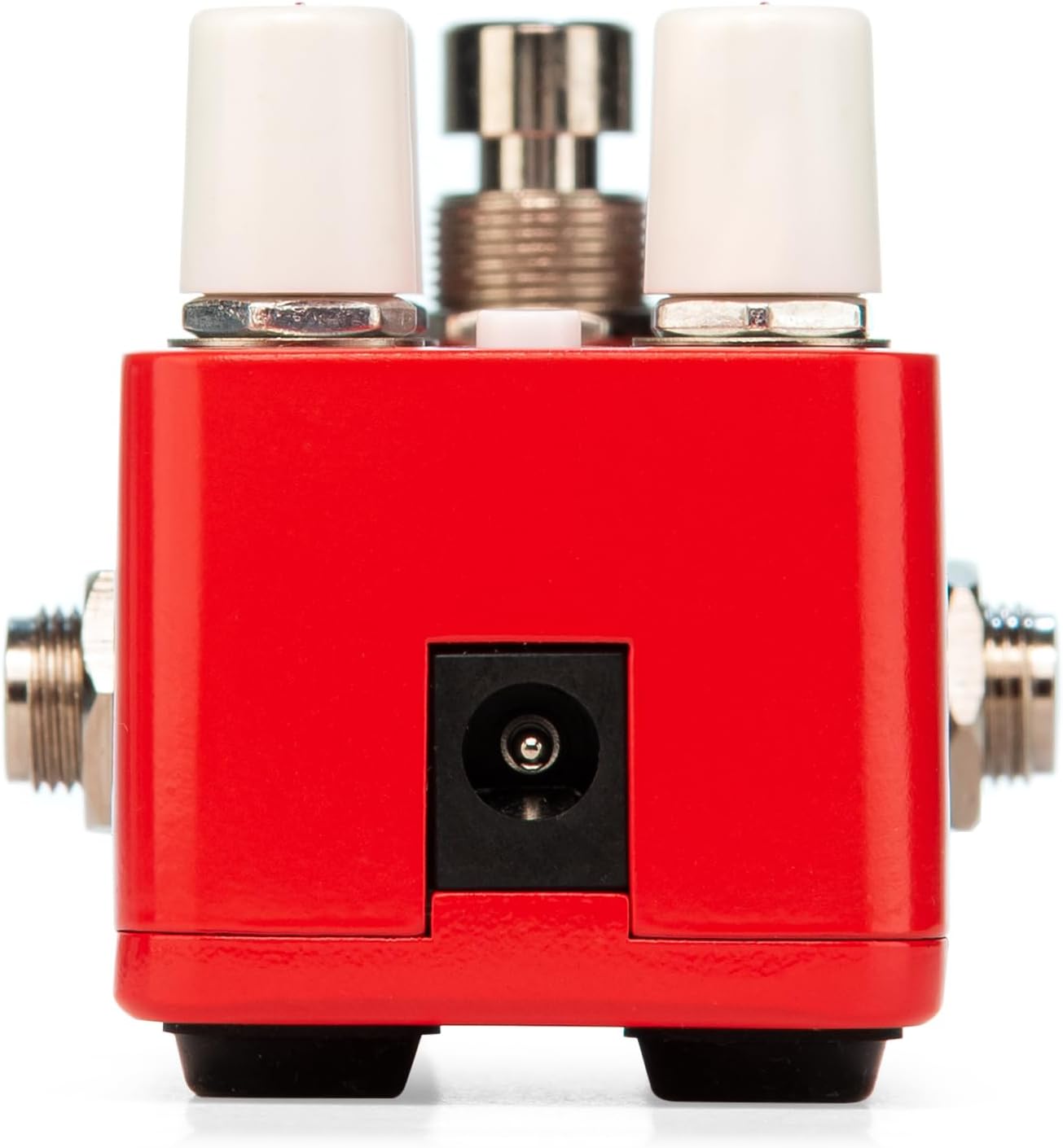
Aworan: A ru view of the red Electro-Harmonix Pico POG pedal, highlighting the circular power input jack. The pedal's compact size is evident.
Awọn isopọ
- So ohun èlò orin rẹ (fún àpẹẹrẹ, gítà) mọ́ ÀWỌN Ọ̀RỌ̀ jack ni apa ọtun ti pedal.
- Sopọ awọn IJADE ọpá ìkọsẹ̀ ní apá òsì ti pedal sí tirẹ amplifia tabi pedal ti o tẹle ninu ẹwọn ifihan agbara rẹ.

Aworan: Angled view of the red Electro-Harmonix Pico POG pedal, showing the input and output jacks on its sides. The white control knobs are also visible from this perspective.
Operating the Pico POG
Awọn Iṣakoso Loriview
The Pico POG features four primary control knobs and a footswitch for intuitive sound manipulation:
- ÀYỌ: A push-button switch that cycles through the three tone filter modes.
- IPIN OCTAVE: Controls the volume level of the octave-down signal.
- OCTAVE UP: Controls the volume level of the octave-up signal.
- GBE: Controls the volume level of your original, unprocessed instrument signal.
- OHUN: Functions differently based on the selected filter mode (see Filter Modes section).
- Ẹsẹ ẹlẹsẹ: Olukoni tabi fori ipa naa.
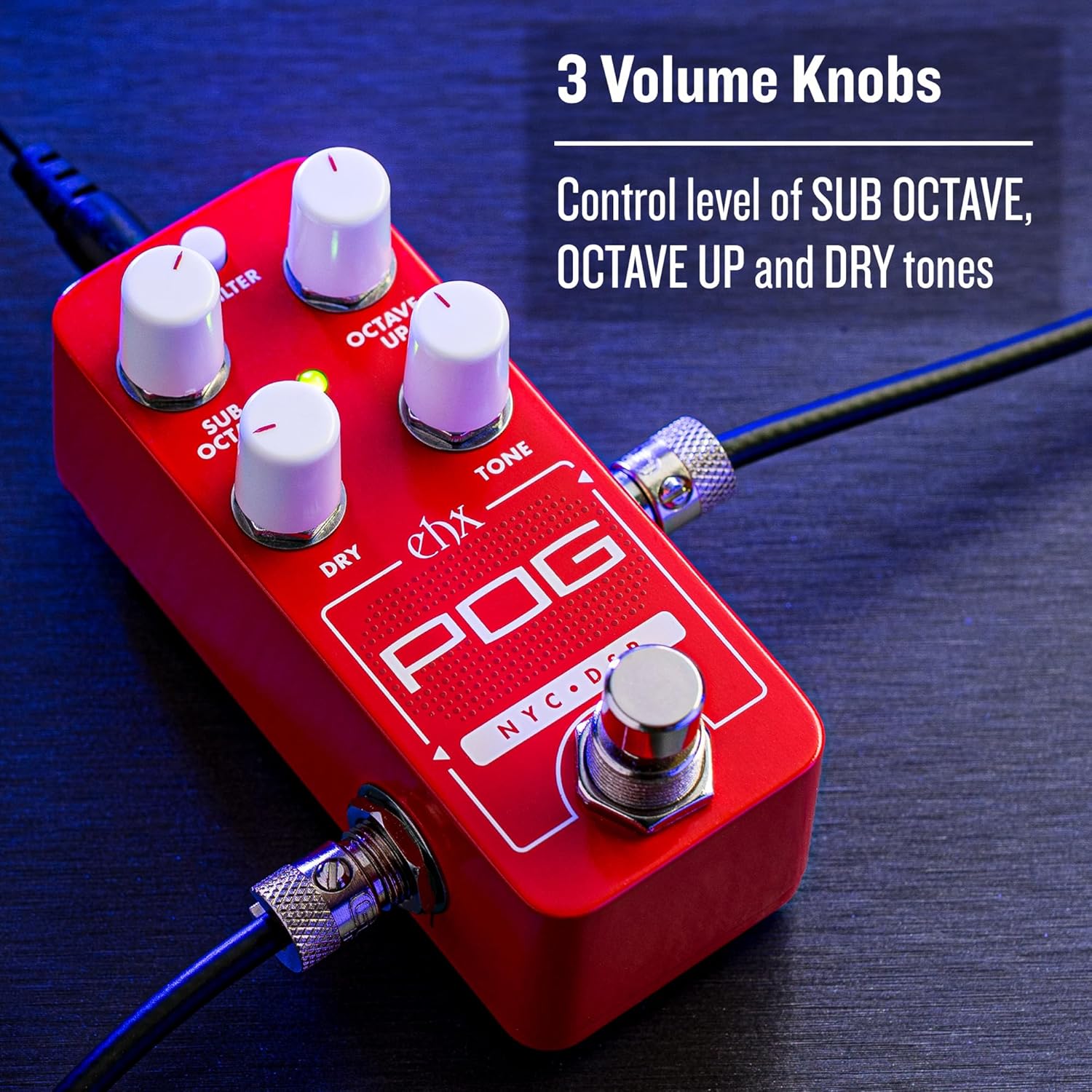
Aworan: A sunmọ-soke view of the Pico POG pedal, emphasizing the three volume knobs: SUB OCTAVE, OCTAVE UP, and DRY. These controls allow for precise mixing of the different octave voices with the original signal.
Awọn ipo àlẹmọ
The Pico POG offers three distinct filter modes, selectable via the FILTER button, which significantly alter the pedal's tonal characteristics:
- Tilt-EQ (Green LED): In this mode, the TONE knob acts as a tilt-EQ. Turning it clockwise increases treble and decreases bass, while turning it counter-clockwise increases bass and decreases treble. The flat frequency response is at the center position. This EQ is applied to all three voices (Dry, Sub Octave, Octave Up).
- Low Pass Filter (Red LED): This mode applies a resonant low-pass filter, cutting higher frequencies from the Sub Octave and Octave Up voices. The TONE knob controls the cutoff frequency.
- High Pass Filter (Orange LED): This mode applies a high-pass filter, cutting lower frequencies from the Sub Octave and Octave Up voices. The TONE knob controls the cutoff frequency.

Image: The Pico POG pedal positioned on a larger pedalboard, illustrating the Low Pass Mode. Text overlay describes how this mode applies a resonant low pass filter to the Sub and Octave Up voices.

Image: The Pico POG pedal on a larger pedalboard, showcasing the High Pass Mode. Text overlay explains that this mode applies a high pass filter, cutting lower frequencies from the Sub and Octave Up voices.
Ohun Examples ati Awọn ohun elo
The Pico POG's polyphonic tracking and versatile controls allow for a wide range of applications:
- Thickening Chords: Blend the Sub Octave and Octave Up voices with your dry signal to create rich, full-bodied chord voicings.
- Bass Simulation: Turn up the SUB OCTAVE knob and reduce the DRY and OCTAVE UP levels to transform your guitar into a bass-like instrument.
- Synth Sounds: Experiment with the Low Pass Filter mode and adjust the TONE knob to achieve classic synth flute or pad sounds.
- Organ Tones: Combine octave voices with a long reverb or Leslie effect for cathedral organ or jazz organ sounds.
- Vintage Octave Divider: Drive the pedal into an overdriven amplifier for a vintage octave divider effect.
Video: An official demonstration of the Electro-Harmonix Pico POG pedal, showcasing its polyphonic octave generation capabilities, various filter modes (Tilt-EQ, Low Pass, High Pass), and applications such as creating 12-string guitar sounds, bass simulation, synth flutes, and vintage octave divider effects. The video features a guitarist demonstrating the pedal's sounds with different settings.
Itoju
To ensure the longevity and optimal performance of your Electro-Harmonix Pico POG pedal, follow these maintenance guidelines:
- Ninu: Use a soft, dry cloth to clean the pedal's exterior. Avoid abrasive cleaners or solvents that could damage the finish or internal components.
- Ibi ipamọ: Tọ́jú pedal náà sí ibi tí ó tutù tí ó sì gbẹ, tí kò sí ibi tí oòrùn lè tàn dé àti ibi tí ó gbóná janjan.
- Agbara: Nigbagbogbo ge asopọ ipese agbara nigbati ẹsẹ ko ba si ni lilo fun awọn akoko ti o gbooro sii.
- Awọn isopọ: Lojoojumọ, ṣayẹwo gbogbo awọn asopọ okun waya fun ibamu to dara ati awọn ami ti o wọ.
Laasigbotitusita
If you encounter issues with your Pico POG, consider the following common troubleshooting steps:
| Isoro | Owun to le Fa | Ojutu |
|---|---|---|
| Ko si Ohun | Incorrect power supply, loose cables, pedal bypassed. | Verify 9V power supply, check all input/output cables, ensure footswitch is engaged (LED on). |
| Alailagbara tabi Ohun Daru | Incorrect gain staging, faulty cables, low battery (if applicable). | Adjust volume knobs, try different cables, ensure proper power. |
| Octave Tracking Issues | Input signal too low/high, complex chords, old strings. | Ensure a strong, clean input signal. Polyphonic pedals track best with clear notes. Consider fresh strings. |
Awọn pato
- Awoṣe: PICO POG
- Brand: Itanna-Harmonix
- Ìwọ̀n Nkan: 1.23 iwon (0.56 kilo)
- Awọn iwọn ọja: 3.65"L x 2"W x 2"H
- Ni wiwo Hardware: 1/4-inch Audio
- Ọna kika Ifihan: Analog
- Orisun Agbara: Okun Itanna
- Voltage: 9 Volts
Atilẹyin ọja & Atilẹyin
Electro-Harmonix products are designed for durability and performance. For specific warranty information, including coverage details and duration, please refer to the warranty card included with your product or visit the official Electro-Harmonix website. For technical support, troubleshooting assistance beyond this manual, or service inquiries, please contact Electro-Harmonix customer support directly through their official channels.
O le ri alaye siwaju sii ati olubasọrọ awọn alaye lori awọn Electro-Harmonix Store on Amazon tabi osise wọn webojula.