Ọrọ Iṣaaju
The Fame EC-1802 E-Cello is an electric cello designed for portability and versatile performance. This manual provides essential information for setting up, operating, and maintaining your instrument to ensure optimal performance and longevity.

Nọmba 1: Full front view of the Fame EC-1802 E-Cello. This image displays the instrument's sleek white body, black fingerboard, and four strings, highlighting its modern design.
Ṣeto
1. Unpacking
- Ni ifarabalẹ yọ gbogbo awọn paati kuro ninu apoti.
- Verify that all parts are present: E-Cello body, removable body rests, bow, and any included cables.
- Retain original packaging for future transport or storage.
2. Attaching Body Rests
The Fame EC-1802 E-Cello features removable body rests for comfortable playing. Locate the two 'C' shaped body rests and align them with the attachment points on the cello body. Gently slide and secure them into place until they click or feel firmly seated.

Nọmba 2: The Fame EC-1802 E-Cello with its ergonomic body rests attached, providing a comfortable playing position. The image shows the instrument from a slight angle, highlighting the curves of the rests.
3. Ipese Agbara ati Awọn isopọ
The E-Cello requires power for its internal electronics. Locate the battery compartment, typically on the underside or side of the instrument. Insert the required batteries (not specified in product data, assume standard 9V or AA) according to the polarity markings.
- O wu Jack: Connect a standard 6.35mm (1/4 inch) instrument cable from the cello's output jack to an amplifier, audio interface, or PA system.
- Agbekọri Ijade: For silent practice, connect headphones to the "Phone" jack.
- Iṣawọle MP3: To play along with backing tracks, connect an external audio source (e.g., MP3 player, smartphone) to the "Mp3 In" jack using an appropriate cable.
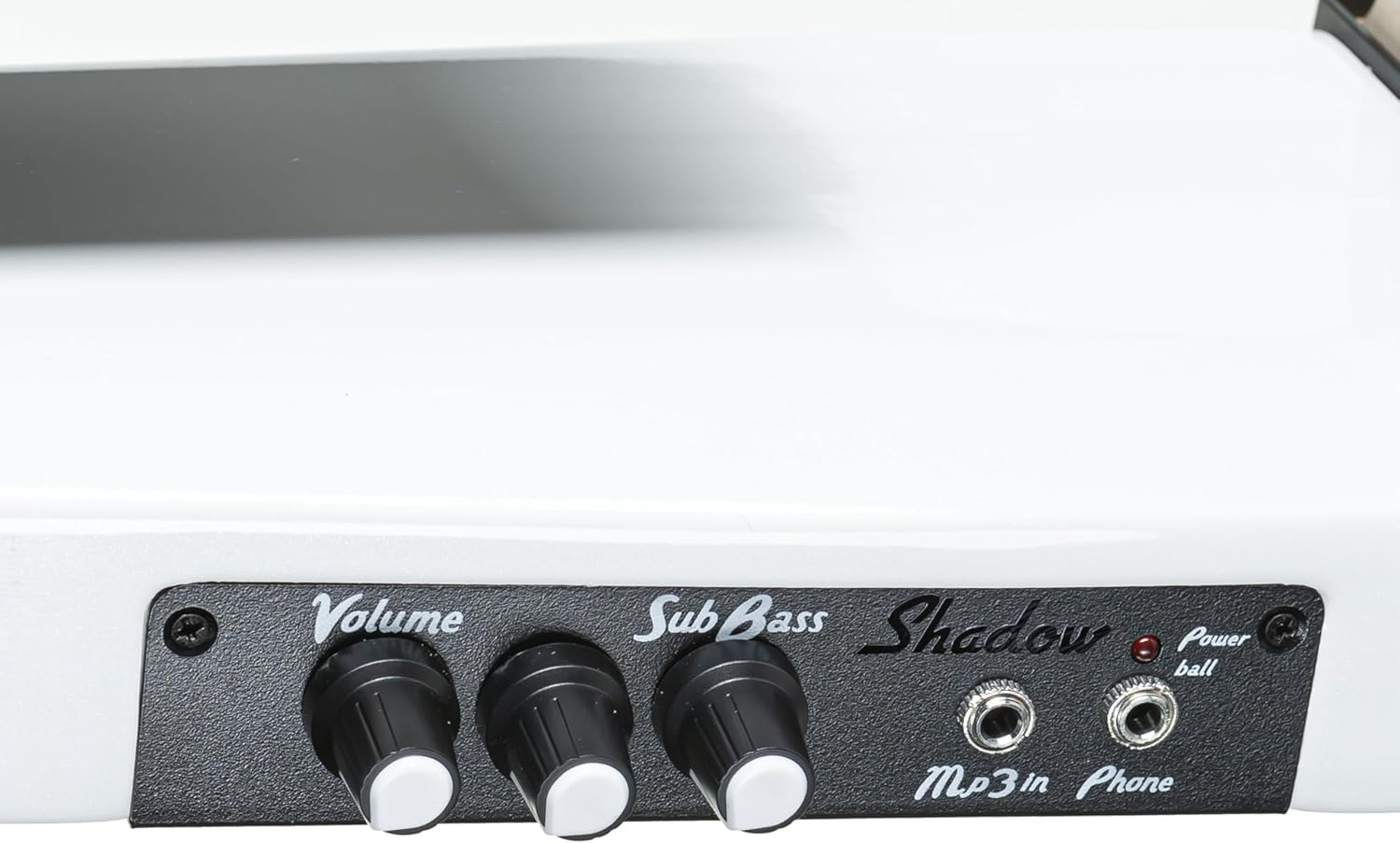
Nọmba 3: Sun mo tipetipe view of the output jack and battery compartment on the Fame EC-1802 E-Cello. This image details the connection points for audio output and power supply.
4. Atunse
Tune the cello using the tuning pegs located on the headstock. Standard cello tuning is C-G-D-A (from lowest to highest string). Use an electronic tuner for accuracy.

Nọmba 4: Iwaju view of the headstock of the Fame EC-1802 E-Cello, showing the four tuning pegs and the strings extending down the fingerboard.
5. Bow Preparation
Before playing, apply rosin to the bow hair. This creates friction necessary to produce sound from the strings. Ensure the bow hair is tightened appropriately, but not excessively, before applying rosin.
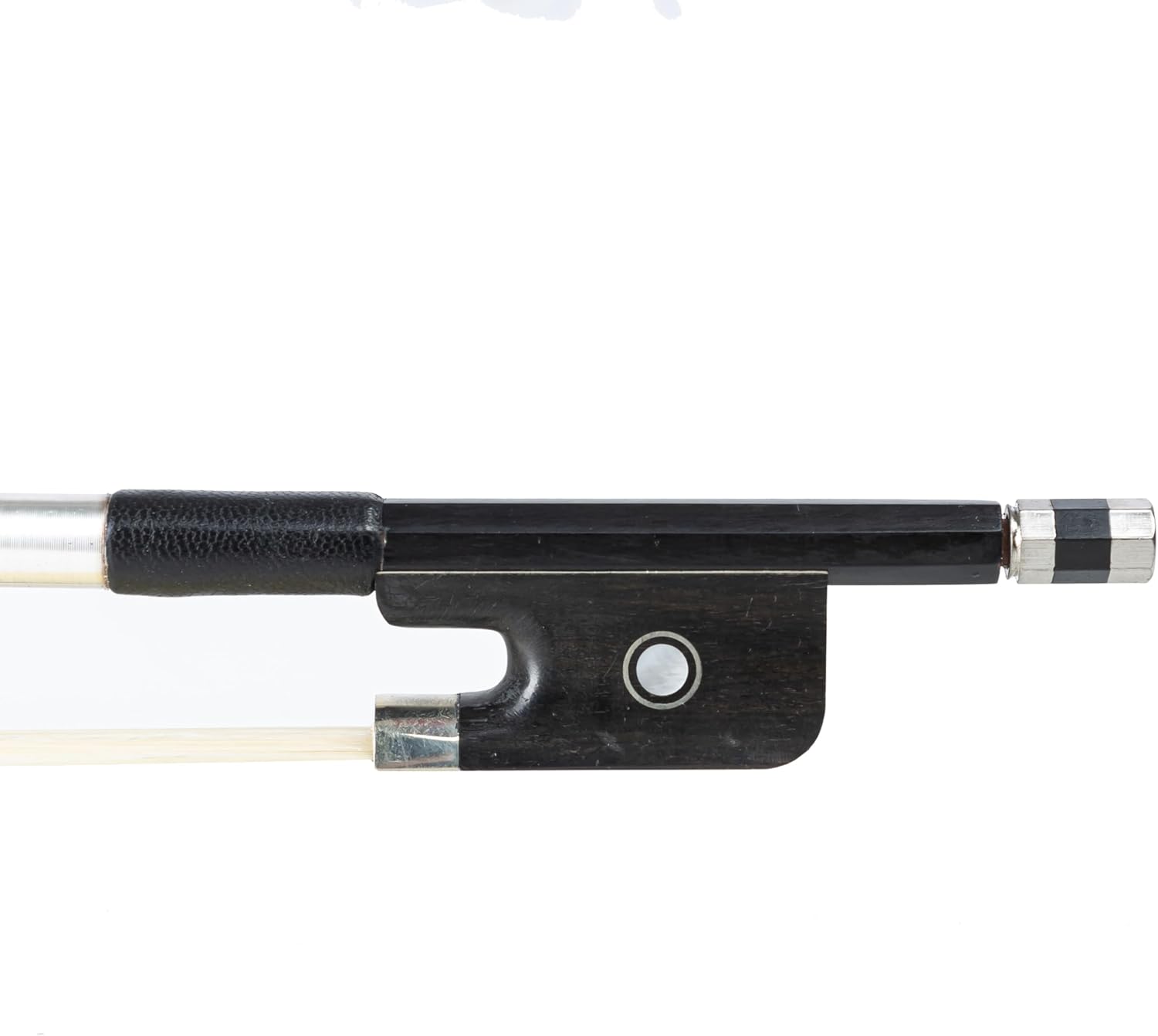
Nọmba 5: Close-up of the bow frog, showing the mechanism for tightening the bow hair and the grip area. This part is essential for proper bow handling and rosin application.
Ṣiṣẹ
1. Awọn iṣakoso Loriview
The Fame EC-1802 E-Cello features a control panel for adjusting sound and connectivity.

Nọmba 6: Alaye view of the control panel on the Fame EC-1802 E-Cello, featuring knobs for Volume and Sub Bass, and input/output jacks for MP3 In and Phone (headphones).
- Iwọn didun: Ṣe àtúnṣe ipele gbogbo ti ohun èlò náà.
- Sub Bass: Controls the amount of low-frequency enhancement. Turn clockwise to increase bass.
- Mp3 In: Input for connecting external audio devices.
- Foonu: Agbekọri jade Jack.
- Power/Ball Indicator: A small LED light indicates when the instrument is powered on.
2. Playing the E-Cello
Ní kete tí a bá ti sopọ̀ mọ́ amplifier or headphones, turn on the amplifier and adjust its volume to a low setting. Begin playing the cello as you would an acoustic instrument. Experiment with the Volume and Sub Bass controls to achieve your desired sound. For practice, use the headphone output to monitor your playing without disturbing others.
Itoju
1. Ninu
- After each use, wipe down the strings and body with a soft, dry cloth to remove rosin dust and fingerprints.
- Yẹra fún lílo àwọn ohun ìfọṣọ tàbí àwọn ohun èlò ìfọ́mọ́ra, nítorí pé àwọn wọ̀nyí lè ba ìparí rẹ̀ jẹ́.
2. Rirọpo okun
Strings should be replaced periodically, depending on usage, to maintain optimal tone and playability. Replace one string at a time to maintain tension on the bridge. Use steel cello strings of appropriate gauge.
3. Ibi ipamọ
Store the E-Cello in its case or a suitable stand when not in use. Avoid exposing the instrument to extreme temperatures, humidity, or direct sunlight, which can cause damage.
4. Bow Care
- Loosen the bow hair after each playing session to prevent warping of the stick.
- Re-apply rosin as needed, but avoid excessive application.
- Keep the bow clean and protected.
Laasigbotitusita
- Ko si Ohun:
- Check if the instrument is powered on (Power/Ball indicator).
- Rí i dájú pé àwọn batiri ti fi sori ẹrọ daradara ati pe wọn ko ti pari.
- Verify all cables are securely connected to the cello, amplifier, and power source.
- Ṣayẹwo amplifier volume and settings.
- Ensure the cello's Volume knob is not set to minimum.
- Ohun Yiyi:
- Reduce the Volume on the cello or amplifier.
- Ṣàyẹ̀wò fún àwọn okùn tó ti bàjẹ́.
- Rii daju pe amplifier's input gain is not too high.
- Ṣíṣe àtúnṣe àìdúróṣinṣin:
- Ensure strings are properly seated in the tuning pegs and bridge.
- New strings may require several days to stabilize.
- Check for worn or damaged strings.
Awọn pato
| Ẹya ara ẹrọ | Ẹ̀kúnrẹ́rẹ́ |
|---|---|
| Brand | Olokiki |
| Awoṣe | EC-1802 |
| Ọja Mefa | 140 x 29 x 22 cm |
| Iwọn Nkan | 5.98 kg |
| Àwọ̀ | Funfun |
| Asopọmọra | 6.35 mm Jack |
| Ohun elo okun | Irin |
| Ohun elo ti o ga julọ | Erogba Okun |
| Nọmba ti Awọn okun | 4 |
| Iwọn | 3/4 iwọn |
| Olupese | Olokiki |
| Ilu isenbale | Jẹmánì |
Atilẹyin ọja ati Support
For detailed warranty information, please refer to the documentation provided with your purchase or visit the official Fame website. For technical support or service inquiries, please contact your retailer or the manufacturer directly.


