LEKATO B0DK2R3P8P

LEKATO Mechanical Metronome User Manual

Model: B0DK2R3P8P

Orúkọ ìtajà: LEKATO

1. Ifihan

The LEKATO Mechanical Metronome is a precision instrument designed to help musicians maintain accurate tempo and rhythm during practice. Featuring a classic pyramid design and durable metal movement, it is suitable for a wide range of instruments and skill levels.

Awọn ẹya pataki:

  • Apẹrẹ Alailẹgbẹ: Traditional pyramid shape with an ash wood pattern for an elegant aesthetic.
  • Accurate Timing: Ensures precise tempo with a tolerance of only 0.04%.
  • Durable Metal Movement: High-hardness, precision all-metal mechanism for long-lasting performance without batteries.
  • Versatile Rhythm Patterns: Offers tempo range from 40 to 208 beats per minute (BPM) and rhythm patterns including 2, 3, 4, 6, and 0 (no bell).
  • Ideal for All Skill Levels: A valuable practice tool for beginners and experienced musicians alike.
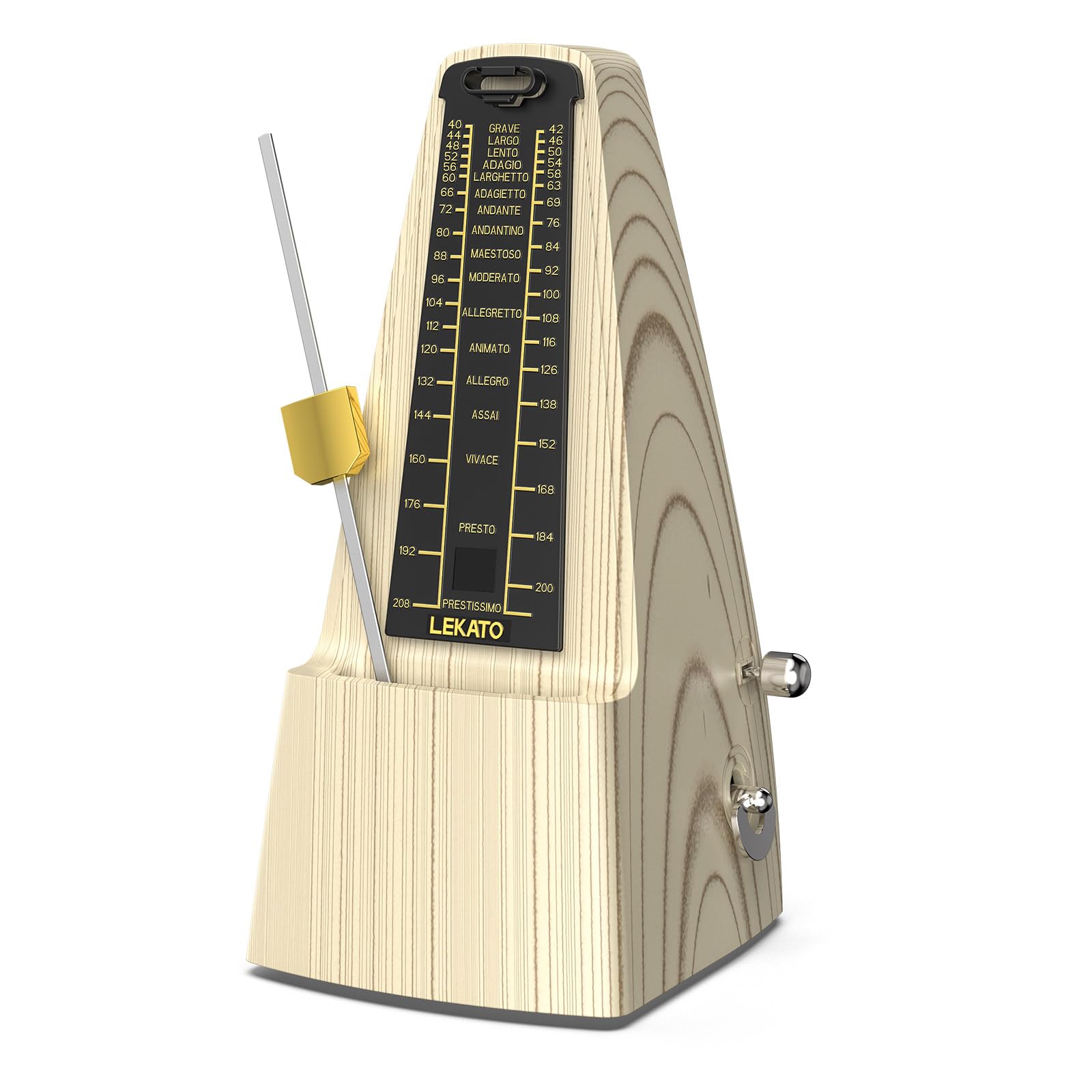
LEKATO Mechanical Metronome, front view.
Figure 1: LEKATO Mechanical Metronome, front view. This image shows the classic pyramid design of the metronome with its pendulum and tempo scale.
Pariview of LEKATO Mechanical Metronome features: no battery, sturdy spring, metal movement, precision, precise beat, classic style, sufficient sound volume.
Olusin 2: Pariview of LEKATO Mechanical Metronome features, highlighting its battery-free operation, sturdy spring, metal movement, precision, precise beat, classic style, and sufficient sound volume.

2. Eto ati First Lo

2.1 Unpacking ati Ibẹrẹ ayewo

Carefully remove the metronome from its packaging. Inspect for any visible damage. Ensure all components, including the dust cover and pendulum, are present.

2.2 Winding the Metronome

The LEKATO Mechanical Metronome is spring-wound and does not require batteries. To wind it, locate the winding key on the side of the unit. Turn the key clockwise until you feel resistance. Do not overwind.

2.3 Ṣíṣàtúnṣe Ìgbàkúgbà

The tempo is adjusted by sliding the pendulum weight up or down the pendulum rod. Slide the weight up for a slower tempo (fewer BPM) and down for a faster tempo (more BPM). Align the top edge of the weight with the desired BPM marking on the scale.

2.4 Setting Rhythm Patterns

The metronome features a beat selector to choose different rhythm patterns (e.g., 2/4, 3/4, 4/4, 6/8). This selector is typically a small lever or knob on the side of the metronome. Set it to '0' for no bell accent, or to the desired beat count for an audible accent on the first beat of each measure.

2.5 Bibẹrẹ ati Iduro

To start the metronome, gently push the pendulum to one side and release it. To stop, gently catch the pendulum and secure it in its resting position, often by sliding the pendulum weight to the top of the rod or engaging a brake mechanism if present.

Step-by-step guide on how to use the metronome: remove cover, rotate clockwork, select beat, adjust pendulum weight, move out pendulum, push pendulum to left and release.
Figure 3: Step-by-step guide on how to prepare and use the metronome, including removing the cover, winding the clockwork, selecting the beat, adjusting the pendulum weight, and starting the pendulum swing.
Apa view of LEKATO Mechanical Metronome with dimensions: 25cm/9.8in height, 10cm/3.9in depth, 11.5cm/4.5in width.
olusin 4: Apa view of the LEKATO Mechanical Metronome, illustrating its physical dimensions: approximately 25cm (9.8 inches) in height, 10cm (3.9 inches) in depth, and 11.5cm (4.5 inches) in width.
Close-up of the metronome's metal movement, highlighting its durability and precision.
olusin 5: Isunmọ view of the metronome's internal metal movement, emphasizing its robust construction for durability and precise rhythm generation.
Diagram illustrating the 5 rhythm patterns (2, 3, 4, 6, 0) available on the metronome.
Figure 6: Diagram showing the five selectable rhythm patterns (2, 3, 4, 6, and 0 for no bell) on the metronome, allowing for diverse musical applications.
Labeled diagram of the metronome's components: pendulum hook, pendulum weight, meter plate, beat selector handle, pendulum, clockwork.
Figure 7: Labeled diagram detailing the various parts of the metronome, including the pendulum hook, pendulum weight, meter plate, beat selector handle, pendulum, and internal clockwork mechanism.

3. Awọn ilana Iṣiṣẹ

3.1 Tempo Adjustment

To change the tempo, simply slide the brass weight up or down the pendulum rod. The scale on the metronome indicates the beats per minute (BPM). Move the weight up for slower tempos and down for faster tempos. Ensure the top edge of the weight aligns with the desired BPM mark.

3.2 Beat Selection

Use the beat selector switch, usually located on the side of the metronome, to choose your desired beat accent. Options typically include 0 (no accent), 2, 3, 4, and 6 beats. This allows the metronome to produce an audible bell sound on the first beat of each measure, helping you keep track of time signatures.

Alaye view of the metronome's dial plate for tempo (Largo 40-60 bpm to Prestissimo 168-208 bpm) and beat selector (0, 2, 3, 4, 6 beats).
Nọmba 8: Alaye view of the metronome's dial plate, showing tempo markings from Largo (40-60 bpm) to Prestissimo (168-208 bpm), and the beat selector for choosing rhythm patterns (0, 2, 3, 4, 6 beats).

3.3 Video ifihan

Video 1: This video demonstrates the general use of a mechanical metronome, including winding, setting tempo, and observing its operation for various instruments like piano and guitar.

4. Itọju

Proper care ensures the longevity and accuracy of your metronome.

  • Jeki mimọ: Regularly wipe the metronome with a soft, dry cloth to remove dust and fingerprints.
  • Lo Ideri Eruku: Always place the provided dust cover over the metronome when not in use to protect it from dust and accidental damage.
  • Yago fun awọn ipo to gaju: Do not expose the metronome to extreme temperatures, humidity, or direct sunlight, as this can affect its internal mechanism and wood finish.
  • Mu pẹlu Itọju: Avoid dropping or subjecting the metronome to strong impacts.
LEKATO Mechanical Metronome with its protective dust cover in place.
Figure 9: The LEKATO Mechanical Metronome shown with its clear protective dust cover, emphasizing the importance of covering the unit when not in use to prevent dust accumulation and damage.

5. Laasigbotitusita

  • Metronome Not Ticking: Ensure the unit is fully wound. Check that the pendulum is not obstructed and is free to swing.
  • Inaccurate Tempo: Verify that the pendulum weight is correctly aligned with the desired BPM mark on the scale. Ensure the metronome is placed on a flat, stable surface.
  • Bell Not Ringing: Check the beat selector switch to ensure it is set to a number other than '0'. If the issue persists, the internal bell mechanism may require inspection.
  • Awọn Ariwo Alailẹgbẹ: If the metronome produces grinding or unusual noises, stop use immediately and contact customer support. Do not attempt to force any parts.

6. Awọn alaye ọja

Ẹya ara ẹrọSipesifikesonu
Iwọn Nkan1.14 iwon
Ọja Mefa4.72 x 9.46 x 4.33 inches
Orukọ awọLight Wood Metal Move
Ohun elo IruMetal Movement
Ibiti tẹmpo40-208 BPM
Awọn Ilana Rhythm0, 2, 3, 4, 6

7. Atilẹyin ọja ati Support

For warranty information, technical support, or any questions regarding your LEKATO Mechanical Metronome, please refer to the contact information provided with your purchase or visit the official LEKATO webojula. Tọju iwe-ẹri rira rẹ bi ẹri rira fun awọn iṣeduro atilẹyin ọja.

Awọn iwe aṣẹ ti o jọmọ - B0DK2R3P8P

Ṣaajuview Itọsọna olumulo LEKATO M65 Metronome: Awọn ẹya ara ẹrọ, Iṣẹ, ati Awọn pato
Itọsọna olumulo pipe fun LEKATO M65 mini metronome. Kọ ẹkọ nipa awọn ẹya rẹ, bii o ṣe le ṣiṣẹ, awọn pato, ati awọn akiyesi pataki. Pẹlu awọn alaye lori awọn iru ilu, awọn eto igba diẹ, awọn ohun lilu, ati iran ohun orin.
Ṣaajuview LEKATO WS-80 Alailowaya gita System eni ká Afowoyi
Iwari LEKATO WS-80 Alailowaya gita System eni ká Afowoyi. Kọ ẹkọ bii o ṣe le ṣeto, lo, ati laasigbotitusita atagba alailowaya 2.4GHz ISM yii ati olugba fun awọn gita ina, ti o nfihan diẹ sii ju awọn wakati 8 ti igbesi aye batiri ati pulọọgi iyipo-iwọn 220. Mu iṣeto gita rẹ pọ si pẹlu igbẹkẹle ati ojutu alailowaya to ṣee gbe.
Ṣaajuview Agbekọri Gita LEKATO PA-1 Amplifier Afowoyi
Ìwé ìtọ́ni fún ẹ̀rọ agbọ́rọ̀ gítà iná mànàmáná LEKATO PA-1 Amplifier pẹ̀lú Bluetooth. Ó ní ìṣètò, ìṣiṣẹ́, àti ìwífún nípa ìṣòro.
Ṣaajuview LEKATO gita Looper Series famuwia Update Itọsọna
Awọn ilana fun mimudojuiwọn famuwia lori LekaTO Gita Looper Series rẹ lati yanju awọn ọran ariwo ami. Pẹlu awọn igbesẹ fun igbasilẹ ohun elo CubeSuite ati ṣiṣe igbesoke OTA.
Ṣaajuview Ìwé Ìtọ́sọ́nà Olùlò Looper Pro Guitar Effector - LEKATO
Ìwé ìtọ́ni tó péye fún LEKATO Looper Pro Guitar Effector. Kọ́ nípa dídára ohùn rẹ̀ tó jẹ́ 48K/24bit, agbára gbígbàsílẹ̀ ìṣẹ́jú 40, àwọn ìlù 9, olùtúnṣe inú rẹ̀, ìsopọ̀ USB fún WAV file Gbé wọlé/kójáde, àti àwọn ìtọ́ni iṣẹ́ tó kún rẹ́rẹ́. Ó dára fún àwọn tó ń wá àwọn gítà tó ń wá agbára ìyípo tó dáńtọ́.
Ṣaajuview LEKATO TANK-G gita Ipa Processor ká Afowoyi
Iwe afọwọkọ oniwun pipe fun LEKATO TANK-G Guitar Effect Processor, ṣe alaye awọn ẹya rẹ, awọn iṣẹ ṣiṣe, ati iṣẹ ṣiṣe. Pẹlu alaye lori awọn tito tẹlẹ, ipo laaye, awọn modulu ipa, awọn aye imọ-ẹrọ, ati awọn igbasilẹ sọfitiwia.