1. Ifihan
The Daitsu Aral ADD-12XB Dehumidifier is designed to efficiently remove excess moisture from indoor environments, helping to prevent mold, mildew, and musty odors. This manual provides essential information for the safe and effective operation, maintenance, and troubleshooting of your dehumidifier. Please read it thoroughly before first use and retain it for future reference.
2. Awọn ilana aabo
Lati rii daju iṣiṣẹ ailewu, nigbagbogbo tẹle awọn iṣọra wọnyi:
- Rii daju pe ipese agbara ibaamu voltage pato lori awọn kuro ká Rating aami.
- Ma ṣe ṣiṣiṣẹ dehumidifier pẹlu okun agbara ti bajẹ tabi plug.
- Jẹ́ kí ẹ̀rọ náà dúró ṣinṣin nígbà tí o bá ń gbé e àti nígbà tí o bá ń ṣiṣẹ́.
- Maintain at least 20 cm (8 inches) of clearance around the unit for proper airflow.
- Ma ṣe fi awọn nkan sii sinu ẹnu-ọna afẹfẹ tabi iṣan.
- Yọọ kuro ṣaaju ṣiṣe mimọ tabi ṣiṣe itọju eyikeyi.
- Do not use the dehumidifier in areas where flammable gases or liquids are stored.
- Ohun elo yii kii ṣe ipinnu fun lilo nipasẹ awọn eniyan (pẹlu awọn ọmọde) pẹlu idinku ti ara, imọlara tabi awọn agbara ọpọlọ, tabi aini iriri ati imọ, ayafi ti wọn ba ti fun wọn ni abojuto tabi itọnisọna nipa lilo ohun elo nipasẹ eniyan ti o ni iduro fun aabo wọn.
3. Ọja Ipariview
Familiarize yourself with the main components of your Daitsu Aral ADD-12XB Dehumidifier.
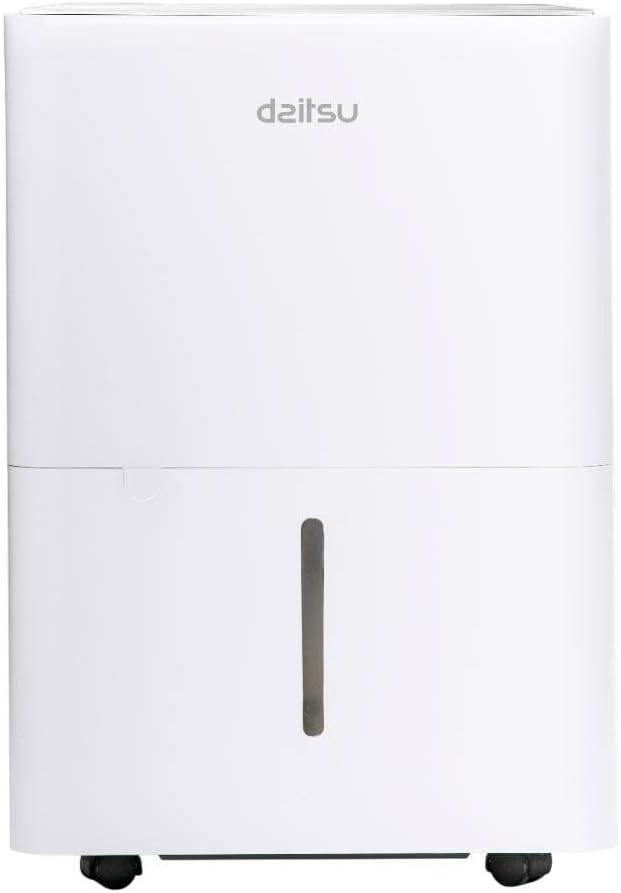
Nọmba 1: Iwaju view of the Daitsu Aral ADD-12XB Dehumidifier. This image displays the front of the Daitsu Aral ADD-12XB Dehumidifier, featuring its clean white design and the visible water level indicator on the collection tank.

Nọmba 2: Ẹyìn view of the Daitsu Aral ADD-12XB Dehumidifier. The rear view of the dehumidifier shows the removable air filter cover for maintenance and the continuous drainage outlet, typically used for connecting a hose for extended operation.

Nọmba 3: Control panel of the Daitsu Aral ADD-12XB Dehumidifier. This close-up image shows the top control panel of the dehumidifier, featuring intuitive buttons for power, mode selection (Continuous, Dry, Turbo, Comfort), and timer settings, along with indicator lights.
4. Eto
4.1 Ṣiṣii silẹ
- Farabalẹ yọ dehumidifier kuro ninu apoti rẹ.
- Yọ gbogbo awọn ohun elo iṣakojọpọ kuro, pẹlu eyikeyi teepu tabi awọn fiimu aabo.
- Ṣe àyẹ̀wò ẹ̀rọ náà fún àmì ìbàjẹ́ èyíkéyìí. Tí ó bá bàjẹ́, má ṣe ṣiṣẹ́ kí o sì kan sí olùrànlọ́wọ́ oníbàárà.
4.2 Ibi
- Place the dehumidifier on a firm, level surface to minimize vibration and noise.
- Ensure there is at least 20 cm (8 inches) of clear space around the air inlet and outlet to allow for efficient airflow.
- Yago fun gbigbe ẹrọ naa si nitosi awọn orisun ooru tabi ni imọlẹ orun taara.
- For optimal performance, place the unit in the center of the room where dehumidification is needed most.
4.3 Asopọ agbara
Plug the power cord into a grounded electrical outlet. Ensure the outlet meets the electrical requirements specified on the unit's rating label.
5. Awọn ilana Iṣiṣẹ
5.1 Iṣakoso Panel Awọn iṣẹ
Tọkasi Figure 3 fun awọn ifilelẹ ti awọn iṣakoso nronu.
- Bọtini agbara: Tẹ lati tan-an tabi PA kuro.
- Bọtini Ipo: Press to cycle through available operating modes:
- Cont. (Continuous): The unit operates continuously regardless of the ambient humidity level.
- Gbẹ Designed for drying clothes or in very humid conditions.
- Turbo: Operates at maximum fan speed for rapid dehumidification.
- Itunu: Maintains a comfortable humidity level automatically.
- Bọtini Aago: Press to set the auto-on or auto-off timer (e.g., 24-hour timer).
- Atọka kikun tanki: Illuminates when the water tank is full and needs to be emptied. The unit will automatically stop operating.
5.2 Ṣofo Omi Omi
When the 'Tank Full' indicator lights up, the unit will stop operating. To empty the tank:
- Rọra fa jade ni omi ojò lati iwaju ti awọn kuro.
- Farabalẹ gbe ojò naa lọ si ibi iwẹ tabi sisan.
- Tú omi ti a ti gba.
- Slide the empty tank back into the unit until it clicks into place. The unit will resume operation.
5.3 Ìṣàn omi tó ń tẹ̀síwájú (Àṣàyàn)
For extended operation without needing to empty the water tank, you can set up continuous drainage:
- Locate the continuous drainage outlet at the back of the unit (refer to Figure 2).
- Remove the rubber stopper from the outlet.
- Connect a suitable drain hose (not included) to the outlet. Ensure the connection is secure to prevent leaks.
- Direct the other end of the hose to a floor drain or a large container, ensuring the hose is sloped downwards for gravity drainage.
- The unit will now drain water continuously, bypassing the internal water tank.
6. Itọju
Itọju deede ṣe idaniloju iṣẹ ṣiṣe ti o dara julọ ati fa gigun igbesi aye ti dehumidifier rẹ.
6.1 Ninu Ajọ Afẹfẹ
Ajọ afẹfẹ yẹ ki o di mimọ ni gbogbo ọsẹ meji tabi diẹ sii nigbagbogbo da lori lilo ati didara afẹfẹ.
- Pa dehumidifier kuro ki o yọọ kuro ni iṣan agbara.
- Locate the air filter cover on the back of the unit (refer to Figure 2).
- Remove the filter cover and carefully pull out the air filter.
- Clean the filter using a vacuum cleaner to remove dust and debris. For heavy dirt, wash the filter with lukewarm water and a mild detergent.
- Rinse the filter thoroughly and allow it to air dry completely before reinserting.
- Place the dry filter back into the unit and close the cover.
6.2 Ninu Omi Omi
Clean the water tank regularly to prevent mold and bacteria growth.
- Yọ ati ofo omi ojò.
- Wash the tank with warm water and a mild detergent.
- Fi omi ṣan daradara ki o gbẹ ṣaaju ki o to gbe e pada sinu ẹyọkan.
6.3 Ode Ninu
Mu ese ita kuro pẹlu asọ, damp Aṣọ. Má ṣe lo àwọn kẹ́míkà líle, àwọn ohun ìpara, tàbí àwọn ohun olómi, nítorí pé wọ́n lè ba ojú ilẹ̀ jẹ́.
6.4 Ibi ipamọ
Ti ẹyọ naa ko ba ni lo fun igba pipẹ:
- Empty and clean the water tank and air filter.
- Yọọ ẹyọ kuro ki o si fi okun agbara pọ daradara.
- Bo ẹyọ naa pẹlu apo ike tabi asọ lati daabobo rẹ lati eruku.
- Store the dehumidifier in an upright position in a cool, dry place.
7. Laasigbotitusita
Ṣaaju ki o to kan si atilẹyin alabara, jọwọ tọka si awọn ọran ti o wọpọ ati awọn ojutu wọnyi:
| Isoro | Owun to le Fa | Ojutu |
|---|---|---|
| Ẹka ko ni tan-an | Ko si ipese agbara Okun agbara ko sopọ mọ daradara Omi omi kun | Ṣayẹwo iṣan agbara Rii daju pe okun agbara ti wa ni edidi ni aabo Sofo ojò omi |
| A ko gba omi ti a kojọ | Ọriniinitutu yara kere ju Afẹfẹ àlẹmọ dí Iwọn otutu ti lọ silẹ pupọ Unit in continuous drainage mode | Dehumidification may not be needed Mọ àlẹmọ afẹfẹ Unit may not operate efficiently below 5°C (41°F) Check if continuous drainage hose is connected and draining |
| Unit jẹ alariwo | Kuro ko lori kan ipele dada Afẹfẹ àlẹmọ dí | Gbe ẹyọkan sori alapin, dada iduroṣinṣin Mọ àlẹmọ afẹfẹ |
| Iyọkuro ti ko dara | Awọn ilẹkun / awọn window ṣii Afẹfẹ àlẹmọ dí Iwọn yara tobi ju | Pa gbogbo ilẹkun ati awọn window Mọ àlẹmọ afẹfẹ Ensure unit capacity matches room size |
8. Awọn pato
Technical specifications for the Daitsu Aral ADD-12XB Dehumidifier:
| Ẹya ara ẹrọ | Sipesifikesonu |
|---|---|
| Orukọ awoṣe | Ṣafikun-12XB |
| Brand | Daitsu |
| Agbara Dehumidification | 12 Liters/day (at specified conditions) |
| Iwọn Omi Omi | 1.5 liters |
| Awọn iwọn (H x W x D) | 38.6 x 28 x 19.5 cm (isunmọ. 15.2 x 11 x 7.7 inches) |
| Iwọn Ọja | Kg 23.5 (isunmọ 51.8 lbs) |
| Voltage | 230 Volts |
| Agbara | 2.5 kW (This value seems unusually high for a dehumidifier, typically it would be in Watts, e.g., 250W. Please verify with product label if possible.) |
| Ariwo Ipele | 54 Decibels |
| Pataki Awọn ẹya ara ẹrọ | Automatic Shut-off, Continuous Drainage, Timer |
| Àwọ̀ | Funfun |
Note: Specifications are subject to change without notice. Please refer to the product label for the most accurate information.
9. Atilẹyin ọja ati Support
9.1 atilẹyin ọja Alaye
This Daitsu product is covered by a manufacturer's warranty. The warranty period and terms may vary by region. Please retain your proof of purchase for warranty claims. For specific warranty details, refer to the warranty card included with your product or contact Daitsu customer service.
9.2 Onibara Support
If you encounter any issues not covered in the troubleshooting section or require further assistance, please contact Daitsu customer support. Contact information can typically be found on the official Daitsu webaaye tabi lori apoti ọja.


