1. Ifihan
The DEERC F16 Thunderbirds RC Plane is a 3-channel remote control aircraft designed for both beginners and experienced pilots. It features a realistic F16 Thunderbirds design with vibrant lights, a 6-axis gyro stabilization system for easy and stable flight, and durable EPP foam construction with a soft silicone nose for crash resistance. The plane operates on a 2.4GHz frequency, offering a long-range control distance and comes with two rechargeable batteries for extended flight times.
2. Alaye Aabo
- Lilo ita nikan: This product is not intended for indoor use. Operate the aircraft only in open outdoor areas.
- Clear Environment: Ensure the flying area is clear of people, pets, trees, power lines, and other obstacles to prevent accidents.
- Abojuto Agba: A gbani nimọran abojuto awọn agbalagba, paapaa fun awọn olumulo ti o kere ju.
- Ààbò propeller: Keep fingers, hair, and loose clothing away from the propellers when the aircraft is powered on.
- Mimu Batiri: Follow all battery charging and handling instructions carefully to prevent fire or injury.
3. Package Awọn akoonu
The DEERC F16 Thunderbirds RC Plane package includes the following items:
- F-16 Airplane (x1)
- 2.4GHz Controller (x1)
- Li-Po Battery (x2)
- Propeller Set (x1)
- Landing Gear Set (x1)
- USB Charger (x1)
- Itọsọna olumulo (x1)
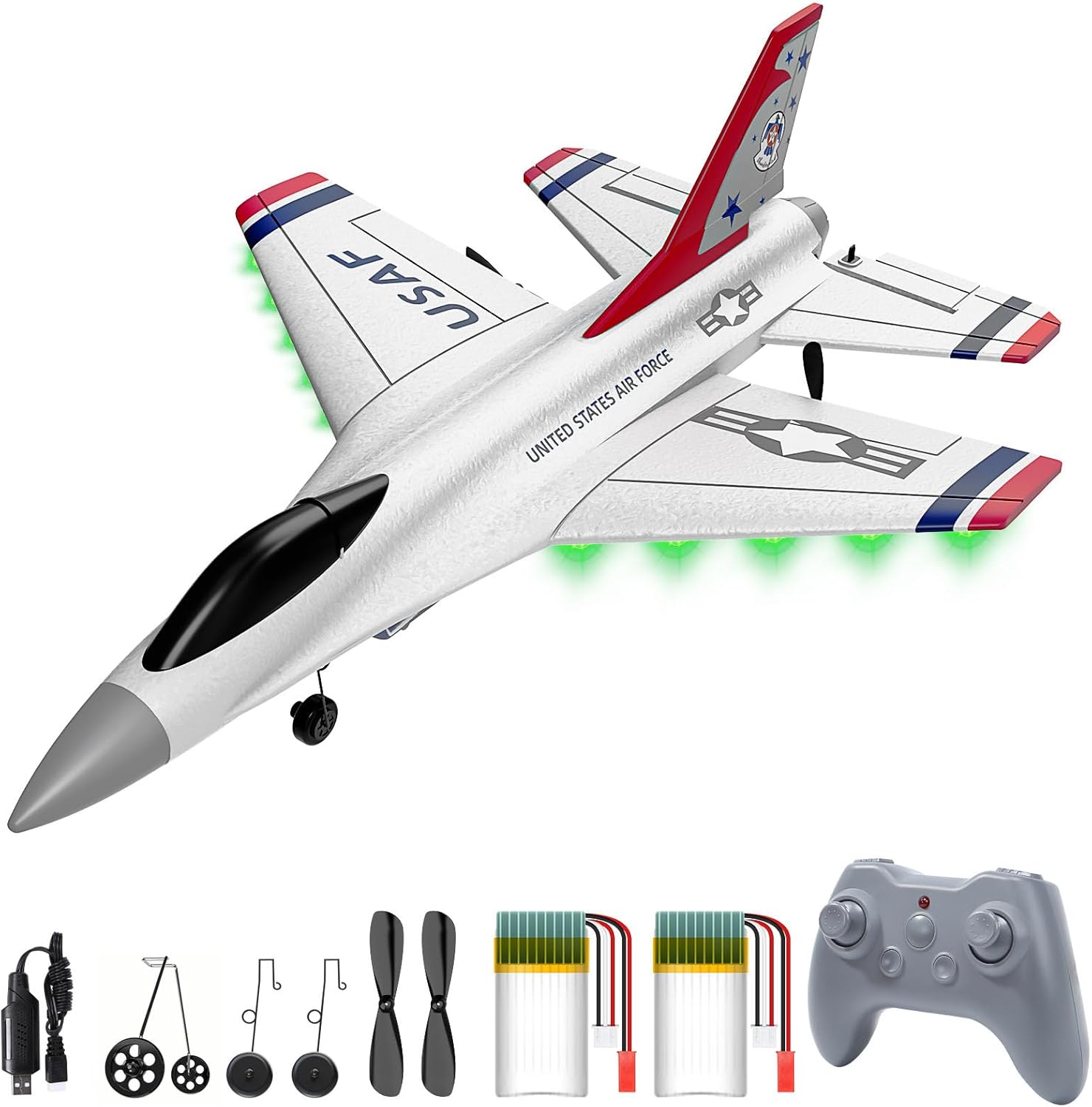
Aworan: The DEERC F16 Thunderbirds RC Plane shown with its remote control, two batteries, propellers, landing gear, and USB charger.
4. Apejọ
The DEERC F16 Thunderbirds RC Plane is designed for quick and easy assembly. Simply snap the main components together as instructed in the included user manual. The tail fins and landing gear are designed to fit securely into designated slots on the aircraft body.
Akiyesi: The aircraft body is constructed from EPP foam. Handle with care during assembly to avoid damage.
5. Gbigba agbara batiri ati fifi sori ẹrọ
Charging the Li-Po Batteries
- Connect the provided USB charger to a USB power source (e.g., computer, USB wall adapter).
- Connect the Li-Po battery to the USB charger. The charger's indicator light will show the charging status.
- Ni kete ti o ti gba agbara ni kikun, ge asopọ batiri kuro lati ṣaja.
- Pataki: Use only the provided proprietary USB charger for the Li-Po batteries.
Installing Batteries in the Aircraft
- Locate the battery compartment on the underside of the aircraft.
- Ṣii ideri iyẹwu batiri naa.
- Carefully connect the charged Li-Po battery to the aircraft's power connector.
- Fi batiri sinu yara naa ki o si ti ideri naa mọ daradara.
Fifi awọn batiri sinu isakoṣo latọna jijin
- The remote control requires 4 AA batteries (not included).
- Ṣii yara batiri ni ẹhin isakoṣo latọna jijin.
- Insert 4 fresh AA batteries, ensuring correct polarity (+/-).
- Pa ideri iyẹwu batiri naa.
6. Latọna jijin Iṣakoso Loriview
The 2.4GHz remote control provides precise 3-channel control for the DEERC F16 Thunderbirds RC Plane. It features joysticks for throttle/rudder and elevator/aileron control, allowing for responsive and stable flight maneuvers. The controller also includes buttons for speed adjustments and performing rolls.

Aworan: An illustration of the DEERC F16 Thunderbirds RC Plane in flight, highlighting its 3-channel control capabilities, with an inset showing the remote control.
7. Eto
- Agbara Tan: First, turn on the aircraft by connecting its battery. Then, turn on the remote control.
- Asopọmọra: The aircraft and remote control should automatically bind. If binding fails, refer to the detailed instructions in the included user manual.
- Ṣiṣayẹwo Ọkọ ofurufu-ṣaaju: Before each flight, ensure all control surfaces (ailerons, rudder, elevator) move freely and correctly in response to remote control inputs. Check that the propellers are securely attached and undamaged.
8. Awọn ilana Iṣiṣẹ
Takeoff Options
- Hand-Launch: Hold the aircraft firmly, apply full throttle, and gently toss it forward into the wind.
- Ground Taxi: With the landing gear attached, place the aircraft on a flat, open surface. Apply full throttle and steer as needed until it gains enough speed for takeoff.

Aworan: The DEERC F16 Thunderbirds RC Plane illustrating both hand-thrown and ground taxi takeoff methods.
Awọn Isakoso ofurufu
- Ijoko: Controls the speed and altitude.
- Rọda: Controls yaw (left/right turning).
- Ategun: Controls pitch (up/down movement).
- Ailerons: Controls roll (banking left/right).
- Gyro Apá 6: The integrated 6-axis gyro stabilization system provides enhanced stability, making it easier for beginners to fly and maintain control, even in windy conditions.

Aworan: The DEERC F16 Thunderbirds RC Plane taking off, with an inset showing the internal gyro flight control system.
Awọn fidio ọja osise
Fidio: A demonstration of the DEERC 3CH F16 RC Plane in flight, showcasing its maneuverability and stability.
Fidio: An official video highlighting the features and flight of the DEERC F16 Thunderbirds RC Plane.
9. Itọju
- Ikole ti o tọ: The aircraft is made from durable EPP foam and features a soft silicone nose, designed to withstand minor crashes and impacts.
- Rirọpo Propeller: In case of damage, replace propellers with the spare set provided in the package. Refer to the user manual for detailed replacement instructions.
- Ninu: Wipe the aircraft clean with a soft, dry cloth after use.
- Ibi ipamọ: Store the aircraft and batteries in a cool, dry place away from direct sunlight and extreme temperatures.

Aworan: The DEERC F16 Thunderbirds RC Plane in flight, emphasizing its crash-resistant EPP foam and enhanced soft rubber nose.
10. Laasigbotitusita
- Pipadanu Iṣakoso: Ensure the remote control batteries are fully charged and that the aircraft is within the specified operating range (up to 500ft). Avoid areas with strong electromagnetic interference.
- Aircraft Not Taking Off: Check that the propellers are spinning correctly and are undamaged. Ensure the battery is fully charged and properly connected. Verify that the control surfaces are in a neutral position.
- Damage to Nose Cone: While the aircraft is designed to be crash-resistant, repeated hard landings can cause wear or damage to the nose cone. Replacement parts may be available from the manufacturer.
- Ọkọ ofurufu aiduroṣinṣin: Recalibrate the gyro stabilization system as per the user manual. Ensure there are no strong winds exceeding the aircraft's recommended operating conditions.
11. Awọn pato
- Awọn iwọn ọja: 9.7 x 3.15 x 13.48 inches
- Ìwọ̀n Nkan: 15.5 iwon
- Nọmba Awoṣe Nkan: US4-F16-WT
- Ọjọ ori Ti a ṣeduro Olupese: 0 - 12 ọdun
- Awọn batiri Iṣakoso Latọna jijin: Awọn batiri AA 2 nilo (pẹlu)
- Olupese: DEERC
12. Atilẹyin ọja & Atilẹyin
DEERC is committed to customer satisfaction. If you encounter any issues or are unhappy with your product for any reason, please do not hesitate to contact DEERC US customer service. They take full ownership and responsibility for the quality of their products and will assist in resolving your problem quickly and efficiently.


