Ọrọ Iṣaaju
The Intelbras SS 3532 MF is an advanced facial access controller from the Bio-T line, designed for secure and efficient access management. It supports multiple authentication methods including facial recognition, RFID MF 13.56 MHz cards, QR Codes, and passwords. This device is suitable for both indoor and outdoor environments and can be integrated with various door locking systems such as electric locks, electromagnets, or solenoids. This manual provides essential information for the proper installation, operation, and maintenance of your SS 3532 MF controller.
Ọja Pariview
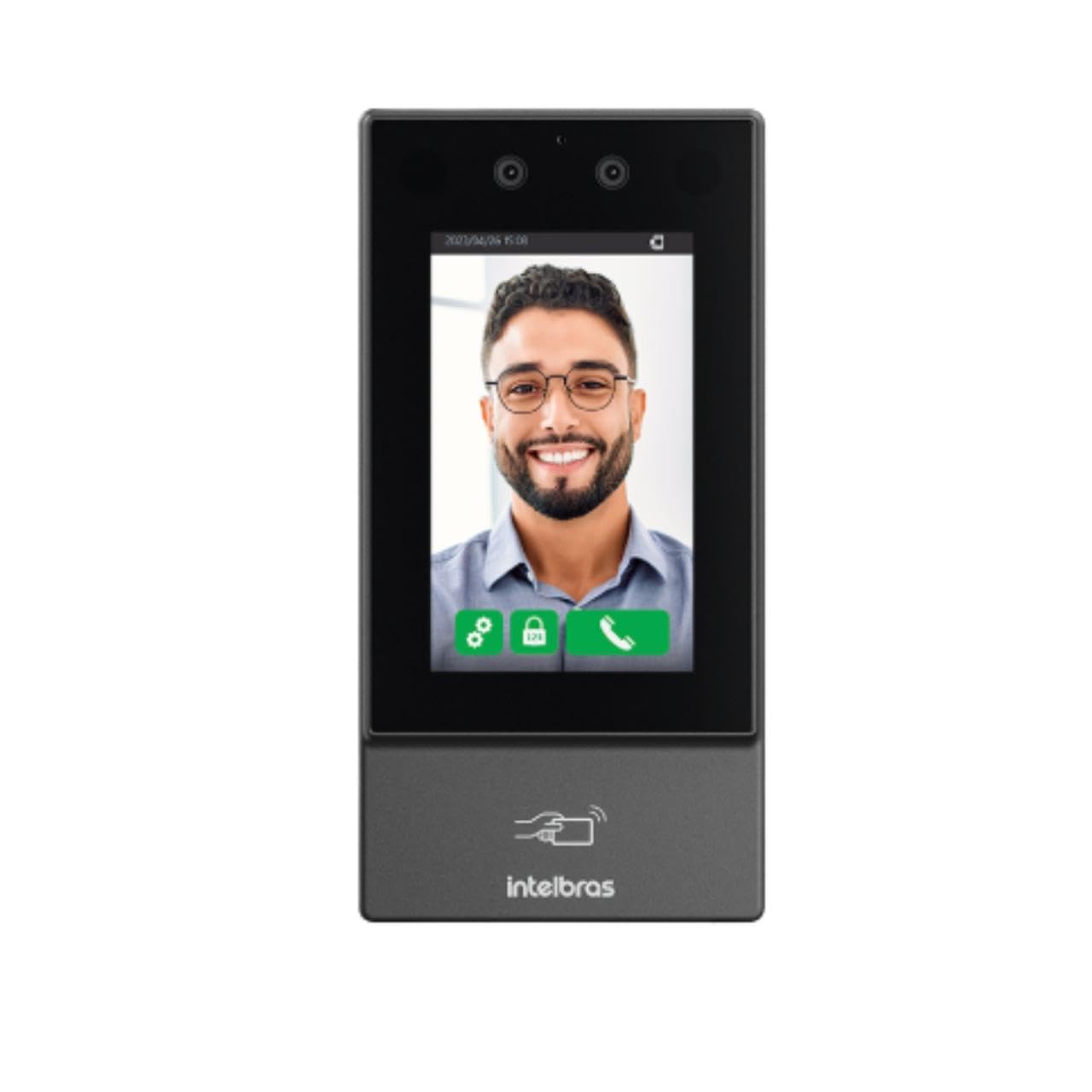
Aworan: Iwaju view of the Intelbras SS 3532 MF Facial Access Controller. The device features a large screen displaying a smiling man's face, indicating successful facial recognition. Below the screen, the Intelbras logo and an RFID card icon are visible. The device is sleek and dark gray, designed for modern security applications.
Awọn ẹya pataki:
- Idanimọ oju: Advanced anti-fake system prevents access via photos or videos.
- Multi-Authentication: Supports facial recognition, RFID MF 13.56 MHz cards, QR Codes, and passwords.
- Mask Detection: Alerts and/or blocks access if a mask is detected.
- LCD iboju ifọwọkan: Capacitive touch-sensitive LCD screen for intuitive operation.
- Abe ile/ita gbangba Lo: IP55 protection rating suitable for various environments.
- Agbara giga: Stores up to 10,000 users, 20,000 cards/QR Codes (up to 5 per user), 10,000 passwords (1 per user), and 10,000 facial templates (up to 2 per user).
- Fast Recognition: Facial recognition time of 0.2 seconds with over 99.5% verification accuracy.
- Ibi ipamọ data: User data saved directly on the controller.
- Asopọmọra: Ethernet connection (no Wi-Fi).
- Iṣọkan Software: Compatible with InControl Web, Defense IA, and third-party software via SDK, API/CGI.
Package Awọn akoonu
Jẹrisi pe gbogbo awọn ohun kan wa ninu package:
- 1 × SS 3532 MF Access Controller (without Wi-Fi connection)
- 1 × Set of wall plugs and screws
- 1 × Wall mounting bracket
- 1} Itọsọna olumulo
Note: The XR 2201 relay module and power supply are not included.
Awọn pato
| Ẹya ara ẹrọ | Ẹ̀kúnrẹ́rẹ́ |
|---|---|
| Ipese Agbara Voltage | 12 Vdc 2A (power supply not included) |
| O pọju Lilo | 24 W |
| Awọn iwọn (W × H × D) | 90.1 × 180.1 × 27 mm |
| Awọn iwọn otutu ti nṣiṣẹ | -30 °C si 60 °C |
| Ọriniinitutu ibatan ti nṣiṣẹ | 0% si 90% RH (ti kii ṣe condensing) |
| Idaabobo Rating | IP55 (lilo inu ati ita) |
| Iwon girosi | 0.70 kg |
| Ohun elo apade | PC+ABS |
| Ayika fifi sori ẹrọ | Ninu ile ati ita gbangba |
| Ijọpọ | SDK, API/CGI |
| Facial Verification Accuracy | > 99.5% |
| Facial Recognition Time | 0.2 aaya |
| Famuwia imudojuiwọn | Via DEFENSE IA |
Eto ati fifi sori
1. Ìmúra Ibùdó:
- Ensure the installation environment is suitable for an IP55 rated device, whether indoor or outdoor.
- Prepare a stable surface for mounting the device.
2. Gbigbe Ẹrọ naa:
- Lo akọmọ iṣagbesori ogiri ti a pese bi awoṣe lati samisi awọn aaye liluho lori ogiri.
- Lu ihò ki o si fi ogiri plugs.
- Ṣe aabo akọmọ iṣagbesori si odi nipa lilo awọn skru ti a pese.
- Attach the SS 3532 MF controller to the mounted bracket.
3. Asopọ agbara:
- Connect a 12 Vdc 2A power supply (not included) to the device's power input.
- Rii daju pe ipese agbara pade voltage and current requirements to prevent damage.
4. Asopọ nẹtiwọki:
- Connect an Ethernet cable to the device's network port for online operation and software integration.
- The device does not support Wi-Fi connectivity.
5. Lock Integration:
- Connect the device to your electric lock, electromagnet, or solenoid system as per the wiring diagram in the full user manual (not provided here).
- Note that the XR 2201 relay module is not included and may be required for certain lock types.
Awọn ilana Iṣiṣẹ
1. Initial Power-Up:
- Once powered, the device will boot up and display the main interface on its LCD touchscreen.
2. Isakoso olumulo:
- Access the device's menu via the touchscreen to add, edit, or delete users.
- Each user can be assigned facial templates, RFID cards, QR Codes, and passwords.
- The device supports up to 10,000 users and 10,000 facial templates (2 per user).
3. Authentication Methods:
- Idanimọ oju: Stand in front of the device's camera. The system will automatically detect and verify your face. The anti-fake system prevents unauthorized access using photos or videos.
- Kaadi RFID: Present your RFID MF 13.56 MHz card to the designated reader area on the device.
- Koodu QR: Present a valid QR Code to the device's camera for scanning.
- Ọrọigbaniwọle: Enter your assigned password using the touchscreen keypad.
4. Mask Detection:
- The device can be configured to alert or block access if a user is detected wearing a mask, depending on security policies.
5. Software Integration:
- For advanced management, connect the device to InControl Web, Defense IA, or other compatible third-party software via Ethernet.
- Refer to the respective software manuals for detailed configuration and operation instructions.
Itoju
- Ninu: Regularly clean the touchscreen and camera lenses with a soft, dry, lint-free cloth. Avoid abrasive cleaners or solvents.
- Awọn imudojuiwọn famuwia: Keep the device's firmware updated via DEFENSE IA software to ensure optimal performance and security.
- Ṣayẹwo Ayika: Periodically inspect the device for any signs of wear or damage, especially if installed outdoors. Ensure connections are secure.
Laasigbotitusita
- Ẹrọ ti ko ni agbara:
- Check if the 12 Vdc 2A power supply is correctly connected and functioning.
- Verify the power outlet.
- Facial Recognition Failure:
- Ensure adequate lighting in front of the device.
- Nu awọn lẹnsi kamẹra nu.
- Confirm the user's facial template is properly enrolled and up-to-date.
- Adjust the user's distance and angle to the device.
- RFID Card Not Detected:
- Ensure the card is an RFID MF 13.56 MHz type.
- Present the card correctly to the reader area.
- Verify the card is enrolled for the user.
- Ko si Isopọ Nẹtiwọọki:
- Ṣàyẹ̀wò ìsopọ̀ okùn àjọlò.
- Verify network settings on the device and your network infrastructure.
- Ilekun Ko Ṣii silẹ:
- Confirm successful authentication on the device.
- Check wiring to the electric lock/electromagnet/solenoid.
- Ensure the lock mechanism is functioning correctly.


