1. Ifihan
This manual provides essential information for the safe and effective operation, maintenance, and care of your KERDOM Foldable Electric Wheelchair, Model KD-B02. Please read this manual thoroughly before using the wheelchair to ensure proper understanding of its features and functions. Retain this manual for future reference.

Image 1.1: The KERDOM Foldable Electric Wheelchair KD-B02, featuring a black frame with orange accents, a joystick control, and anti-tip wheels.
2. Alaye Aabo
Your safety is paramount. Adhere to all warnings and instructions provided in this manual. Failure to do so may result in injury or damage to the wheelchair.
2.1 Gbogbogbo Awọn Itọsọna Aabo
- Always ensure the wheelchair is fully unfolded and locked before use.
- Maṣe kọja agbara iwuwo ti o pọju ti 330 lbs (150 kg).
- Operate the wheelchair on stable and level surfaces whenever possible.
- Yẹra fún dídúró tàbí yíyípo lójijì, pàápàá jùlọ ní iyàrá gíga.
- Rii daju pe batiri ti gba agbara daradara ṣaaju lilo kọọkan.
- Pa ọwọ ati aṣọ mọ kuro ninu awọn ẹya gbigbe.
- Always use the seat belt provided.
2.2 EABS Parking System and Anti-Tip Wheels
The wheelchair is equipped with an EABS (Electromagnetic Braking System) parking system and anti-tip wheels for enhanced safety. The EABS system automatically engages when the joystick is released, providing secure braking, especially on inclines up to 12 degrees. The anti-tip wheels prevent backward tipping, increasing iduroṣinṣin.

Image 2.1: Illustration of the EABS slope standing function, showing the wheelchair stopping automatically on an incline when the joystick is released.
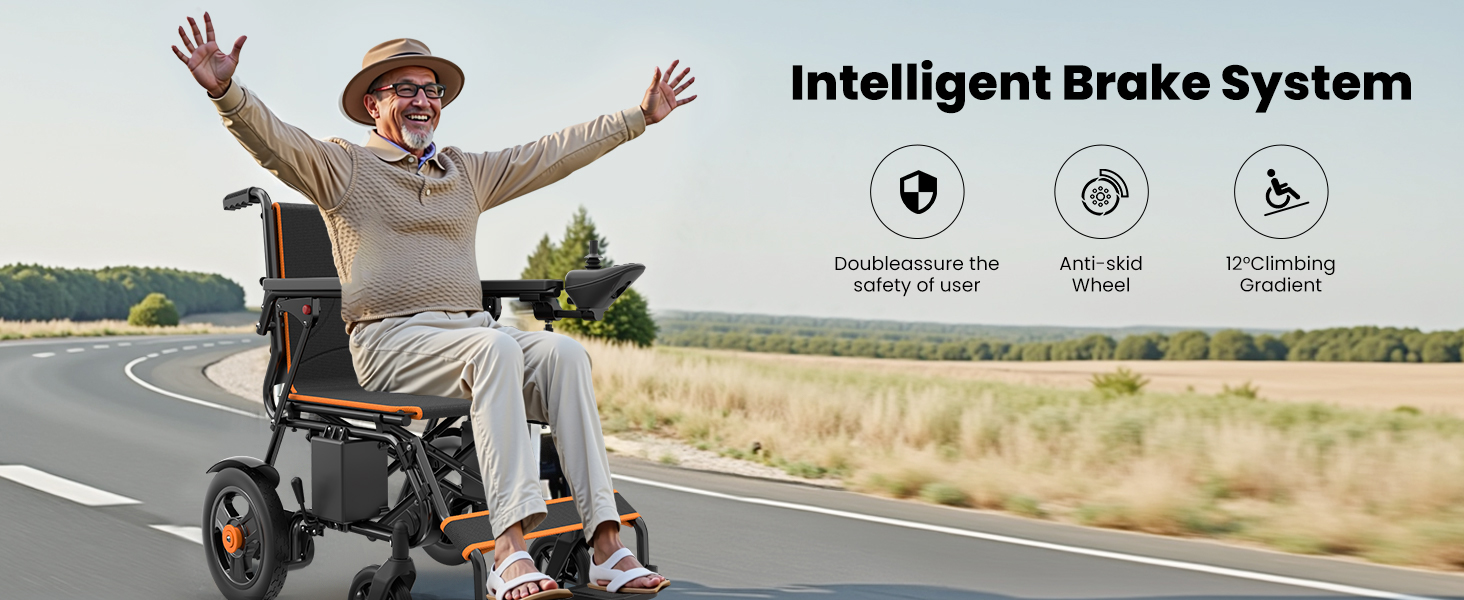
Image 2.2: Graphic detailing the intelligent brake system, highlighting features like double assurance for user safety, anti-skid wheels, and a 12-degree climbing gradient capability.
2.3 Awọn iwe-ẹri
The KERDOM KD-B02 electric wheelchair adheres to various safety and quality standards, including MSDS, CNAS, UN38.3, and UL certifications, ensuring product reliability and user safety.

Image 2.3: Display of safety certifications including MSDS, CNAS, UN38.3, and UL, indicating compliance with international safety standards.
2.4 ofin AlAIgBA
Statements regarding dietary supplements have not been evaluated by the FDA and are not intended to diagnose, treat, cure, or prevent any disease or health condition. This product is a mobility aid and not a medical device intended for diagnosis or treatment.
3. Awọn ẹya Ọja
The KERDOM KD-B02 electric wheelchair is designed for portability, comfort, and ease of use.
3.1 Folding Design
This wheelchair features a 3-second folding design for easy transport and storage. Its lightweight frame (approximately 57 lbs) and compact size when folded make it suitable for travel.

Image 3.1: Visual guide demonstrating the three steps to fold the wheelchair for compact storage.

Image 3.2: The folded wheelchair stored compactly in a car trunk, highlighting its portability for travel.
3.2 Dual Motor System
Equipped with dual 250W motors, providing a total of 500W power, the wheelchair offers improved climbing ability and smooth navigation across various terrains.

Image 3.3: Diagram illustrating the upgraded 500W dual motor system compared to a single 250W motor, emphasizing enhanced power and durability.

Aworan 3.4: alaye view of the dual 250W motors, designed for improved climbing ability and navigating difficult terrain.
3.3 All-Terrain Performance
The wheelchair is designed to handle various surfaces, including gravel, lawn, muddy roads, speed bumps, and city roads, thanks to its shock-absorbing design and 12-inch rear wheels.

Image 3.5: Collage showing the wheelchair navigating different terrains: gravel road, lawn, muddy road, speed bump, and city road.

Image 3.6: Illustration highlighting the dual shock absorption in the front wheels and the 12-inch rear wheels, designed for easier navigation over obstacles up to 2.8 inches.
3.4 User-Friendly Design
- Awọn ihamọra ti o le ṣatunṣe: Designed for comfort and ease of transfer.
- Breathable Seat Cushion: Made from three-dimensional gauze fabric for comfort and easy cleaning.
- Ibudo Gbigba agbara USB: Convenient for charging personal devices during outings.

Aworan 3.7: Isunmọ view of the breathable fabric used for the seat and backrest, emphasizing its comfort and ease of maintenance.

Image 3.8: Detail of the ergonomically designed armrest, measuring 15.4 inches, intended to provide comfort and release hand pressure.
4. Eto
4.1 Unfolding the Wheelchair
- Gbé kẹ̀kẹ́ alága tí a ti tẹ̀ sí orí ilẹ̀ tí ó tẹ́jú, tí ó sì dúró ṣinṣin.
- Gently pull the armrests outwards to begin unfolding the frame.
- Push down on the seat rails until the frame is fully extended and locked into place. Ensure all locking mechanisms are engaged.
- Lower the footrests into position.

Image 4.1: A detailed three-step visual guide illustrating the process of unfolding the wheelchair, from lifting footrests to securing the seat cushion and backrest.
4.2 Ibẹrẹ agbara Batiri
Before first use, fully charge the wheelchair battery. Connect the charger to the charging port on the joystick and then to a standard electrical outlet. The LED indicator on the joystick will show charging status. A full charge typically takes several hours.
5. Awọn ilana Iṣiṣẹ
5.1 Iṣakoso Joystick
The 360° flexible joystick provides precise control over the wheelchair's movement. The LED display on the joystick shows battery life and current speed settings.

Image 5.1: Close-up of the 360-degree flexible joystick controller, showing its intuitive design and control buttons.

Image 5.2: Diagram illustrating the joystick's directional controls for forward, back, left, and right movement.
Operating the Joystick:
- Titan/Apapa: Tẹ bọtini agbara lati tan tabi pa kẹkẹ kẹkẹ.
- Siwaju/Sẹhin: Gently push the joystick forward or backward.
- Yipada: Push the joystick left or right to steer.
- Titunṣe Iyara: Use the speed control buttons (+/-) to adjust the wheelchair's speed.
- Braking: Release the joystick to engage the EABS automatic brake.
5.2 Using the Seat Belt
Always fasten the seat belt before operating the wheelchair. The seat belt is designed for quick insertion and removal with one hand, providing additional security during movement.

Image 5.3: Close-up of the seat belt buckle, demonstrating its quick-release mechanism for easy fastening and unfastening.
6. Itọju
Regular maintenance ensures the longevity and safe operation of your KERDOM electric wheelchair.
6.1 Ninu
- Nu férémù náà pẹ̀lú ìpolówóamp asọ. Yago fun lilo abrasive ose.
- The breathable seat cushion can be cleaned with mild soap and water. Ensure it is completely dry before reattaching.
6.2 batiri Itọju
- Charge the battery regularly, even if the wheelchair is not in frequent use, to maintain battery health.
- Yago fun gbigbe batiri patapata ṣaaju gbigba agbara.
- Store the wheelchair and battery in a cool, dry place.
6.3 Gbogbogbo ayewo
- Periodically check all nuts, bolts, and fasteners for tightness.
- Inspect tires for wear and proper inflation (if applicable).
- Ensure the joystick operates smoothly and all buttons are functional.
- Verify that the EABS braking system engages correctly when the joystick is released.
7. Laasigbotitusita
This section addresses common issues you might encounter with your electric wheelchair.
| Isoro | Owun to le Fa | Ojutu |
|---|---|---|
| Kẹ̀kẹ́ kì í tan iná. | Battery is low or depleted; power cable loose; power button not pressed correctly. | Charge the battery; check all cable connections; press the power button firmly. |
| Wheelchair moves slowly or inconsistently. | Low battery; speed setting too low; uneven terrain. | Recharge battery; increase speed setting on joystick; move to smoother terrain. |
| Brakes do not engage or release properly. | Joystick not fully released; EABS system malfunction. | Ensure joystick is in neutral position; if issue persists, contact customer support. |
| Awọn ariwo ti ko wọpọ lakoko iṣẹ. | Loose components; debris in wheels/motors. | Inspect for loose parts and tighten; clear any obstructions from wheels and motors. If noise continues, contact customer support. |
If you encounter issues not listed here or if solutions do not resolve the problem, please contact KERDOM customer support.
8. Awọn pato
| Ẹya ara ẹrọ | Ẹ̀kúnrẹ́rẹ́ |
|---|---|
| Nọmba awoṣe | KD-B02 |
| Awọn iwọn Ọja (Ṣiṣiṣi) | 36.19"D x 24.8"W x 33.4"H |
| Iwọn | Approx. 57 lbs (without battery) |
| Agbara iwuwo | 330 lbs |
| Awọn ọkọ ayọkẹlẹ | Meji 250W (Lapapọ 500W) |
| Braking System | EABS Electromagnetic Brake |
| Ilọsiwaju ti o pọju | 12° |
| Ru Wheel Iwon | 12 inches |
| Ohun elo | Irin, Ṣiṣu |
| Batiri Iru | 24V/12AH Lead-Acid |
| Irin-ajo Ijinna | Up to 15 miles (approximate, depending on terrain and usage) |

Image 8.1: Detailed diagram showing the key dimensions of the KERDOM electric wheelchair in both unfolded and folded states.

Image 8.2: Information graphic detailing the 24V/12AH Lead-Acid battery and the approximate 15-mile travel distance.
9. Atilẹyin ọja ati Support
KERDOM provides a 12-month warranty for the electric wheelchair. For any inquiries or support needs, please contact KERDOM's US-based customer support team. They aim to respond to all queries within 24 hours.
For further assistance, refer to the detailed user manual and video instructions provided by KERDOM.
Ibi iwifunni:
- Atilẹyin Onibara: Wa 24/7
- Webojula: Visit the KERDOM Store on Amazon


