1. Ifihan
The Waveshare ESP32-S3 AI Smart Speaker Development Board is a versatile platform designed for smart audio applications. It integrates a powerful ESP32-S3R8 module, dual microphones with noise reduction, RGB lighting, and extensive expansion interfaces for external displays and cameras. This manual provides essential information for setting up, operating, and developing with your board.
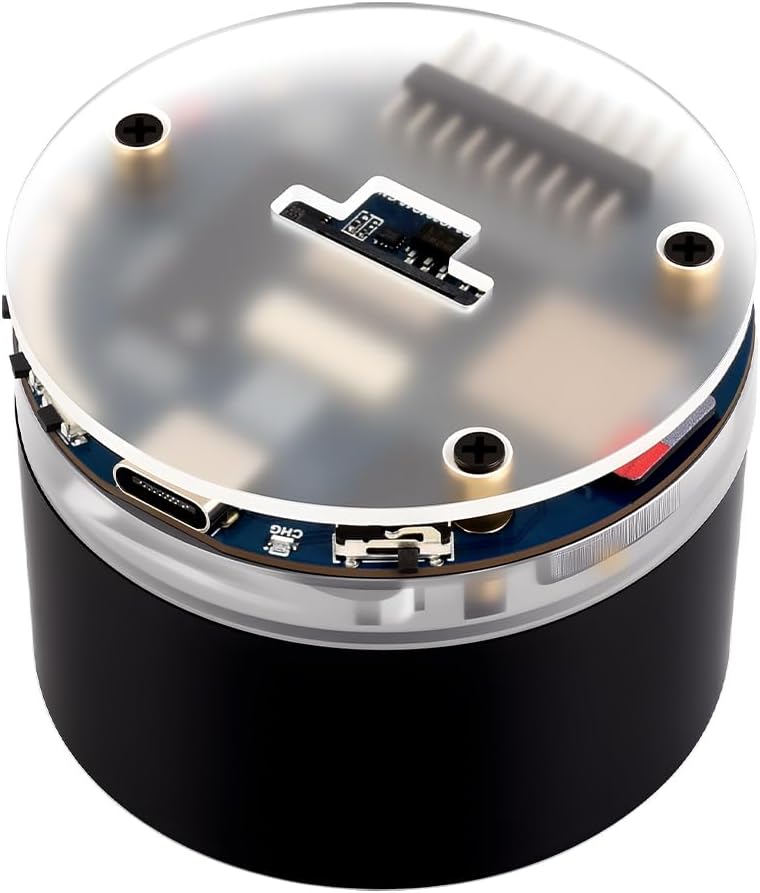
olusin 1: Iwaju view of the Waveshare ESP32-S3 AI Smart Speaker Development Board.
2. Package Awọn akoonu
Daju pe gbogbo awọn nkan ti a ṣe akojọ rẹ si isalẹ wa ninu package rẹ:
- ESP32-S3-AUDIO-Board-EN x1

Figure 2: The package contains one ESP32-S3-AUDIO-Board.
3. Hardware Loriview
The ESP32-S3-AUDIO-Board features a compact design with various integrated components and interfaces for diverse applications.
3.1 Key Awọn ẹya ara ẹrọ
- MCU Iṣẹ́ Gíga: Equipped with the ESP32-S3R8 module, featuring a powerful Xtensa 32-bit LX7 dual-core processor operating at up to 240MHz.
- Asopọ Alailowaya: Built-in 2.4GHz Wi-Fi (802.11 b/g/n) and Bluetooth 5 (LE) with an onboard antenna.
- Advanced Voice Interaction: Dual microphone array with noise reduction and echo cancellation for accurate speech recognition and near/far-field wake-up.
- Awọn ipa Imọlẹ Yiyi: 7x programmable surround RGB LEDs for visual feedback.
- Ìfẹ̀sí Gíga: SPI LCD display, DVP camera, USB, I2C, and multiple reserved buttons.
- Awọn ẹya Multimedia: Onboard audio decoding chip, microphone integration, and TF card slot.
- Storage Resources: Integrated 512KB SRAM, 384KB ROM, 8MB PSRAM, and external 16MB Flash memory.

Figure 3: Detailed diagram of the ESP32-S3-AUDIO-Board components and interfaces.
3.2 Interfaces and Pinout
The board provides various interfaces for connectivity and expansion. Refer to the diagram below for a detailed pinout and interface definitions.

Figure 4: Pinout and interface definitions for the ESP32-S3-AUDIO-Board.
3.3 Awọn iwọn
The physical dimensions of the board are provided for integration into custom enclosures or projects.

Figure 5: Outline dimensions of the ESP32-S3-AUDIO-Board.
4. Eto
4.1 Ipese Agbara
The ESP32-S3-AUDIO-Board requires a 3.7V MX1.25 lithium battery for operation, which is not included and must be purchased separately. The board includes a battery recharge management module.
4.2 Ibẹrẹ Asopọ
Connect the board to a power source via the USB Type-C port. The charge indicator LED will light up when charging. The light status may be uncertain if no battery is connected.
5. Awọn ilana Iṣiṣẹ
5.1 Audio Input/Output
The board supports high-quality audio processing with an onboard audio decoding chip, dual microphones, and a speaker header. This enables clear audio input and output for voice-activated applications.

Figure 6: Audio input and output capabilities of the development board.
5.2 AI Speech Interaction
The dual microphone array, combined with noise reduction and echo cancellation, facilitates accurate speech recognition and responsive near/far-field wake-up functionality. This makes it suitable for developing AI speakers and interactive HMI screens.

Figure 7: AI speech interaction capabilities, including access to online large model platforms.
5.3 External Display and Camera Support
The board includes interfaces for SPI LCD displays and DVP cameras, allowing for expanded multimedia experiences.

Figure 8: The board supports external LCD displays and DVP cameras.
5.4 Dynamic Lighting
Seven programmable surround RGB LEDs are integrated into the board, enabling the creation of various dynamic lighting effects for enhanced user interaction and visual appeal.
6. Development & Customization
The ESP32-S3-AUDIO-Board supports various development tools and frameworks, including Arduino IDE and ESP-IDF. Comprehensive SDK open-source tutorials are available to facilitate easy integration into your applications.
6.1 Software Development Kits (SDKs)
The board is compatible with both Arduino IDE and ESP-IDF, providing flexibility for developers. Detailed documentation and examples are typically provided by Waveshare to assist with project development.
6.2 isọdi
The independent shell body allows for customization of the board's appearance. Users can also DIY suitable back covers to meet specific usage scenarios.
6.3 Osise Video ọja
Video 1: This video demonstrates the features and capabilities of the Waveshare ESP32-S3 Touch LCD 1.85C, which shares many functionalities and the form factor with the AI Smart Speaker Development Board. It showcases the high-performance processor, display, audio processing, AI voice interaction, wireless connectivity, and expansion options.
7. Awọn pato
| Ẹya ara ẹrọ | Ẹ̀kúnrẹ́rẹ́ |
|---|---|
| isise | Xtensa 32-bit LX7 dual-core, up to 240 MHz |
| Àgbo | LPDDR4, 512KB SRAM, 8MB PSRAM |
| Flash Memory | 16MB |
| ROM | 384KB |
| Alailowaya Asopọmọra | Wi-Fi 2.4GHz (802.11 b/g/n), Bluetooth 5 (LE) |
| Eto isesise | FreeRTOS |
| Ibi ti ina elekitiriki ti nwa | 3.7V MX1.25 Lithium Battery (not included), USB Type-C |
| Audio Awọn ẹya ara ẹrọ | Dual Microphones (noise reduction, echo cancellation), Onboard Audio Decoding Chip, Speaker Header |
| Ifihan Support | SPI LCD display interface |
| Atilẹyin kamẹra | DVP camera interface |
| Miiran Awọn atọkun | USB, I2C, GPIO, TF Card Slot, Reserved Buttons |
| Iwọn Nkan | 4.9 iwon |
| Package Mefa | 4.49 x 3.27 x 2.83 inches |
8. Laasigbotitusita
8.1 No Sound from Speaker
If you experience no sound from the speaker, ensure that the power amplifier is correctly initialized in your software configuration. This is a common solution for speaker-related issues.
8.2 Gbogbogbo Asopọmọra Oran
If the board is not connecting via Wi-Fi or Bluetooth, verify that the onboard antenna is properly connected and that your software configuration for wireless modules is correct. Ensure the device is within range of your network or Bluetooth device.
9. Itọju
To ensure the longevity and optimal performance of your Waveshare ESP32-S3 AI Smart Speaker Development Board, follow these maintenance guidelines:
- Jeki Gbẹgbẹ: Avoid exposing the board to moisture or humidity, which can damage electronic components.
- Sọ di mimọ: Use a soft, dry cloth to clean the board. Avoid using harsh chemicals or abrasive materials.
- Mu pẹlu Itọju: The board contains sensitive electronic components. Avoid dropping or subjecting it to strong impacts.
- Ibi ipamọ to tọ: When not in use, store the board in a cool, dry place, away from direct sunlight and extreme temperatures.
10. Atilẹyin ọja & Atilẹyin
Fun alaye atilẹyin ọja, atilẹyin imọ-ẹrọ, tabi iranlọwọ siwaju sii, jọwọ tọka si Waveshare osise webojula tabi kan si wọn onibara iṣẹ. Tọju iwe-ẹri rira rẹ fun awọn ẹtọ atilẹyin ọja.


